Air Filters for House: A Practical Guide to Clean Indoor Air
Learn how to select, install, and maintain air filters for house to improve indoor air quality, reduce dust and odors, and protect against allergies.


Learn how to choose and maintain air filters for house to boost indoor air quality. You'll learn about filter types, sizing, MERV ratings, replacement schedules, and maintenance tips. Before you start, gather your HVAC specs, a timeline for replacements, and notes on any allergies or pets. This quick guide helps homeowners and renters act confidently.
Why air filters for house matter
Air quality inside homes significantly affects health and comfort, especially for people with allergies, asthma, or pet exposure. The phrase air filters for house captures the core idea: the right filter reduces microscopic particles, odors, and irritants that circulate through living spaces. According to Air Purifier Info, these filters act as the first line of defense against dust, pollen, pet dander, and smoke that otherwise linger in shared rooms. When you choose the right filter, you improve sleep quality, decrease sneezing, and create a more pleasant environment for all occupants. This section outlines how filters work in typical residential setups, including furnaces, central air systems, and portable purifiers. You’ll also learn how filtration intersects with airflow and energy use, so you can select solutions that fit your home and budget. Emphasize a routine that includes inspection, replacement, and a quick wipe-down of the housing to prevent debris buildup that can bypass the filter.
Types of filters and how they work
Filters come in several designs, each targeting different pollutant sizes and odors. Fiberglass and non-pleated panel filters are inexpensive and catch larger particles but need more frequent replacement. Pleated filters offer higher surface area and better particle capture without a major price jump. Activated carbon or odor-control filters neutralize smells from cooking, smoke, and pets but may not catch fine allergens alone. For allergy-prone homes, HEPA-style options or high-efficiency pleated filters provide superior capture of small particles like dust mite debris and mold spores. A growing trend is hybrid filters that combine pleated media with carbon layers. For households with animals or strong odors, consider combining a high-quality pleated filter with a carbon layer to address both particulates and smells. Remember: higher filtration can affect airflow if the system isn’t sized correctly, so verify compatibility with your HVAC or purifier.
Sizing and fit: how to measure and verify
Accurate sizing is essential for effective filtration. Start by removing the current filter and checking the dimensions printed on its frame or the sides of the housing. If the print is worn, measure the height, width, and depth with a tape measure, then match those measurements to available replacements. Also confirm the filter type (e.g., pleated, carbon, HEPA) your system supports; some homes require different media types in different zones. Make sure the filter snaps or slides into place securely and that the arrow indicators on the frame point in the direction of airflow. A loose fit can bypass the filter and reduce effectiveness, especially in tight return-air slots. When in doubt, consult the owner’s manual or contact the system manufacturer for approved options.
How to choose by filtration efficiency and VOCs
Filtration efficiency determines how much of the air’s particles are captured during a single pass. Filters with better surface coverage and media density remove more particles, including common indoor dust and pet dander. Some filters also target volatile organic compounds (VOCs) and odors through activated carbon or specialty media. In homes with strong cooking odors, tobacco smoke, or new furniture off-gassing, VOC-reducing filters can noticeably improve air quality. Balance filtration efficiency with airflow: very dense media can slow air movement and require fan adjustments or a slightly higher-capacity purifier. Always verify that your system’s blower can accommodate upgraded media without overworking the motor.
Maintenance and replacement schedules
Maintenance is the practical backbone of clean air. Most filters perform best when replaced on a regular schedule based on usage, environment, and manufacturer guidance. A quick visual check can reveal when a filter is clogged with dust and hair; a visibly dark or clogged filter should be replaced promptly. Note that some filters are designed to last longer in drier climates and shorter in areas with heavy dust or pet hair. Mark the replacement date on the new filter or in your home maintenance app. Proper disposal of old filters helps prevent re-entry of contaminants, and keeping the intake grilles clean reduces the load on the system between replacements.
Pets, allergies, and odors: tailored tips
Pets increase dander and hair in the air, while cooking and smoking introduce odors and VOCs. For households with furry friends or allergy sufferers, pair a pleated, high-efficiency filter with an activated carbon layer to address both particles and smells. Frequent vacuuming and reducing fabric surfaces that trap dust can complement filter performance. If you have multiple rooms or zones, consider portable purifiers with true HEPA filters for spaces where occupants spend the most time, like bedrooms and living rooms. Regular checks of seals and doors around return vents prevent unfiltered air from leaking into living spaces.
Budgeting and energy considerations
Filters come in a range of prices, but the long-term cost of clean air can be worth the investment. Higher-efficiency filters may cost more upfront but last longer and reduce allergen exposure, potentially lowering healthcare or medication costs for sensitive individuals. When selecting, weigh the filter’s cost against replacement frequency and potential energy use if the HVAC runs longer to push air through denser media. For renters or budget-conscious homeowners, plan for a phased upgrade: start with a durable pleated option and monitor your comfort, then add carbon layers or a secondary purifier in rooms that see higher activity or odors. Small, consistent upgrades over time can yield meaningful improvements in indoor air quality.
Quick-start plan for homeowners and renters
To implement right away, identify the current filter size and type, purchase a replacement that matches those specs, and commit to a replacement interval. Create a simple calendar reminder for every 30 to 90 days, depending on use, and stage a small storage area for filters to avoid last-minute scrambling. For multi-zone homes, establish a baseline for each room’s air needs and consider portable purifiers for the most occupied spaces. By building a simple routine, you maintain steady IAQ without overwhelming your budget or your schedule.
Common mistakes to avoid
Avoid selecting a filter solely on price; a cheap, low-efficiency option won’t protect your family from fine particles. Do not install a filter that is too dense for your system, as it can reduce airflow and place stress on the blower. Never operate an HVAC or purifier with an damaged or misaligned filter; this can allow unfiltered air to bypass the filter and spread contaminants. Finally, don’t neglect housing cleanliness: a dusty housing or clogged return grilles can dramatically reduce filtration effectiveness.
Quick-start checklist
- Identify current filter size and type.
- Purchase a matching pleated or carbon-filter combination as needed.
- Replace on schedule and label the date on the filter.
- Inspect the housing and return vent areas for signs of dust buildup.
- Consider a dedicated purifier for high-traffic rooms or allergy-prone occupants.
Tools & Materials
- Replacement air filters(Have the correct size and type for your system; verify dimensions before purchase.)
- Measuring tape(Use to confirm filter dimensions printed on the current filter.)
- Safety gloves(Optional to protect hands from dirt.)
- Flashlight(Helpful when inspecting tight spaces.)
- Permanent marker(Label new filter with date of replacement.)
- Vacuum with brush attachment(Clean debris from the filter housing before installing new filter.)
Steps
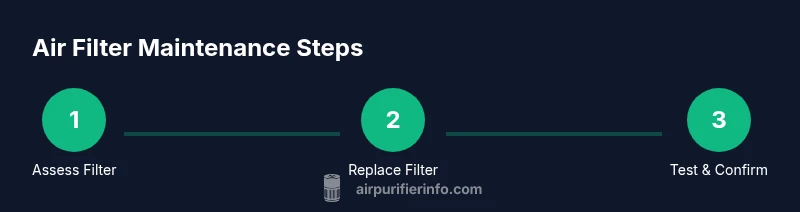
Estimated time: 15-25 minutes
- 1
Identify the correct filter type and size
Remove the current filter and read the frame for size and media type. If unclear, measure height, width, and depth, then confirm with the system manual or manufacturer guidance.
Tip: Double-check arrows on the filter to ensure correct airflow direction before removal. - 2
Power down and locate the filter
Turn off the HVAC or purifier and locate the filter housing. If access is behind a grille or panel, gently loosen screws or clips to reach the filter.
Tip: Take a photo of the housing before removing anything to reference during reassembly. - 3
Remove the old filter
Carefully pull the filter straight out to avoid disturbing settled dust. Place the used filter in a bag to contain dust and dust debris during disposal.
Tip: Wear gloves to minimize skin contact with dust. - 4
Inspect housing and clean if needed
Check the housing for dust build-up or moisture. If present, gently vacuum or wipe the area, ensuring no loose particles fall into the return opening.
Tip: Wait a few minutes for any loose dust to settle before cleaning. - 5
Insert the new filter correctly
Align the new filter with the airflow arrows and slide it into place. Ensure it sits flush and the seal is intact to prevent bypass.
Tip: Avoid compressing the frame; ensure full contact with all sides. - 6
Secure the cover and test
Reattach the cover or grille securely. Restore power and run the system on a low setting for a few minutes to verify smooth airflow and listen for abnormal noises.
Tip: If airflow seems weak, re-check the filter direction and seal. - 7
Record replacement date
Mark the new filter with the replacement date or log it in your maintenance tracker. This helps establish a predictable replacement schedule.
Tip: Use a color-coded sticker to quickly identify replacement timing at a glance. - 8
Plan next replacement
Set a reminder based on your environment and usage. In dusty or pet-heavy homes, replace more frequently; in drier climates, less frequent changes may be needed.
Tip: Keep an extra filter on hand in a dedicated storage area.
Questions & Answers
What is the difference between HEPA and standard residential filters?
HEPA filters capture smaller particles and allergens more effectively than standard residential filters, but may require compatible equipment and can impact airflow if not sized properly. Always verify compatibility with your HVAC or purifier before upgrading.
HEPA filters capture smaller particles but require the right system and fit. Check compatibility before upgrading.
How often should I replace filters in a typical home?
Most homes benefit from replacing filters every 1 to 3 months, depending on usage, pets, and environmental dust. If you notice reduced airflow or visible dirt, replace sooner.
Replace filters every 1 to 3 months, or sooner if airflow drops or you see dirt.
Can I run a home purifier with no filter?
Running a purifier without a filter defeats its purpose and can damage the motor or circulate unfiltered air. Always keep a proper filter in place.
Never run with no filter; it defeats the purpose and can harm the device.
Do activated carbon filters remove odors effectively?
Activated carbon filters help neutralize odors from cooking, smoke, and pets, but they are most effective when paired with a filter that captures particulates. Use a combination for best results.
Carbon filters help with odors, especially when used with a particulate filter.
Will higher MERV ratings reduce airflow in my system?
More efficient filters can restrict airflow if the system isn't sized for them. Check compatibility and consider staged upgrades or a purifier in high-use rooms to maintain airflow.
Higher efficiency can affect airflow; ensure your system can handle it.
Are there filters designed for pets and allergies?
Yes. Look for pleated filters with good particle capture and, if odors are a concern, include carbon or specialty media. Pair with regular cleaning in pet-heavy homes.
Yes—choose pleated, high-capture filters, and add carbon if odors are a concern.
Watch Video
Main Points
- Identify the correct filter size and type before purchasing.
- Install filters with the correct airflow direction.
- Replace filters on a consistent schedule to maintain IAQ.
- Clean the housing to prevent bypass and maintain efficiency.
- Document replacements to stay on track.