How long do air filters last
Discover how long air filters last in different environments, learn the factors that influence replacement intervals, and get practical tips to optimize indoor air quality in 2026.


The typical lifespan of most residential air filters is about 3-6 months under normal use, with more frequent changes in dusty homes or when allergy symptoms are present. HEPA filters tend to last longer, while cheaper fiberglass ones may clog sooner. Always check manufacturer recommendations for your specific model.
How long do air filters last in practice
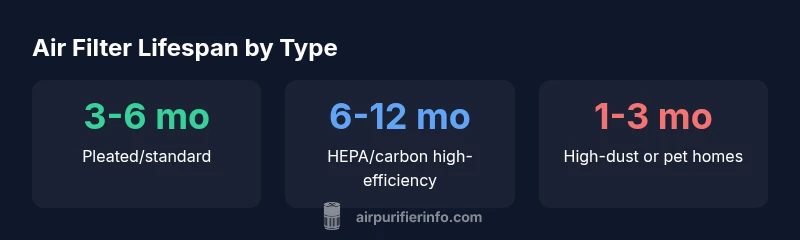
Understanding how long do air filters last helps homeowners plan replacements, maintain indoor air quality, and avoid unnecessary energy use. In practice, life expectancy depends on filter type, airflow, and environmental conditions. Most residential filters are designed for a multi-month cycle, typically around 3-6 months for standard pleated designs. In dusty homes or households with pets, lifespans may drop toward the 1-3 month range. Conversely, in low-dust environments or with higher-quality HEPA and carbon filters, you may see lifespans stretching toward 6-12 months. Always check the product label, as manufacturers tailor intervals to the specific filter construction, recommended airflow (ACH rates), and whether the unit is used continuously or intermittently. For people with allergies or asthma, adhering to the recommended replacement interval is essential to preserve performance and IAQ.
Air Purifier Info analysis shows that environmental conditions and usage patterns are often the biggest drivers of filter life. Keeping a simple replacement calendar helps ensure each device maintains peak performance and that you don’t miss critical IAQ improvements.
Filter types and their typical lifespans
Filter materials vary widely, and so do their lifespans. Fiberglass filters are inexpensive but typically need more frequent changes due to lower filtration efficiency and higher clogging risk. Pleated filters strike a balance between cost and performance and often last longer than fiberglass in the same environment. HEPA filters deliver the highest efficiency but can be pricier and sometimes require more careful handling; their physical life is usually longer in lower-dust environments, though heavy use or high particle load can shorten that. Activated carbon filters target odors and gases, and their lifespan is influenced by contaminant load as well as humidity. When selecting filters, consider both the MERV rating and the pollutant profile in your home: dust, pollen, smoke, and pet dander all affect replacement cycles differently.
A practical rule: mix and match by using a primary pleated filter for bulk particle removal and an optional carbon layer for odor control. This approach can optimize lifespan while maintaining IAQ.
How usage patterns alter filter life
Usage intensity is a major determinant of filter life. Continuous operation, high fan speeds, and devices running in extreme environments accelerate particle capture and thus shorten replacement intervals. If you run a purifier or HVAC system at high speed in a dusty home, plan for more frequent changes—often toward the 1-3 month range. In contrast, light use in a relatively clean apartment may extend life to 6-12 months. Humidity also matters: high moisture can promote mold growth on filters and reduce efficiency, while overly dry air tends to keep particulates suspended longer, affecting how quickly they accumulate on the filter. Regularly inspecting filters, even when not yet due, can prevent performance drops.
Environmental factors that shorten or extend life
Dust density in your living space is the single biggest factor. Homes with pets, smoking, or heavy cooking produce more particulates, shortening filter life. Smoke particles, volatile organic compounds (VOCs), and volatile odors increase the burden on carbon and HEPA components, reducing usable life if replacement cycles aren’t adjusted. Allergy-prone households may benefit from more frequent changes to maintain low allergen levels. Conversely, well-sealed rooms and rooms with tighter filtration can extend filter life by reducing new contaminant load. If you can control air exchange with proper ventilation, you may experience a mild extension in the life of your filters. Air Purifier Info’s analysis highlights the dynamic relationship between air quality, filter type, and maintenance schedules.
How to read and follow replacement labels
Manufacturers specify a recommended replacement interval on the filter packaging and sometimes directly on the unit. This interval reflects the filter design, particle capture capacity, and intended usage (continuous vs intermittent). Pay attention to the MERV rating as a rough guide—higher MERV filters capture more particles but may load faster in dusty environments. If your device includes a digital indicator or IAQ sensor, use it alongside the label guidance. When in doubt, err on the side of replacement a bit earlier rather than later to ensure consistent performance. Keeping a log helps you track actual life against the label and adjust for your home’s conditions.
Practical replacement strategies for homeowners
Create a proactive replacement plan that aligns with your environment. Keep spare filters on hand and rotate them between devices if you own multiple units. Use a calendar reminder aligned to the typical 3-6 month window for standard filters, and shorten the interval for dusty homes or households with pets. For those with multiple filtration stages, replace the pre-filter (if applicable) at shorter intervals than the main cartridge to prolong overall life. In cases of persistent allergy or asthma symptoms, consider opting for higher-quality pleated or HEPA-rated filters that support longer lifespans with consistent performance. A note on maintenance: always power down the device before handling filters and follow disposal guidelines for used filters, especially carbon and activated charcoal types.
How to extend filter life with smart habits
Adopt habits that reduce particle load. Vacuum floors and upholstery regularly, wipe surfaces to minimize settled dust, and seal air leaks around doors and windows. Consider using a high-efficiency purifier in rooms with heavy use and move units away from vents to avoid short-circuiting airflow. If you use multiple devices, stagger replacements to avoid simultaneous downtime. A well-maintained system plus mindful usage can push typical replacement windows toward the longer end of the 3-6 month range, especially in cleaner environments.
Measuring and tracking filter life
Use built-in indicators when available, or maintain a simple log with dates of installation and expected replacement. Some devices offer sensor-driven alerts that notify you when performance declines. If you operate in a hybrid environment (windows open for ventilation), expect more rapid filter loading and shorter intervals. A small notebook or digital note can help you compare actual lifespans across different room conditions, filter types, and usage patterns, improving forecasting for future replacements.
Common mistakes that shorten filter life
Avoid waiting until you visually notice poor performance. Visual inspection alone can miss early clogging; rely on sensor data or manufacturer guidance. Don’t reuse disposable filters after cleaning unless explicitly approved by the manufacturer. Mixing filter types without considering compatibility with your device can reduce efficiency and shorten life. Lastly, neglecting to replace carbon or odor-control layers when needed can lead to contaminated flows and higher energy use as the system works harder.
Lifespan and replacement intervals by filter type
| Filter Type | Lifespan (months) | Typical replacement interval | Notes |
|---|---|---|---|
| Fiberglass | 1-3 | 1-3 months | Low-cost, lower efficiency |
| Pleated | 3-6 | 3-6 months | Balanced performance |
| HEPA | 6-12 | 6-12 months | High efficiency; depends on load |
| Carbon/Odor-control | 3-9 | 3-6 months | Odor capture dependent |
Questions & Answers
How often should I replace an HVAC air filter?
Most HVAC filters should be replaced every 60-90 days, but higher dust loads or pets can shorten that to 60 days. Always follow the manufacturer’s guidelines and consider using IAQ sensors to fine-tune timing.
Most HVAC filters need changing every 60 to 90 days, but dusty homes or pets can shorten that. Check your label and use IAQ sensors to optimize timing.
Do HEPA filters last longer than fiberglass filters?
HEPA filters generally last longer than fiberglass in the same conditions due to higher particle capture efficiency. Actual lifespan still depends on usage, air quality, and device design.
HEPA filters usually last longer than fiberglass filters, but it still depends on how you use your device and the air quality.
Can I clean a disposable air filter instead of replacing it?
Most disposable filters are not designed to be cleaned and should be replaced. Some washable filters exist, but follow the manufacturer’s instructions to avoid damage or reduced effectiveness.
Most disposable filters shouldn’t be cleaned—replace them. If it’s washable, follow the label instructions.
What factors shorten filter life the most?
Dust load, pet dander, smoking, and humidity are the main drivers that shorten filter life. Heavy cooking and opening windows frequently can also accelerate clogging.
Dust, pets, smoke, and humidity are the biggest life-shorteners for filters.
Is it okay to wait until the filter looks dirty?
visually dirty isn’t the only cue. Airflow sensors or performance drops often occur before visible dirt. Use device indicators and follow the replacement schedule.
Waiting until it looks dirty can miss early signs. Use indicators and recommended schedules.
“Regular filter maintenance is a cornerstone of effective indoor air quality. Lifespan varies with usage and environment, so follow guidelines and monitor performance.”
Main Points
- Replace on schedule rather than waiting for performance drop
- Higher dust increases shorten filter life dramatically
- HEPA and pleated filters often last longer than fiberglass in similar conditions
- Follow manufacturer guidance and use sensors when available
- Regular IAQ checks help optimize maintenance cycles