When to Change Air Filter: A 2026 Practical Guide for Homes
Learn when to change your air filter with practical intervals, signs of wear, and a step-by-step replacement guide. Air Purifier Info explains how usage shapes filter lifespan and indoor air quality.


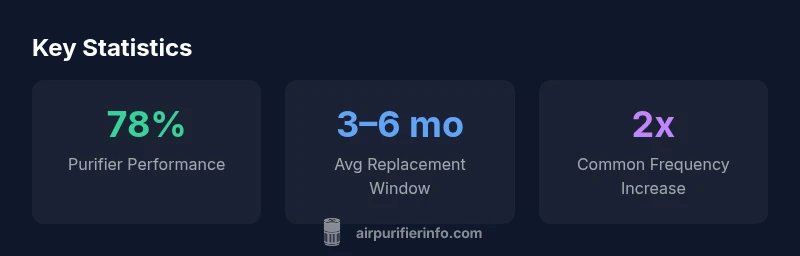
Most home air purifiers require filter changes every 3 to 6 months under normal use. In high-traffic spaces, homes with pets, or kitchens, expect more frequent changes, often every 1 to 3 months. Different filter types have different lifespans; HEPA filters typically last longer than activated carbon for odor removal. Signs you need a change include reduced airflow, louder operation, and new or lingering odors. According to Air Purifier Info, plan to check monthly.
How often to change your air filter
The question of when air filter change should happen is not one-size-fits-all. Under typical, moderate use in a clean indoor environment, most residential air purifiers recommend changing the filter every 3 to 6 months. This interval balances cost with performance, ensuring the purifier continues to trap dust, pollen, and particulates without impeding airflow. If you rely heavily on your purifier for allergies or asthma, or if you notice a drop in performance, consider shortening the interval to the 3-month mark. The key is to monitor performance indicators, such as airflow and odor, rather than sticking to a calendar if your living space differs from the baseline.
Factors that influence change frequency
Several practical factors tilt the timing scale for when air filter change is best. Usage level is the primary driver: a purifier in a small, rarely used room will likely need fewer replacements than a device in a high-traffic living space. Household composition matters too: pets, smoke, and frequent cooking raise particulate load and odor, shortening the filter life. Filter design also plays a role; HEPA filters generally retain performance longer than basic or carbon-only filters. Finally, local air quality matters; in areas with high outdoor pollution or pollen, you may see a more rapid buildup of contaminants.
Signs that it’s time to replace the filter
Rely on both objective cues and your purifier’s indicators. A noticeable drop in airflow, unusual odors, increased noise, or visible dirt on the filter are clear signals that a change is needed. If your unit lacks a filter change indicator, use a practical cadence based on your environment and inspect the filter monthly. When air feels heavy or the purifier runs longer to achieve the same clean air output, it’s time to replace.
Step-by-step guide to changing the filter
- Power off and unplug the purifier; 2) Open the housing and carefully remove the old filter; 3) Check the seal and housing for dust buildup; 4) Insert the new filter with the correct orientation as shown in the manual; 5) Reassemble, plug in, and reset any filter indicator; 6) Run the purifier on a higher setting for 10-15 minutes to ensure proper airflow and seal integrity. Always follow the manufacturer’s specific instructions for your model.
Maintenance tips to maximize filter life
Keep intake vents clear of dust; vacuum or wipe the exterior periodically to reduce contaminants reaching the filter. If your purifier uses a pre-filter, wash or replace it as recommended by the manufacturer. Place the unit away from walls and drapes to maximize airflow. Consider pairing with odor-control filters if you regularly encounter strong scents, which can shorten the life of a carbon filter.
Special scenarios: pets, odors, and smoke
Pet dander and household odors place extra load on filters. In homes with cats or dogs, or with ongoing cooking odors, you may see more frequent changes than the average interval. Smokers or fireplace users also introduce additional particles that can shorten filter life. In these cases, you might follow a stricter schedule, such as checking weekly and replacing sooner if you notice diminished performance or odors lingering after a run cycle.
Common filter change intervals by usage scenario
| Aspect | Recommendation | Notes |
|---|---|---|
| Standard interval | 3-6 months | Normal use, clean environment |
| High-use households | 1-3 months | Pets, cooking, smokers increase load |
| Filter type differences | HEPA: 6-12 months; carbon: 3-6 months | Material quality varies by model |
| Signs to replace | Reduced airflow, odor, visible dirt | When in doubt, replace earlier |
Questions & Answers
How often should I change the air filter in a typical home air purifier?
For most homes with average use, change every 3-6 months. If your space has pets, smoke, or heavy cooking, consider a shorter interval like 1-3 months. Use indicators and odor cues to fine-tune the schedule.
Most homes should change filters every 3 to 6 months, but pet or cooking activity can shorten that to 1 to 3 months. Use the unit's indicators and odors to decide.
Do all air purifiers require the same filter lifespan?
No. Lifespans vary by purifier design, filter type, and usage. HEPA filters typically last longer than basic or carbon-only filters, but high load from pets or cooking can shorten all lifespans.
No. Lifespans differ by model and filter type, and heavy use can shorten them for any purifier.
Can I wash or reuse a disposable filter?
Disposable filters should not be reused after removal. Some purifiers use washable pre-filters, which can be cleaned per the manual. Reusing a disposable filter reduces effectiveness and may void warranties.
No, disposable filters aren’t meant to be reused. Check if your unit has a washable pre-filter instead.
What signs indicate a filter needs replacement?
Look for reduced airflow, unusual odors, loud operation, or visible dirt on the filter. If your unit’s indicator shows replacement, follow that guidance.
If airflow drops, you smell something odd, or the unit is louder, it’s time to replace.
How does pet dander affect filter change frequency?
Pet dander adds particulate matter, often requiring more frequent changes in households with pets. Monitor performance and adjust the schedule accordingly.
Pets mean more frequent changes, so watch performance and odor cues closely.
“Regular filter changes are a simple, high-impact step toward maintaining indoor air quality and purifier efficiency.”
Main Points
- Set a practical replacement cadence based on usage
- Use indicators and signs to guide timing
- Address pet odors and cooking loads with more frequent changes
- Follow model-specific guidelines for filter life