GermGuardian Air Purifier Filter Replacement Guide 2026
Learn how to choose and replace GermGuardian air purifier filters. This guide covers compatibility, replacement intervals, and typical costs for dust, odors, allergies, and pet dander.


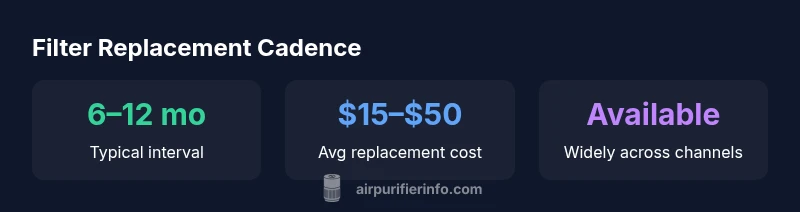
Replacement filters for GermGuardian air purifiers are typically needed every 6 to 12 months, depending on usage and air quality. Most models use replaceable HEPA-type filters with a charcoal pre-filter. Rely on the unit’s indicator light and model guidance to know when to change, and ensure you buy the correct cartridge for your unit.
What the GermGuardian filter does
GermGuardian air purifiers rely on a cartridge that combines a primary true HEPA filtration stage with an activated carbon layer. The HEPA component captures tiny particulates—dust, pollen, and many smoke particles—while the carbon layer reduces odors and volatile organic compounds (VOCs). A pre-filter protects the main filter from larger debris and extends life. In normal home use, expect to replace filters roughly every 6–12 months, though heavy use, high pollution levels, or pet dander can shorten this window. Most units include an indicator light or a message on the display to cue replacement. Proper installation matters: align the filter exactly with the housing, reseal the compartment, and avoid bypass that could degrade filtration performance.
Key takeaway: Replace with the correct GermGuardian cartridge to preserve particle capture and odor control. Regular checks help maintain indoor air quality.
Understanding filter types and compatibility
GermGuardian filters come in a few variations, but most models use a replaceable HEPA-type cartridge paired with a carbon pre-filter. The HEPA stage traps fine particles as small as 0.3 microns, while the carbon layer helps neutralize common household odors and VOCs. Some newer units use a sealed HEPA filter design that locks into place, while others rely on modular cartridges that include a separate pre-filter. When evaluating replacements, verify two things: the exact model compatibility (not all GermGuardian cartridges fit every model) and the correct filtration sequence (pre-filter → carbon layer → HEPA media). If you’re unsure, consult the user manual or the product packaging to confirm the exact model code. Consistency in replacement products ensures optimal airflow and filtration efficiency.
Reading model numbers and filter codes
To avoid buying the wrong cartridge, learn to read your purifier’s model code and filter label. Model codes are usually printed on the back or bottom of the unit, and the filter packaging also lists compatible model numbers. Some GermGuardian cartridges are labeled with “HG” or “AC” prefixes indicating carbon or activated-carbon blends, while others specify “HEPA-type” or “true HEPA.” Match the cartridge to the model code exactly, then verify the installation orientation arrows before sliding the filter in. If a filter doesn’t fit snugly, remove it and re-check the alignment. Ordering from official channels reduces the risk of counterfeit or incompatible products.
Replacement schedules by usage scenario
Your replacement cadence should reflect both usage intensity and the air quality in your space. In a routine living room with moderate traffic and low smoke, a 6–9 month interval is common. In kitchens, near smoking areas, or homes with heavy dust from construction, a 3–6 month cadence may be more realistic. If you have seasonal allergies, you might notice the need for filters more often during peak pollen months. Air quality sensors in some GermGuardian models help tailor replacement timing by measuring particle counts and overall airflow. Always adjust based on observed performance: reduced airflow, persistent odors, or visible particle buildup are signals to change sooner rather than later.
Maintenance beyond replacement: cleaning and care
Beyond replacing the cartridge, routine maintenance keeps filtration systems performing well. Gently vacuum or wipe the exterior and intake grille to remove dust buildup. Do not use water on the filter cartridge itself; moisture can damage the media and compromise filtration. Some models permit limited cleaning of the pre-filter—if so, remove and wash per the manual, then fully dry before reassembly. Keep the unit in a low-humidity environment away from direct moisture and heat. Regular maintenance reduces strain on the fan, helps maintain airflow, and prolongs filter life. Always power down the unit before any cleaning, and never operate with a missing or improperly seated filter.
Cost considerations and where to buy
Replacement filters for GermGuardian units vary in price but generally fall within a modest range. Budget for a couple of replacement cartridges per year in typical use, and anticipate higher costs if you own multiple units or have intense usage. Availability is broad: major retailers, online marketplaces, and official GermGuardian channels often stock the standard HEPA-type cartridges with carbon. Look for official filters that match your exact model code to ensure performance. Compare batch sizes and bulk options if you plan long-term replacements. Remember that cheaper, off-brand cartridges may not deliver the same level of filtration efficiency and could affect warranty terms.
Choosing the right filter for odors, dust and allergies
If your priority is dust reduction, a HEPA-type filter with high efficiency is essential. For odors and VOCs, ensure the filter includes an activated carbon or carbon-embedded layer. Allergies benefit from true HEPA filtration due to its ability to capture fine particulates. Some GermGuardian models combine both features in a single cartridge, offering a balance of particle capture and odor control. When selecting, consider room size, CADR (clean air delivery rate) ratings, and whether you need a pre-filter to extend cartridge life. Replacements should be done on schedule to maintain peak performance and indoor air quality.
Common myths about GermGuardian filters
A common myth is that all filters are interchangeable across every GermGuardian model. In reality, cartridge design, sizing, and attachment mechanisms vary by model. Another misconception is that more expensive filters always deliver significantly better performance; cost differences often reflect cartridge longevity, carbon content, and packaging. Finally, some assume washing a HEPA cartridge is an option; most HEPA filters are not washable and should be replaced when soiled. Always verify compatibility and follow manufacturer guidance to preserve efficiency and protect warranty terms.
Quick-start replacement checklist
- Identify your exact GermGuardian model code and corresponding filter cartridge.
- Check the user manual or packaging for compatibility and installation orientation.
- Prepare a clean, dry workspace and power off the purifier before replacing.
- Remove the old cartridge, clean the housing, and insert the new filter with proper alignment.
- Re-seal the housing and reset any indicator or timer per the manual.
- Run the purifier for a short period to ensure even airflow and no unusual noises.
- Note the replacement date and set reminders for the next cycle.
Replacement filter options for GermGuardian purifiers
| Filter Type | Lifespan (approx) | Notes |
|---|---|---|
| HEPA-type with activated carbon | 6-12 months | Balances particle capture and odor control |
| HEPA-type without carbon | 6-9 months | Effective at particulates, less odor control |
| Carbon pre-filter (optional) | 3-6 months | Reduces odors before HEPA stage |
Questions & Answers
How often should I replace GermGuardian filters?
Most GermGuardian filters need replacement every 6–12 months depending on usage, room size, and air quality. In high-dust areas or with pets, replacements may come sooner. Always rely on the purifier’s indicator and model guidance.
Most people replace every 6 to 12 months, depending on use; use the indicator to guide timing.
Can I wash or reuse GermGuardian filters?
GermGuardian HEPA-type cartridges are not designed to be washed and should be replaced when dirty or after the recommended interval. Washing can damage the media and reduce effectiveness.
No—these filters aren’t washable; replace them when they’re dirty or at the advised interval.
How do I know which filter fits my model?
Check the unit’s model code on the back or bottom and compare it to the filter packaging. Use the exact cartridge specified for your model to ensure proper fit and performance.
Look up your model code and match it with the listed compatible filters.
Do replacement filters affect energy usage?
Replacing filters maintains good airflow, which helps the purifier run efficiently. Filter quality affects performance but energy use mainly depends on fan speed and settings.
Filters don’t change energy use much; performance depends on fit and airflow.
Where can I buy GermGuardian replacement filters?
Official GermGuardian channels, major retailers, and reputable online stores typically stock the standard replacement cartridges. Verify compatibility with your model before purchasing.
You can buy from official GermGuardian channels or major retailers; check compatibility first.
“The right replacement filters are essential for maintaining purifier efficiency and indoor air quality.”
Main Points
- Choose the right GermGuardian cartridge for your model
- Expect 6–12 months between replacements in typical home use
- Use the model code to confirm compatibility before buying
- Rely on indicator lights to confirm replacement timing
- Maintain filters and regularly clean housing for best performance