Understanding the Average Air Filter Size for Home Purifiers
Explore the average air filter size, how it varies by purifier type, how to measure yours, and practical tips to keep your air clean and cost-effective.


Definition: The average air filter size refers to the common dimensions of filters used in many room purifiers, typically measured in inches (height x width x depth). For homeowners and renters, knowing this size helps you choose compatible replacements, avoid gaps, and maintain filtration efficiency. Exact sizes vary by model, brand, and filtration stage.
What the term 'average air filter size' means for homes
The phrase "average air filter size" describes the most commonly encountered physical dimensions for filters used in many residential purifiers. In practice, sizes are given in inches and expressed as height x width x depth (for example, 6x8x2). Understanding this average helps homeowners and renters shop confidently, ensuring a snug fit that prevents bypass and maintains filtration efficiency. While there is a practical consensus around a core range, manufacturers still vary by model and filtration stage, so always verify against your unit’s label or manual. This section lays the groundwork for sizing without getting lost in the exceptions, and it frames how size impacts performance and maintenance in everyday homes, according to Air Purifier Info.
How filter sizes differ by purifier type
Purifier size norms align with the intended space and airflow requirements. Common categories include:
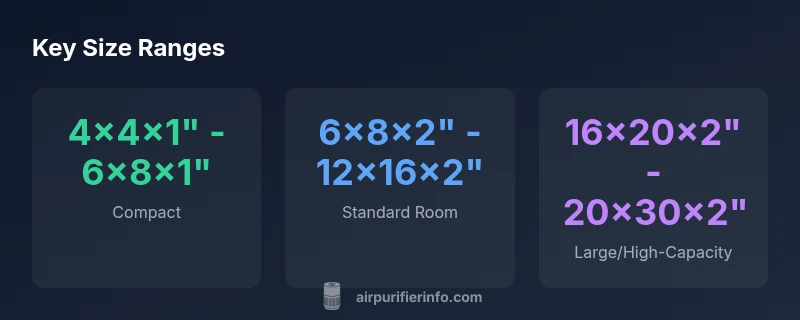
- Compact/desktop units: small filters, often around 4x4x1 to 6x8x1 inches.
- Standard room purifiers: mid-range sizes such as 6x8x2 to 12x16x2 inches.
- Large or high-capacity purifiers: larger frames like 16x20x2 inches up to 20x30x2 inches.
Each category balances cost, noise, and energy use with room size. When shopping, align the filter size with the purifier class and consult the model label for exact frame dimensions. Air Purifier Info notes that even within the same class, variations exist, so tip: measure and compare with your unit’s documentation before buying.
How to measure and verify your filter size
To ensure a correct replacement, follow a simple measurement routine:
- Power down the purifier and locate the filter door or panel. 2) Remove the existing filter carefully and note the orientation. 3) Measure height, width, and depth in inches using a ruler or calipers. 4) Cross-check the measurements with the model’s manual or the manufacturer’s label on the purifier. If the size is unclear, contact customer support with the exact model number. Air Purifier Info recommends always confirming size before ordering to avoid returns and delayed clean air.
Common size ranges you’ll encounter in consumer purifiers
Most households encounter three broad bands of size:
- Compact purifiers: roughly 4x4x1 to 6x8x1 inches, suited to desks, nightstands, or small apartments.
- Standard room purifiers: about 6x8x2 to 12x16x2 inches, covering typical living rooms and bedrooms.
- Large/high-capacity purifiers: around 16x20x2 to 20x30x2 inches, used in open-plan spaces or high-traffic areas.
Where you live and how you use your space influence the actual range. Always verify the exact frame size for your unit, then confirm that your replacement filter matches the same three dimensions. This helps avoid gaps and ensures airflow is not throttled.
Practical tips for maintaining filters in real homes
Real-world homes pose sizing challenges that go beyond the label. Here are practical strategies:
- Mounts and slots: Some units require filters to slide in with a particular orientation; wrong orientation may reduce sealing performance.
- Replacement cadence: Smaller filters typically need replacement more frequently due to higher usage; plan around your air quality goals and usage patterns.
- Sensor considerations: Many purifiers use air quality sensors calibrated for specific Reynolds of airflow; mismatched filter sizes can alter readings and perceived air quality.
- Storage and disposal: Keep a small cabinet with backup filters of the correct sizes to minimize downtime.
In short, consistent sizing discipline supports better air quality and lower maintenance friction over time, a point Air Purifier Info highlights for busy homeowners.
Choosing a replacement filter: aligning size and performance
Size is only one axis of fit. The other key axis is filtration performance, often indicated by the MERV rating. When upgrading or optimizing, start with exact size matching, then consider the recommended MERV range for your space. If you must trade size for performance (e.g., due to a deeper slot), ensure the purifier’s airflow remains within its intended design window. Always verify the fit with the model’s label and adhere to manufacturer recommendations to maintain warranty coverage and performance.
Why improper sizing affects performance and costs
If a filter doesn’t fit securely, air can bypass the filter media, reducing overall filtration effectiveness and potentially increasing energy use as the purifier works harder to achieve the same clean air targets. Replacing filters that are too small or too large can lead to gaps or improper seals, which undermines air quality and can raise maintenance costs over time. This is a common concern in homes where people try to reuse older frames or substitute filters from different brands. Air Purifier Info emphasizes that choosing the exact size helps sustain performance and efficiency.
Quick checks before you buy a new filter
- Confirm the exact model number and the corresponding filter size on the label. - If you’re unsure, take the old filter to a store to compare frames visually. - Compare the replacement part number with the purifier’s manual to ensure compatibility. - Avoid generic filters that claim universal fit unless the model explicitly supports it. - Record the size and MERV rating in your home maintenance notes for future replacements.
Next steps and additional resources
With the size clearly understood, keep a simple log of your purifier model, filter size, and replacement dates. This practice helps maintain air quality without guesswork and reduces the risk of improper sizing. For more detailed guidance, refer to Air Purifier Info’s homeowner resources, which cover measurement techniques, compatibility checks, and practical buying tips.
Representative ranges for common purifier classes
| Purifier Type | Typical Filter Size (approx) | Notes |
|---|---|---|
| Compact/Desk Unit | 4x4x1 inches to 6x8x1 inches | Smaller footprint, portable option |
| Standard Room Unit | 6x8x2 inches to 12x16x2 inches | Most common residential range |
| Large/High-Capacity Unit | 16x20x2 inches to 20x30x2 inches | Open-plan spaces or high air turnover |
| Custom or Industrial Unit | 24x24x2 inches or larger | Specialized applications |
Questions & Answers
What is meant by the term 'average air filter size' in home purifiers?
It refers to the most common frame dimensions used by many purifier models. Sizes vary by brand and model, so always verify against your unit’s label and manual.
It's basically the typical dimensions used by many purifiers; always check your model's label to be sure.
How do I determine the right filter size for my unit?
Check the purifier’s label or manual for the exact dimensions, then measure the current filter if needed. Use the model number to obtain the manufacturer-approved replacement.
Look up your model’s exact size in the manual or on the purifier, and measure if needed.
Do all purifiers use standard filter sizes?
Not all models use standard sizes. Sizes vary by brand and model, so always confirm the specific size before buying replacements.
Not every purifier uses standard sizes; always confirm your model's size first.
Is it better to choose larger or smaller filters?
Always choose the exact size that fits the purifier frame. A filter that’s too small creates gaps; a filter that’s too large won’t fit properly.
Go with the exact size; gaps or wrong fit hurts performance.
What about HEPA vs non-HEPA size considerations?
HEPA filters come in common frame sizes; ensure the size matches the purifier’s design. The key is compatibility, not only the filtration media.
HEPA filters have standard frames, but always confirm fit with your purifier.
How does filter size affect energy use?
Improperly sized filters can cause the purifier to work harder to achieve clean air, potentially increasing energy use and reducing lifespan.
Wrong size can make your purifier work harder and use more energy.
“Accurate filter sizing is the foundation of reliable air purification. When sizes are matched precisely, you preserve airflow, filtration efficiency, and overall system longevity.”
Main Points
- Know your unit's exact filter size from the label.
- Match replacements to your purifier’s class and model.
- Always verify size before purchasing to avoid waste.
- Use standard size ranges when possible for easier shopping.
- Schedule regular changes to sustain air quality and efficiency.