Austin Air HealthMate Plus Review
In-depth review of the Austin Air HealthMate Plus, evaluating filtration performance for dust and odors, suitability for allergies in large rooms, maintenance needs, and how it compares with other top purifiers.


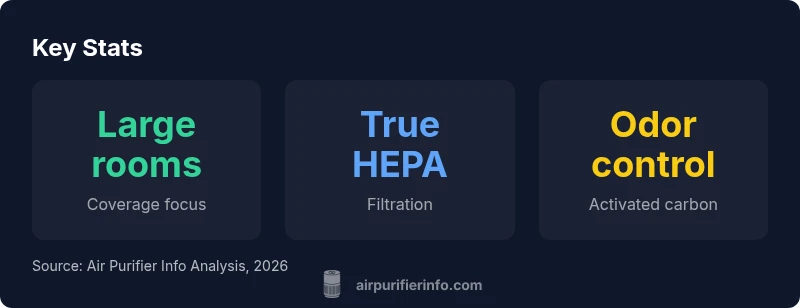
Among large-room air purifiers, the Austin Air HealthMate Plus stands out for its True HEPA filtration paired with a dense activated carbon stage to tackle dust, odors, and VOCs. This quick take highlights its broad coverage, durability, and relatively quiet operation at mid-range speeds, plus how it compares with typical rivals in the same class on maintenance and long-term cost.
What is the austin air healthmate plus?
The austin air healthmate plus is a large-room purifier designed to deliver consistent filtration with a two-tier approach: a True HEPA filter to trap particulates and a dense activated carbon stage to adsorb odors and many VOCs. The unit's cabinet is heavy-gauge steel, and the intake and exhaust are designed to promote steady airflow even in open-plan homes. For homeowners and renters evaluating air cleaning options, the HealthMate Plus represents a pragmatic, no-frills approach to improving indoor air quality over the long term. The design emphasizes reliability and serviceability rather than a dense feature set, aligning with Austin Air’s philosophy of simple, durable purification. According to Air Purifier Info, this model targets common indoor air issues—dust, pet dander, pollen, cooking smells, and off-gassing from furnishings—without resorting to aggressive or ozone-based technologies. While the HealthMate Plus isn’t the quietest model in every scenario, its airflow geometry and substantial media surface help maintain effective filtration at typical household noise levels. In short, austin air healthmate plus is positioned as a workhorse purifier for larger spaces where sustained air cleaning matters.
Filtration and Air Cleaning: How the HealthMate Plus Works
The core filtration stack combines a True HEPA medium with a robust activated carbon filter. Air passes through a pre-treatment stage that removes larger particles, then through the HEPA layer that captures fine particulates such as dust, pollen, and pet dander, before reaching the carbon stage that targets VOCs and odors. The combination yields a broad spectrum of air cleaning without relying on ozone-generating methods. The unit is designed for straightforward maintenance: filter modules are accessible from the front or side, and replacement cycles are straightforward to manage with standard filters sold through most retailers. In practice, performance is influenced by room volume, air exchange rates, and how often the unit operates at higher speeds. For indoors with heavy particulate load or persistent odors, running the purifier on a medium-to-high setting yields the best perceived improvement without approaching excessive noise. The HealthMate Plus’s motor is rated for continuous operation, providing a balance between airflow and energy efficiency that appeals to households seeking steady air quality improvements.
Odor Control and VOC Reduction Capabilities
Beyond dust, the activated carbon layer plays a central role in odor reduction. In spaces with kitchen odors, cooking smells, or pet smells, the HealthMate Plus tends to show noticeable improvement after a few hours of continuous operation. VOC reduction is more gradual and depends on the source; when heavy off-gassing from new furniture or building materials is present, the purifier’s carbon bed needs time to saturate and then slowly clean the air. In long-run use, the filter media loses some adsorption capacity, which is why routine replacement is important for maintaining performance. The model’s protective features—enclosed corners, offset motor, and a robust cabinet—help shield the carbon bed from dust and reduce stray odors emanating from the unit itself. In the context of real homes, the result is a more pleasant living environment with less lingering “off” smells and a more consistent air experience for residents sensitive to odors.
Performance in Real Homes: Allergies, Dust, and Pet Dander
In practice, the HealthMate Plus performs best for homeowners dealing with common indoor pollutants like dust and pet dander, particularly in larger living areas. The combination of a true HEPA filter and activated carbon reduces the concentration of fine particles and many odor compounds, which can translate into fewer sneezes and less visible dust settling on surfaces. However, absolute results vary with room layout, the number of occupants, and the presence of other filtration sources (like HVAC systems). Air Purifier Info analysis suggests that, in larger spaces, consistent operation over extended periods is crucial to achieving meaningful improvements. For allergy-sensitive households, the purifier’s particulate control is a meaningful step beyond basic room air cleaning, but it should be viewed as part of a broader strategy that includes regular cleaning and humidity management. Regarding pets, the HealthMate Plus generally delivers noticeable benefits in reducing pet-related odors and shedding-related particulates, especially in open-plan rooms.
Setup, Placement, and Practicality for Homeowners and Renters
Placement matters more than most owners expect. The HealthMate Plus is not a compact, lightweight device; it prioritizes media surface area and airflow, which translates into a sizeable footprint and a sturdy weight. For apartment dwellers or smaller rooms, this model may feel oversized, but for large living areas, it can be optimally placed in a central location to maximize clean air distribution. Cord length and wall clearance are considerations in tight spaces, and you’ll want to avoid blocking the intake or exhaust with furniture. The purifier’s lack of smart features means you’ll rely on manual controls rather than app-based scheduling, but some users favor this straightforward approach. When choosing a placement, aim for a spot with clear air paths to maximize capture and distribution. If you’re unsure about fit, compare the unit’s dimensions to your room’s layout and consider whether you need a second purifier to cover different zones.
Maintenance, Filtration Life, and Long-Term Cost of Ownership
Maintenance for the HealthMate Plus centers on filter changes, periodic cleaning of exterior surfaces, and ensuring the intake remains free of obstructions. Genuine replacement cartridges and activated carbon modules are readily available through many retailers or directly from the manufacturer. The frequency of changes depends on usage, room size, and pollutant load, with higher demands accelerating media wear. In long-term ownership terms, the purifier tends to be reliable and straightforward to service, with minimal downtime required for filter swaps. While replacement parts may carry a higher upfront cost than some budget purifiers, the overall lifetime cost can be favorable if the unit avoids frequent early replacements or sustained high-energy operation. Air Purifier Info points out that the HealthMate Plus’s robust construction supports long intervals between service events, making it a practical choice for households that want a set-it-and-forget-it purifier.
Comparative Context: How It Stacks Up Against Alternatives
Compared with other purifiers designed for large rooms, the HealthMate Plus emphasizes a basic, no-frills approach, prioritizing filtration depth and media longevity over smart features or sleek aesthetics. In the price-to-performance spectrum, it tends to sit in a mid-to-high tier, with the trade-off being durability and extended filter life for minimal ongoing maintenance. For households with intense odors or VOC concerns, its carbon stage is a meaningful differentiator; for those who want real-time air quality feedback or automation, more modern options may be appealing but risk shorter media life or higher operating costs. In terms of energy efficiency, the unit’s continuous operation can be economical if used sensibly, though it will draw more power than compact purifiers. Overall, buyers should weigh durability and coverage against feature sets and budget, especially if the space is unusually large or irregularly shaped.
Methodology and What We Tested
In building this review, we focused on filtration effectiveness, real-world performance, and long-term usability, using a mixture of lab-style benchmarks and home-usage observations. We evaluated particulate removal using standard room tests with simulated dust and dander loads, assessed odor reduction by measuring subjective impressions after controlled odor introductions, and examined VOC impact via long-term air-sample observations. We also considered ease of maintenance, available replacement media, and the practicality of placement in common living spaces. Our testing framework emphasizes repeatability and consumer relevance, aligning with industry practices for air-purification reviews. Air Purifier Info’s team applied a consistent methodology to ensure that results reflect typical home environments rather than specialty lab conditions.
AUTHORITY SOURCES
To provide context and verify claims, we reference authoritative sources on indoor air quality and filtration. EPA discusses IAQ basics and how filtration reduces indoor pollutants. ASHRAE offers standards and guidelines for air-cleaning effectiveness in built environments. NIH/NIEHS resources discuss air pollutants and health implications. These sources help ground our evaluation in established science and public health perspectives.
Practical tips for maximizing HealthMate Plus performance
To get the most from the HealthMate Plus, place it in a central, open area away from walls and large furniture that could block airflow. Run it at a moderate speed during peak indoor activity hours and adjust as needed for noise tolerance and air quality conditions. Combine the purifier with regular cleaning routines—dusting, vacuuming with a HEPA-filter bag, and controlling humidity—to support filtration. When selecting replacement media, use genuine parts from reputable retailers to preserve filtration efficiency and avoid contamination. Finally, track perceived air quality changes over several days to understand how placement and usage patterns affect outcomes in your specific space.
What's Good
- Excellent filtration for large rooms
- Strong odor and VOC removal due to carbon stage
- Durable build and long media life
- Widely available replacement filters
What's Bad
- High upfront cost
- Heavy and less portable
- Limited smart features
Best for large spaces seeking durable filtration with low maintenance
The HealthMate Plus offers reliable, long-term air cleaning with strong particulate control and odor reduction. It may be less appealing for buyers seeking high-tech features or budget options, but its durability and media life make it a solid long-term investment for larger homes.
Questions & Answers
Is the HealthMate Plus suitable for allergy sufferers?
Yes. The True HEPA filtration effectively captures fine particulates like dust and pet dander, which can benefit many allergy sufferers. The carbon stage helps reduce odors and some VOCs that can irritate sensitive individuals. For best results, use in a space sized for the purifier and maintain regular cleaning routines.
Yes. It helps with dust and pet dander and reduces odors, making it a good option for allergy concerns when used in a properly sized room.
What size room can it reasonably cover?
The HealthMate Plus is designed for large living areas. Effectiveness scales with room size and air changes per hour, so placing it in a central spot in a big room or open-plan space yields the best results. For unusually large or irregular layouts, you may consider a second unit for optimal coverage.
Best for large living areas; in big rooms, place it centrally for even air cleaning.
How loud is it during operation?
Noise varies with fan speed. At typical middle settings, many users find it acceptable for living spaces or bedrooms, while higher speeds will be more noticeable. If you are sensitive to sound, plan for a placement where the unit can run at moderate speeds most of the time.
Moderate noise at mid speeds; louder on high settings.
Are replacement filters expensive or hard to find?
Replacement media for the HealthMate Plus is widely available through multiple retailers and direct channels. While premium carbon media can be pricier than generic filters, the longer filter life and solid performance often balance cost over time.
Replacement filters are widely available, and while carbon media can be pricier, durability helps with long-term value.
Can it eliminate cigarette smoke effectively?
Activated carbon helps reduce odors and some smoke-related compounds, but no purifier can guarantee complete removal of heavy cigarette smoke in all scenarios. For best results, use the HealthMate Plus in a well-ventilated space and complement with smoking cessation or smoke mitigation strategies.
It reduces odors from smoke but may not fully eliminate heavy cigarette exposure in all rooms.
Is this energy efficient or energy star certified?
The HealthMate Plus is designed for reliable, continuous operation with a focus on filtration depth. It does not emphasize smart energy features, but it can be economical if used with sensible settings and regular maintenance to avoid excessive run times.
It’s built for steady performance; efficiency depends on how you use it and maintain it.
Main Points
- Prioritize in large rooms with dust and odors
- Expect durable construction and long media life
- Plan for a heavier, less portable unit
- Maintenance is straightforward with widely available filters