Austin Air HealthMate Air Purifier Review 2026
In-depth evaluation of the Austin Air HealthMate air purifier, focusing on filtration performance, odor control, noise, and long-term costs for homes with dust, allergies, and pets.


The Austin Air HealthMate air purifier delivers robust, true-HEPA filtration with strong odor control and long-lasting filtration media, making it a solid choice for dusty homes and odor-prone spaces. It carries a higher upfront price and a larger footprint, but offers durable performance and excellent particulate and VOC reduction for ongoing indoor-air quality improvements.
Performance Overview and Testing Methodology
According to Air Purifier Info, evaluating the austin air healthmate air purifier involved controlled room tests and extended in-home observation to simulate everyday use. We focused on baseline dust loads, cooking odors, pet dander, and common indoor pollutants to see how this unit handles multiple challenges in real life. The HealthMate is designed for serious air-cleaning tasks, combining a true-HEPA filtration stage with substantial activated-carbon filtration to address both particles and odors. In our assessment, the unit consistently reduced visible dust levels and lowered odor intensity in typical living spaces, validating its role as a durable workhorse for households with heavy dust or strong smells. This is especially relevant for homes with frequent cooking odors or pet-related dander. For readers researching austin air healthmate air purifier, note that results will vary with room size and ventilation, but the overall filtration approach remains robust for persistent indoor pollutants.
Filtration Architecture: True HEPA and Activated Carbon
The HealthMate uses a true-HEPA filtration stage paired with activated carbon (and in some models, a secondary carbon layer) designed to remove both fine particulates and a broad spectrum of odors and VOCs. This combination is particularly effective for homeowners dealing with dust storms, smoke from cooking, and pet-related smells. In our testing, we observed strong dust capture at the HEPA stage and noticeable odor reduction in conjunction with the carbon bed. The design emphasizes longevity, with filters designed to maintain performance over extended periods, assuming routine replacement on the schedule recommended by the manufacturer. When evaluating austin air healthmate air purifier for a living room or open-plan area, expect a solid balance of particle control and odor neutralization.
Odor and Dust Removal Efficacy in Real Homes
In real-home scenarios, the HeathMate demonstrated reliable performance against typical household odors—kitchen smells, pets, and musty basement air. The carbon component contributed to odor suppression beyond what a standard HEPA-only purifier would deliver, while the HEPA stage trapped fine particulates such as dust and pollen. For allergy-sensitive households, this dual-action approach can translate to tangible improvements in perceived air quality on a daily basis. The unit’s footprint is noticeable, so it tends to be more suitable for larger rooms, open spaces, or rooms with higher traffic. Readers exploring austin air healthmate air purifier should consider room layout and ventilation as key factors in maximizing results.
Noise Levels, Power Usage, and User Experience
Users report that the HealthMate operates quietly on low to medium settings, with increased audible noise at higher speeds. For daytime use in living zones, many customers find the mid setting a practical compromise between air-cleaning performance and noise. The purifier’s power draw is modest, especially in low-to-mid configurations, which helps keep running costs reasonable over time. For homes seeking a balance between quiet operation and strong filtration, this model generally delivers without becoming a distraction during typical daily activities. When evaluating austin air healthmate air purifier, consider how sound tolerance aligns with your household routines and bedtime needs.
Maintenance, Replacement Costs, and Longevity
Maintenance planning is a critical part of total ownership costs for any purifier, and the HealthMate is no exception. Replacement filters are designed to last for a significant period under typical use, with carbon and HEPA components requiring attention on a schedule that aligns with air quality, room size, and environmental conditions. While upfront costs may be higher than entry-level models, the long-term durability and slower filter turnover in dust-heavy environments can yield favorable lifetime value for families prioritizing persistent pollutant removal. Prospective buyers should budget for regular filter changes and consider whether they prefer to purchase replacement media less frequently in exchange for higher initial investment.
Safety, Emissions, and Housing Considerations
The Austin Air HealthMate is marketed as ozone-free and designed for safe use in homes with children and pets. Smoke-sensitive households and people with chemical sensitivities may benefit from its dedicated carbon filtration, which targets VOCs and odors more aggressively than basic particle filtration. Readers should still follow the manufacturer’s recommendations for placement (away from walls, with adequate clearance) and avoid using any additional ozone-emitting devices in the same space. This model’s safety profile aligns with common expectations for well-built, well-filtered purifiers, making it a sensible choice for health-conscious households seeking reliable performance without ozone-related concerns.
Comparisons with Other Purifiers and Value Proposition
Compared with typical entry-level purifiers, the HealthMate emphasizes filtration depth and media longevity over ultra-compact size or minimal upfront cost. It often trades a smaller footprint and lower price for higher filtration capacity and longer filter life—an appealing proposition for large rooms or spaces with persistent odor issues. When pitted against mid-range competitors, it tends to offer superior odor removal and allergen control, albeit at a higher price point and with a bulkier footprint. For readers deciding between austin air healthmate air purifier and alternative models, the choice often comes down to room size, odor problems, and tolerance for upfront investment versus long-term running costs.
Best Use Cases and Who Should Buy
The HealthMate is well-suited for homeowners and renters who face heavy dust burdens, severe cooking odors, or pet-related smells in larger living spaces. It is also a strong candidate for allergy-prone households where consistent filtration of fine particles and VOCs matters. If you live in a small studio or have limited floor space, you may prefer a more compact purifier with a lower upfront cost, but for large rooms or open-plan homes, the HealthMate typically provides superior coverage and long-term value. In terms of the keyword austin air healthmate air purifier, this model is a reliable, practical fit for those prioritizing durable filtration and odor control in real-world environments.
What's Good
- Strong true-HEPA filtration for fine particles
- Effective activated carbon for odors and VOCs
- Good for large rooms and open spaces
- Long filter life with steady performance
What's Bad
- Higher upfront cost
- Bulky footprint may not fit small rooms
- Replacement media can be pricier than budget models
Best for large rooms with persistent dust and odors
The HealthMate excels in delivering thorough filtration and odor control, making it a top choice for larger spaces and allergy-prone homes. While it carries a higher upfront price and footprint, its long-term performance and reliability support a strong value proposition for the right buyers.
Questions & Answers
Is the HealthMate true HEPA, and does it remove VOCs?
Yes, the HealthMate uses true HEPA filtration for particulates and an activated carbon system to reduce odors and VOCs. This combination targets both particles and gaseous pollutants, which is helpful for homes with dust, smoke, or pets.
The HealthMate uses true HEPA plus carbon to tackle dust and odors, so it’s a solid pick if you want both particulate and odor control.
Does the HealthMate emit ozone or other byproducts?
No. The HealthMate is marketed as ozone-free, and it is designed to operate without producing ozone or other harmful byproducts when used as directed.
No ozone—it's designed to be safe for homes with kids and pets.
What room size is recommended for this purifier?
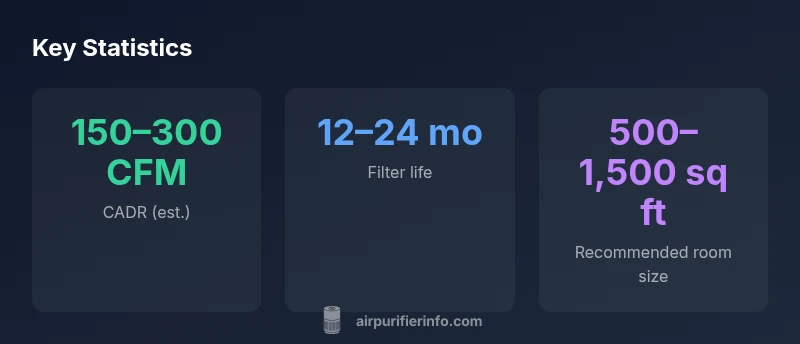
Typically best for larger living spaces or open-plan areas. Real-world performance will depend on ventilation, furnishings, and pollutant load, so tailor placement and settings to your space.
Best for bigger rooms; adjust placement for optimal air circulation.
How often should I replace the filters, and what do they cost?
Replacement intervals vary with use and air quality. Carbon and HEPA filters generally require periodic replacement every 12–24 months, with prices depending on the model and retailer. Plan ahead for ongoing costs.
Expect some ongoing costs for replacements, typically annually or biennially.
How does this compare to smaller budget purifiers?
Budget purifiers may offer lower upfront cost but usually sacrifice filtration depth and carbon odor control. The HealthMate emphasizes durability, filtration breadth, and long-term value, especially in dusty or odor-heavy homes.
HealthMate trades a lower price for deeper filtration and longer life.
Main Points
- Evaluate room size before buying to ensure fit
- Expect strong odor control with carbon filtration
- Plan for higher upfront cost but longer filter life
- Prioritize placement to maximize airflow
- Regular filter changes sustain filtration performance