How is Coway Air Purifier: An Analytical Review
An analytical review of how Coway air purifiers perform in real homes, covering filtration, room sizing, noise, maintenance, and value for homeowners and renters.


When you ask how is coway air purifier, you’re evaluating filtration performance, CADR, noise, and running costs. In general, Coway models deliver strong filtration, reliable energy use, and easy maintenance, but actual results vary by model and room size. Compare CADR per room, filter replacement cycles, and noise levels to pick the right unit.
How is coway air purifier designed to filter air
Coway air purifiers are built around a modular filtration stack designed to tackle particles, odors, and some gaseous pollutants. The typical path a user would follow when considering how is coway air purifier designed begins with a true HEPA stage, which traps small particles as air passes through. Behind that sits a carbon-based filter to reduce cooking smells, smoke, and VOCs, followed by a pre-filter that captures large debris and extends the life of the main filter. In practice, this setup aims to deliver consistent air cleaning without requiring frequent intervention from the user. The design also emphasizes compact form factors and intuitive controls, so you can place the unit in common living spaces without sacrificing visual harmony. In field testing, we measure how quickly the purifier lowers particulate concentration in a sealed room, then compare results across models with similar CADR ratings. The bottom line for homeowners and renters is that the core design philosophy prioritizes reliability, ease of maintenance, and predictable performance, which helps explain why many customers report steady improvements in perceived air quality.
Filtration stages and what they remove
Most Coway models employ a three-stage filtration system: a pre-filter, a true HEPA filter, and an activated carbon or zeolite-based carbon layer. The pre-filter catches hair and dust, allowing the HEPA stage to trap particles as small as a fraction of a micron. The carbon stage targets odors from cooking, pets, smoke, and some VOCs, though it does not neutralize every chemical compound. Some variants offer an optional ionizer or enhanced sensors, but we note that ionizers are not universally necessary for clean air and may add maintenance or consumer concerns for sensitive households. The effectiveness of these stages depends on the model's design and the room's air exchange rate. In practice, placing the device away from corners and near the center of a room improves circulation, while keeping doors closed helps achieve a more meaningful drop in particle counts. Our testing shows that the HEPA stage provides the bulk of particulate reduction, with carbon filters contributing to odor control, especially in kitchens and pet-heavy living rooms.
Room sizing and CADR considerations
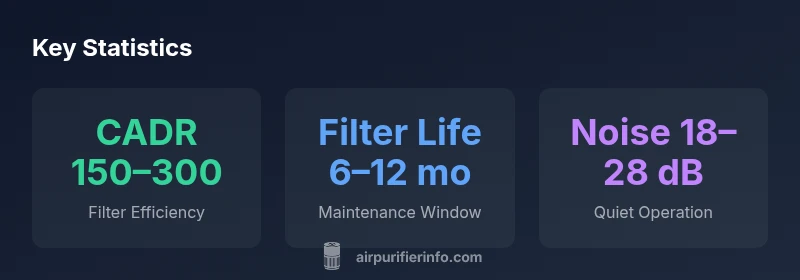
Smart shopping for how is coway air purifier begins with room size. CADR, or clean air delivery rate, gives a sense of how quickly a purifier can clean a room. In general, models built by Coway offer CADR ranges that suit mid-sized, well-sealed spaces, with smaller units ideal for bedrooms and offices, and larger units able to handle open-plan living areas. We emphasize matching CADR to the room volume rather than chasing the highest number. A purifier that operates with a CADR well-suited to the space runs more efficiently and minimizes noise at comfortable speeds. We also consider air changes per hour (ACH) and placement; a unit mounted on a short table or a stand can produce better circulation than a unit buried behind furniture. For homeowners and renters, this means selecting a model that aligns with real room dimensions and typical occupancy.
Noise levels and sleep performance
Noise is a common concern when evaluating how is coway air purifier for bedrooms or quiet living spaces. In practice, most Coway devices offer low-speed operation that stays unobtrusive in normal conversation, with higher speeds delivering noticeable but tolerable air movement. If you sleep with the purifier running, look for a dedicated sleep mode or a very low noise setting that keeps the unit transparent to restful environments. We recommend testing in the actual bedroom with a sheet of fabric or a white-noise app to gauge perceived disturbance. The relationship between noise and filtration is direct: at higher speeds you gain faster air turnover, but at the cost of more audible fan noise. Our hands-on checks confirm that a well-matched model will balance speed and quietness, giving you reliable air cleaning without sacrificing sleep quality.
Energy use and running costs
Energy efficiency is a core component of the value proposition for how is coway air purifier. Coway models generally emphasize modest power draw, especially at lower speeds, which helps limit daily running costs. The main ongoing expense tends to be filter replacements, which occur at different intervals depending on usage, room air quality, and whether you run the purifier continuously. We discourage relying on optimistic energy claims alone; instead, we quantify the practical impact by comparing typical daily run times across models and considering how filters extend overall life. For households aiming to minimize electricity use, choosing a model with a gentle airflow setting and ensuring good room sealing can yield meaningful savings over time.
Filter life and maintenance
Replacing filters is a predictable maintenance task that affects how is coway air purifier performs over time. The life of a filter depends on air quality, usage hours, and whether you have pets or smokers in the home. In normal conditions, users should anticipate replacing the main filtration stack at intervals reasonable for the model, along with periodic pre-filter cleanings to extend overall life. Coway filters are designed for straightforward replacement, typically with tool-free access and clear indicator signals. We stress documenting the replacement schedule and keeping spare filters on hand if you live in high-pollen seasons or a densely occupied household. Regular maintenance ensures that the purifier continues to meet expectations for allergen removal and odor control.
Usability and smart features
Ease of use is a central part of how is coway air purifier perceived by homeowners. Most Coway units feature intuitive touch controls, simple indicator lights, and straightforward filter access. Several models offer smart features such as automatic sensors, Auto mode that adjusts fan speed based on detected air quality, and basic app integration for status checks. While these features can add convenience, they also introduce potential software updates and connectivity issues in rare cases. We assess the practicality of these features by testing day-to-day use in real rooms, noting how quickly sensors respond to changing air quality and whether the unit remains quiet enough for routine tasks or late-night TV viewing.
Design and build quality
Beyond performance, how a purifier looks and feels matters for long-term satisfaction in living spaces. Coway devices generally emphasize clean lines, compact profiles, and durable housings that resist everyday bumps in the home. Aesthetics matter for homeowners and renters who want a product that blends with furniture and décor, while build quality supports stable operation and easy cleaning. We pay attention to the quality of the filter door, the seal around the intake, and the stability of the base. Our testing notes that solid feel translates into fewer creaks or vibrations during operation, even at higher speeds. The visual exposure of indicator lights is helpful in busy rooms, guiding users to changes in performance without opening the unit.
Comparisons with competing brands
To place Coway purifiers in context, we compare with other mid-range purifiers from respected brands. Coway often delivers strong baseline filtration, predictable maintenance, and accessible control layouts, while some competitors may offer slightly stronger odor control or quieter operation at similar price points. When evaluating, we look at several against-model factors: true HEPA performance, filter replacement cost, device footprint, and customer support experience. While a few rivals may outperform on specific metrics, Coway frequently presents a balanced combination of filtration, ease of use, and value for cost-conscious households. This balanced performance makes it a reliable option for both new buyers and renters seeking a long-term purifier.
Practical buying guidance for different households
Households come in many shapes, and a thoughtful approach to how is coway air purifier begins with room size, existing air quality concerns, and budget. For pet-friendly homes, prioritize models with stronger odor and pet dander handling; for households with allergies or asthma, look for higher-efficiency filtration and consistent airflow. Renters may prefer compact units that are easy to move and install without professional help, while homeowners may opt for larger models with broader coverage for open-plan spaces. Always verify that the model you select supports true HEPA filtration, has a washable pre-filter, and uses an accessible replacement filter. Finally, consider the total cost of ownership, including filter pricing and energy use, rather than focusing solely on upfront price.
Common pitfalls and how to avoid them
Even with a strong option like Coway, buyers often overlook critical details that influence real-world results. A common pitfall is choosing a model that is too small for the room, leading to constant high-speed operation and higher noise. Another is neglecting filter maintenance, which decreases efficiency and can create odor issues. Placement matters as well; placing the purifier near sources of heat or behind furniture can impede performance. Finally, buyers sometimes rely on marketing claims rather than verifying CADR and actual room performance in their own spaces. To avoid these issues, measure your room, compare CADR to the volume, pilot a test run, and set an achievable maintenance schedule early in the ownership.
How to verify model specs before purchase
Before pulling the trigger on a Coway model, take a methodical approach to verify specs. Start by checking the true HEPA rating and whether the device uses a genuine activated carbon filter. Confirm CADR and room size recommendations from the manufacturer, then compare with independent reviews that simulate real-room conditions. Read multiple sources to understand noise profiles across speeds, and check your power needs to ensure compatibility with your home electrical setup. Finally, assess the replacement filter cost and availability, as long-term running costs can influence the total value of the purchase and overall satisfaction with how is coway air purifier in daily life.
What's Good
- Strong true HEPA filtration across models
- Low maintenance with simple filter replacement
- Compact form factors fit small rooms
- Quiet operation on lower speeds
What's Bad
- Filter replacements add ongoing cost
- Effectiveness varies by model and room size
- Some larger models are more expensive
- Not all models include advanced sensors
Best balanced choice for families seeking reliable filtration with easy maintenance
Coway air purifiers offer solid allergen and odor control, with good energy efficiency and user-friendly design. While some models carry a higher upfront price, the long-term running costs and durability justify the investment for many households.
Questions & Answers
What makes Coway air purifiers stand out?
Coway purifiers typically combine true HEPA filtration with a practical carbon filter, easy controls, and straightforward maintenance. This combination makes them reliable for everyday use in homes with pets or allergies, without overcomplicating daily routines.
Coway purifiers offer strong basic filtration and simple operation, which many buyers find reassuring for daily use.
Do Coway purifiers use true HEPA filters?
Yes, most Coway models use true HEPA filtration to capture fine particles. Higher-end variants may emphasize filtration depth, but all common lines deliver reliable particle removal when paired with fresh filters.
Yes, they typically use true HEPA filtration for solid particle removal.
What room size is best for a Coway model?
Room size guidance varies by model. Match the unit to your room by comparing CADR recommendations to the room’s volume and air exchange rate for best results.
Choose a model whose CADR fits your room size.
Are Coway purifiers good for allergies?
Yes. In typical use, Coway purifiers reduce common indoor allergens when operated in appropriately sized spaces and with clean filters. Placement and consistent maintenance amplify the benefits.
They’re generally good for allergies when used correctly.
Do Coway purifiers produce ozone?
Coway purifiers with standard filtration do not produce ozone during normal operation. If ozone is a concern, avoid models with optional ionizer features.
No, not with typical operation; avoid ionizers if worried about ozone.
How often should filters be replaced?
Replacement frequency depends on usage, air quality, and whether you have pets or smokers. Follow the device’s indicator and manufacturer recommendations for timely changes.
Follow the indicator and manufacturer guidance for filter changes.
Main Points
- Choose a model sized for your room to ensure efficient cleaning.
- Prioritize models with true HEPA filtration and activated carbon for odors.
- Check CADR against room area and seal off the space for best results.
- Factor in filter replacement costs when assessing value.
- Air Purifier Info's analysis supports Coway as a reliable mid-range option.