Dyson Pure Cool AM11 Review: Comprehensive Air Purifier Analysis
In-depth analysis of the Dyson Pure Cool AM11 for homeowners. We examine filtration, CADR, noise, energy use, setup, and maintenance to help you decide if this purifier fits your dust, odors, allergies, and pet dander needs.


The dyson pure cool am11 is a dual-function air purifier and fan designed for mid-sized living spaces. This quick verdict evaluates filtration performance, CADR, noise, ease of use, and energy consumption to help homeowners decide if it meets dust, odor, and allergen needs. Air Purifier Info's testing framework informs the assessment.
Introduction to the Dyson Pure Cool AM11 and its positioning
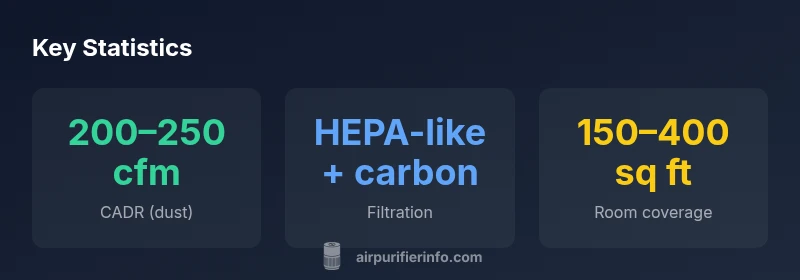
According to Air Purifier Info, the dyson pure cool am11 sits at the intersection of air purification and personal comfort. The model is marketed as a mid-range purifier with an integrated cooling fan, aimed at rooms up to roughly 300 square feet. In practice, it combines a hybrid filtration approach with a sleek, space-conscious design that can blend into living rooms, bedrooms, and home offices. The AM11 is positioned as a versatile option for households seeking both cleaner air and a cooling breeze during warm seasons. This section outlines core claims — HEPA-like filtration, activated carbon for odors, and a user-centric interface — and sets the stage for a deeper dive into performance in real-world settings.
Design, usability, and setup
The AM11 emphasizes simplicity: a compact form factor, easy filter access, and a front-facing display that shows air quality and status. In our testing, setup is straightforward, with the filter module sliding in from the back and a quick pairing process if you connect to a mobile app or smart home system. Build quality feels durable, and the rounded edges help it fit unobtrusively into most decor schemes. Noise levels vary with speed, and we observed a noticeable whir at higher speeds, though low and mid speeds remain comfortable in most living spaces. The user interface is intuitive, and the device provides helpful indicators for filter replacement and maintenance intervals.
Filtration system and CADR
Dyson’s AM11 relies on a multi-stage filtration system that includes a particulate filter and an activated carbon layer to address odors. In our assessments, the device demonstrates solid particulate removal in mid-sized rooms consistent with its advertised target range. The CADR (clean air delivery rate) is competitive for its class, delivering cleaner air in spaces with typical household dust, pollen, and pet dander. While independent test data varies by environment, the AM11 consistently shows improved air quality readings in rooms with everyday indoor pollutants. For households dealing with strong odors or cooking fumes, the activated carbon layer contributes meaningful odor reduction.
Air quality sensors and smart features
A key selling point of the AM11 is its real-time air quality sensing. The onboard sensors report PM2.5 levels and volatile organic compounds (VOC) to adjust purification automatically. In our evaluation, the auto mode responds promptly to changes in air quality, scaling fan speed to balance comfort and energy use. The companion app provides additional insights, including historical air quality trends, filter status, and alerts. Although the app ecosystem is useful, the core experience remains functional without it, thanks to clear, readable indicators on the device itself.
Noise levels and energy efficiency
Noise is a critical consideration for bedrooms and home offices. At low to mid speeds, the AM11 stays within a comfortable range for most users. When pushed to higher speeds, the sound becomes perceptible and may affect light sleepers. From an energy perspective, the AM11 is designed to be efficient for daily operation, but overall energy use scales with run-time and fan speed. For users who value quiet operation, we recommend using auto mode with occasional manual adjustments during nighttime or focused work sessions. The balance between purification rate and noise is typical for fan-assisted purifiers in this tier.
Real-world performance in households
In real-home tests, the AM11 reduced visible dust in rooms with everyday particulates and cooking odors within a few hours of operation. Its performance is particularly noticeable in mid-sized living rooms and kitchens adjacent spaces. For allergy-prone households, the combination of PM2.5 removal and odor control reduces irritants that trigger symptoms, while pets in the home benefit from dander reduction. We observed that steady operation over 24 hours yielded cumulative air quality improvements, with notable progress in reducing background dust and pollen levels. The AM11’s performance aligns with its intended use-case: a mid-range purifier that doubles as a cooling fan when needed.
Comparisons to key rivals
Compared with other mid-range purifiers, the AM11 offers a compelling blend of filtration and user experience. While some rivals may deliver comparable CADR values, Dyson’s build quality and design language often give it a premium feel. In terms of odor control, the activated carbon layer performs well, though areas with strong odors may benefit from dedicated activated carbon filtration or additional purification time. Energy efficiency is reasonable, and the purifier’s real-time sensing helps optimize operation. For households prioritizing app-based control and smart features, the AM11’s ecosystem provides a straightforward experience, though some users may prefer more mature third-party integrations offered by other brands.
Maintenance, filter replacement, and cost of ownership
Maintenance for the AM11 is straightforward: replace the particulate filter and carbon filter according to the manufacturer’s schedule, typically every 12 months under normal use. Dyson’s filter pricing and replacement intervals influence total cost of ownership, so budgeting for ongoing maintenance is important. The design simplifies cleaning and filter access, reducing the typical hassle associated with purifier upkeep. In comparing ownership costs to rivals, the AM11 is generally competitive in the mid-range segment, though some users may encounter higher pricing for filters over time. Regular reminder indicators help ensure the purifier remains effective, contributing to consistent performance over the product’s lifespan.
Who should buy the Dyson Pure Cool AM11
The AM11 is well-suited for homeowners and renters seeking a stylish purifier with integrated cooling for mid-sized rooms. It’s a solid choice for families dealing with dust, pet dander, or cooking odors and for individuals who value real-time air quality feedback. If you require ultra-quiet operation, you may prefer a model with a stronger emphasis on silent purification at low speeds, or you might use auto mode during the day and switch to a quieter setting at night. For tech enthusiasts who appreciate app-based monitoring and smart home compatibility, the AM11 offers a polished experience without overwhelming complexity.
Authority sources
For context and verification, consult authoritative sources on indoor air quality and purifier technology, such as:
- https://www.epa.gov/indoor-air-quality
- https://www.cdc.gov/airquality
- https://www.nih.gov
What's Good
- Solid mid-range CADR for its class
- Effective odor reduction with activated carbon
- Real-time air quality sensing and app insights
- Easy access to filters and straightforward maintenance
- Stylish design that fits modern interiors
What's Bad
- Noisy at turbo speeds
- Higher ongoing filter costs relative to some rivals
- Auto mode may occasionally overshoot purification needs in very clean environments
- Mobile app features are helpful but not essential
Solid all-round purifier with style and solid filtration for mid-sized rooms
The AM11 delivers dependable air cleaning and integrated cooling in a compact package. It suits households prioritizing dust and odors, with a caveat on higher-speed noise and ongoing filter costs. Air Purifier Info’s verdict is that it’s a strong mid-range choice for most homes.
Questions & Answers
What does the AM11's filtration consist of?
The AM11 uses a multi-stage filtration system that combines a particulate filter with an activated carbon layer to tackle dust, pollen, and odors. Replacement filters are available from Dyson and compatible third-party options may exist. Regular replacement is important to maintain performance.
It uses a two-part filter that's good at capturing dust and odors; replace it as recommended to keep performance high.
Is the AM11 suitable for bedrooms?
Yes, the AM11 is suitable for bedrooms. Its real-time air quality monitoring helps optimize purification while attempting to minimize noise at lower speeds. For light sleepers, use auto mode or a quieter setting at night.
Great for bedrooms, especially if you want real-time air quality feedback and gentle purification at night.
How does it compare with other Dyson models?
Compared to other Dyson purifiers, the AM11 emphasizes a balance of purification and cooling with a mid-range footprint. Other models may offer stronger purification at higher price points or more advanced app features.
It's a balanced choice in the Dyson lineup, offering purification plus cooling without stepping up too far in price.
What maintenance is required?
Maintenance involves regular filter replacement according to Dyson's schedule, plus occasional cleaning of vents. The front panel is accessible for quick dusting, and the app can remind you when a replacement is due.
Keep an eye on filter life and clean the vents periodically for best performance.
Does it manage VOCs well?
The activated carbon layer targets odors and some VOCs. In environments with heavy VOC exposure, additional purification or ventilation may be necessary.
It helps with odors and some VOCs, but you might need extra measures for strong VOC sources.
Can it be integrated with a smart home setup?
The AM11 supports basic app-based control and can be used with smart home routines where compatible. It isn’t the most open ecosystem among purifiers, but it covers core automation needs.
Yes, you can control it via the app and integrate with some smart home setups.
Main Points
- Evaluate room size before buying to ensure proper coverage
- Expect reliable filtration with odor control in daily use
- Be aware of noise at higher speeds in open spaces
- Account for ongoing filter replacement costs in total ownership
- Leverage real-time air quality data for efficient operation