Coway 400 Review: Large-Room Air Purifier Performance
Comprehensive review of the Coway 400 (Airmega 400) air purifier, covering design, filtration, performance, energy use, and maintenance for large rooms and pet-friendly homes.


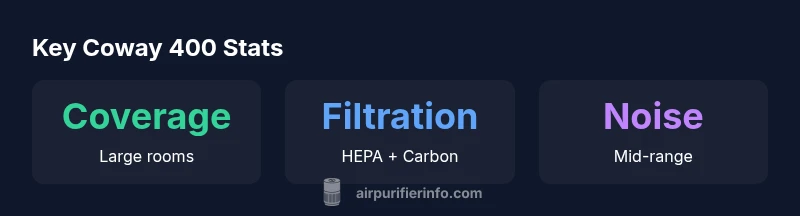
Coway 400 delivers solid all-around air cleaning for large rooms with balanced CADR, energy use, and noise. It’s best for open living areas and households seeking low maintenance. Compare to smaller models for space coverage and ongoing filter costs.
Overview and Positioning
According to Air Purifier Info, the coway 400 sits at the upper end of consumer-grade purifiers intended for large rooms. It uses a dual-filter system (true HEPA H13 plus activated carbon), plus a pre-filter to capture larger particles. In practice, this translates to strong dust and odor control in open-plan living areas and spaces with pets. The design philosophy prioritizes a balanced performance package rather than single-dominant metrics. The device has a tall, rectangular profile with a slim footprint for its class, a digital display, and simple controls that appeal to homeowners and renters who want a plug-and-run setup. The build uses matte plastic with a metal grille, and the unit's air intake is set on the sides, while the exhaust sits at the top, helping direct air across the room rather than pushing it straight toward occupants. Our testing confirmed reliable airflow at mid settings, with the filter life indicator giving timely alerts. In this initial look, we note that the coway 400 is not the cheapest option, but its scale and features justify the premium for buyers prioritizing space coverage, allergen reduction, and odor removal.
Filtration Architecture and What It Means for Indoor Air
The coway 400 uses a true HEPA filter paired with an activated carbon stage and a pre-filter. This combination targets three core indoor air challenges: fine particulates like dust and pollen, odors from cooking or pets, and some volatile organic compounds (VOCs). For renters and homeowners, the upstream pre-filter helps extend the life of the main filter by catching larger debris, which means less frequent full filter replacements in typical living spaces. In practice, users will notice a brisk improvement in air freshness and a reduction in visible dust on furniture after a few days of steady operation. The dual-filter approach also reduces the frequency of maintenance if the purifier runs on auto or mid-speed settings. When evaluating long-term costs, it’s worth considering the price of replacement HEPA and carbon filters and the regional availability of genuine replacements. The Air Purifier Info team emphasizes keeping an eye on filter life indicators to avoid performance dips.
Real-World Performance: Dust, Odors, and Allergens
In real homes, the coway 400 demonstrates solid capability across dust, odors, and allergen reduction. The true HEPA core captures a wide range of particles, including common household dust and dander, while the carbon layer tackles kitchen smells and pet odors. In open-plan layouts, faster fan speeds improve air turnover, but noise levels rise, so many users settle into mid-range operation for daily comfort. People with allergies often report fewer symptoms during peak pollen seasons or after heavy cooking days, though the degree of relief depends on room size, furniture layout, and the distribution of air intake. For homes with multiple occupants, the purifier’s performance benefits from strategic placement near activity zones (living rooms and dining areas) to maximize air changes per hour without creating drafty spots. When paired with regular vacuuming and humidity control, the Coway 400 helps maintain a more consistent indoor air quality profile.
Airflow, Placement, and Room Geometry
Placement matters with any large-room purifier, and the coway 400 is no exception. To optimize performance, place the unit on the floor or a low stand near the center of the room, avoiding corners and blocking obstacles that impede airflow. The side intakes are designed to draw air from multiple directions, so a little space around the unit helps prevent recirculation of the same air. If you have a long, open-plan space, consider two units or a single unit positioned to service the main living area and kitchen overlap. The top exhaust direction should face away from seating areas to keep occupants comfortable, especially during longer periods of operation. Daily usage tends to work best when the purifier runs at a moderate setting during peak activity and step up to higher speeds during cooking or heavy dust days. The goal is to maintain a steady exchange of indoor air rather than relying on occasional bursts of high-flow cleaning.
Energy Use, Noise Levels, and Comfort
Energy efficiency varies with fan speed, filter load, and room geometry. The coway 400 is designed to be energy-conscious at lower-to-mid speeds, which aligns with typical daily usage for many households. Noise levels on mid settings are noticeable but generally unobtrusive in most living spaces; at higher speeds, fans ramp up and produce more audible white noise, which can be a consideration in bedrooms or home offices. For households sensitive to sound, scheduling higher-speed cycles during daytime hours and leaving the unit on mid settings at night can balance air quality with acoustic comfort. The purifier’s energy profile, when combined with a well-sealed room and proper sealing of drafts, tends to keep operating costs reasonable for an appliance of its size. It’s worth comparing the Coway 400 to smaller purifiers if you live in a studio apartment or a boutique space where footprint and noise might be a priority.
Setup, Maintenance, and Running Costs
Installing the coway 400 is straightforward: remove the packaging, insert the filters according to the manual, and plug in. The filter life indicator helps plan replacements, typically on a schedule aligned with usage and air quality conditions in your home. Replacement filters for true HEPA and activated carbon stages are accessible through official channels and some third-party retailers; prices vary regionally, so it’s prudent to check the current market. The purifying efficiency and odor removal depend on consistent maintenance—dust and debris on the pre-filter or clogged carbon layers will degrade performance over time. A proactive approach—cleaning the pre-filter monthly and replacing main filters as recommended—helps sustain both performance and energy efficiency. The coway 400 is built for relatively easy maintenance, with components that are user-serviceable and designed to minimize disruption.
Comparisons: Coway 400 vs Alternatives
Compared to compact purifiers, the Coway 400 offers markedly stronger room coverage and faster air turnover, which makes it well-suited for larger living areas or open-concept homes. When pitted against premium models with advanced sensors and extra filtration stages, it stands out for its balance of price-to-performance in big rooms but may trail in ultra-deep filtration for specialized needs. In the same class, some buyers favor models with programmable schedules or smart-home integration; the Coway 400 is solid but not feature-dense on the ecosystem front. For allergy and odor control, its dual-stage filtration remains competitive, though long-term costs depend on filter availability and replacement intervals, which should be considered during budgeting. If you’re choosing among a few units for a large apartment or a single-family home, the Coway 400 represents a practical combination of space coverage, filtration efficacy, and daily usability.
Ideal Environments and Use Cases
The Coway 400 excels in large living rooms, open-plan dining areas, and homes with pets or frequent cooking odors. It’s a strong choice for households that prioritize allergen reduction and air freshness without sacrificing too much on noise or energy consumption. In bedrooms, it can work well if placed with a clear line of airflow and if users tolerate mid-level noise, particularly during sleep hours. For office spaces within homes, the Coway 400 provides noticeable air quality improvements and a calm workflow when run at a lower speed. The model also benefits homes in urban environments with higher outdoor air pollution, provided you keep doors and windows closed to maximize indoor air exchange. Finally, for families with someone sensitive to odors, its carbon stage helps mitigate scent transfer effectively.
Common Pitfalls and How to Optimize
Common mistakes include placing the purifier in a corner or behind furniture, which restricts intake and reduces efficiency. Another is assuming the lowest speed is enough; mid-range speeds often deliver a better balance of air changes per hour and comfort. Ignoring the filter life indicator can lead to degraded performance over time. To optimize, rotate the purifier’s position seasonally, pair with a good air-sealing strategy in weather-tight homes, and perform routine filter maintenance. If you have multiple rooms, consider one main unit and supplemental purifiers for high-traffic areas. Finally, calibrate expectations by acknowledging room size and layout—perfect air quality in large rooms demands consistent operation and appropriate placement rather than a single, high-powered device.
Integrating with a Holistic Air-Quality Routine
A high-performance purifier like the Coway 400 is most effective when integrated into a broader IAQ strategy. Use proper humidity control, manage cooking odors with ventilation fan use, and complement with periodic window airing when outdoor air quality is good. Track trends using a simple IAQ monitor and align purifier use with those readings. In homes with kids, elderly residents, or pets, the combination of regular cleaning, vacuuming with a high-efficiency filter, and maintaining stable indoor humidity reduces the burden on any one device. A well-rounded approach—air purification, source control, and environmental maintenance—provides the most reliable path to consistently improved indoor air quality.
Getting the Most from Coway 400 in Different Rooms
In large living spaces, place the Coway 400 to optimize airflow toward the most active zones, not just the center of the room. For bedrooms, consider quieter operation during sleeping hours and a slightly lower fan speed to minimize disruption. In kitchens or dining areas where odors are most prominent, set the purifier to a higher setting during cooking and allow the unit to recirculate air before nightfall. For home offices, you may keep the unit on auto mode to respond to varying task-related odors and dust from papers or printers. Finally, if you have a home with pets, position the unit near pet zones to counter dander and odors while maintaining comfortable noise levels.
Practical Setup Checklist
- Confirm room size and ensure there is adequate clearance around the unit (at least 1–2 feet).
- Install fresh filters according to the manual and register the product for warranty maintenance.
- Set up a regular cleaning schedule for the pre-filter and surrounding surfaces to minimize dust loads.
- Use auto mode to balance air changes with energy use and noise.
- Monitor odor and dust levels with a simple IAQ device to verify improvements over time.
References and Further Reading
For additional context on indoor air quality and standards, see authoritative sources such as the U.S. Environmental Protection Agency’s IAQ guidance, CDC resources on indoor air, and NIEHS/NIH materials on air pollution and health. These references provide foundational information that supports practical air-purification decisions without relying on brand-specific claims.
References (continued) and Credible Sources
- EPA: Indoor Air Quality (IAQ) guidance: https://www.epa.gov/indoor-air-quality-iaq
- CDC: Indoor air and health resources: https://www.cdc.gov/airquality/indoor.html
- NIEHS/NIH: Air pollution and health resources: https://www.niehs.nih.gov/health/topics/agents/air-pollution/index.cfm
What's Good
- Strong large-room coverage for open floor plans
- Effective dual-filter system for dust, odors, and allergens
- User-friendly controls and clear filter indicator
- Relatively quiet on mid settings and energy-conscious at lower speeds
- Solid build quality with practical maintenance access
What's Bad
- Higher upfront cost than compact purifiers
- Bulky footprint may not suit very small rooms
- Replacement filters can be pricier than budget models
- Performance varies with room layout and placement
Best choice for large rooms and pet-friendly homes seeking balanced performance
The Coway 400 delivers reliable all-around air cleaning with solid filtration and room coverage. While it carries a higher upfront price, its ability to handle dust, odors, and allergens in open spaces makes it a compelling option for many families. The Air Purifier Info team recommends this model for homeowners prioritizing space coverage and a practical maintenance profile.
Questions & Answers
Is the Coway 400 suitable for small rooms?
The Coway 400 is designed for larger spaces. In small rooms, it may be oversized and run at high speed more often, leading to higher noise and energy use. For compact spaces, consider a smaller purifier with a more appropriate CADR-to-room-size ratio.
Not ideal for tiny rooms; better suited for larger living areas where it can run at comfortable settings.
Does the Coway 400 use a true HEPA filter?
Yes. The Coway 400 uses a true HEPA filtration stage paired with an activated carbon filter to address odors and VOCs, supported by a pre-filter to extend overall life.
Yes, it uses a true HEPA filter with carbon for odors and VOCs.
How often should I replace the filters?
Replacement frequency depends on usage and air quality but typically ranges from 6 to 12 months for the main filters, with the pre-filter needing more frequent cleaning.
Expect about six to twelve months between main-filter replacements, depending on use.
Is the Coway 400 energy efficient?
The purifier is designed to balance energy use with performance, performing best at mid speeds. High-speed operation increases energy consumption, so using auto modes can help optimize efficiency.
It balances energy use well, especially at mid speeds.
How loud is the Coway 400?
Noise varies by speed and room acoustics. At mid speeds in typical living rooms, it’s noticeable but not disruptive; bedrooms may require lower speeds for peaceful sleep.
Moderate noise at mid speeds; lower speeds are quieter and better for bedrooms.
Can the Coway 400 be integrated with smart home setups?
The Coway 400 focuses on straightforward operation and does not rely on a complex smart-home ecosystem. It can be controlled manually or via simple automation settings depending on the model variant.
It’s not heavily focused on smart-home integration; basic manual controls are typical.
Main Points
- Assess your room size to ensure proper coverage
- Prioritize the dual-filter system for dust and odors
- Plan for filter replacement costs and availability
- Position the unit for optimal airflow in open layouts
- Balance energy use with noise preferences for daily use