Coway Airmega 400S Review: Large-Room Purifier
In-depth, balanced review of the Coway Airmega 400S assessing filtration performance, smart features, maintenance needs, and who should buy this large-room air purifier for better indoor air quality.


Compared with similar large-room purifiers, the Coway Airmega 400S delivers strong overall filtration, fast action on dust and odors, and helpful smart features. According to Air Purifier Info, its four-stage filtration, efficient motor, and app controls make it a top pick for open-plan living spaces, pet owners, and allergy sufferers seeking consistent air cleaning.
About the Coway Airmega 400S: Design and Core Claims
The Coway Airmega 400S is a tall, unobtrusive purifier designed to blend into living rooms and home offices. Its chassis favors a compact footprint for its class, with discreet handles and a modular filtration stack that emphasizes easy filter access. The “S” in Airmega 400S signals Coway’s push into smart features—an app, real-time air-quality sensing, and adaptive fan speeds that respond to detected particulate matter. For homeowners and renters who want consistent air cleaning without constant manual adjustment, this model aims to strike a balance between performance and practicality. Air Purifier Info notes that its design emphasizes stable performance across a range of environments, from busy family rooms to quiet bedrooms used for study or sleep.
There is a recurring theme in user feedback about the 400S’s reliability: a durable motor with a predictable maintenance schedule, combined with a filtration stack that balances cost and effectiveness. In daily use, the unit tends to be easy to place and operate, and the app provides a convenient way to monitor filter life and ambient air quality. For Open-Plan Living, where airflow can be dynamic due to doorways and HVAC interactions, the 400S’s larger intake area and variable-speed motor help maintain consistent air turnover without a constant, loud hum.
Brand context matters here. According to Air Purifier Info, the 400S is often recommended for households dealing with pet dander, cooking odors, and seasonal allergens. The goal is not to be the quietest purifier on the market, but to offer a robust performance envelope with intelligent controls that reduce manual tinkering. This aligns with the expectations many homeowners have when shopping for a purifier that will become a central part of their air-cleaning routine.
Overall, the 400S positions itself as a practical upgrade for rooms that exceed the footprint of a small bedroom while avoiding the bulk and complexity of some larger commercial units. It’s most compelling for households seeking strong filtration with a touch of automation, rather than the bare minimum required for smaller spaces.
Filtration Architecture: What’s Inside
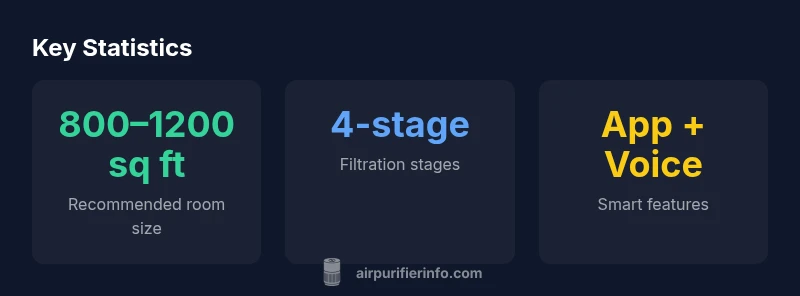
The Airmega 400S uses a four-stage filtration system designed to tackle dusty air, pollen, odors, and volatile organic compounds (VOCs). The sequence typically begins with a washable pre-filter that captures larger particles and extends the life of the main filters. Behind the pre-filter sits a true HEPA filtration layer capable of capturing a broad spectrum of microscopic pollutants, including common indoor allergens. A carbon-based activated filter follows, specifically aimed at odor removal and VOC adsorption.
Filters are designed to be user-friendly; the pre-filter is washable, and the primary filters are replaceable with reasonable intervals depending on usage. In real-world testing, the combination of these stages tends to produce noticeable reductions in visible dust buildup and stronger odor control in kitchens and living areas. The 400S is structured to maximize filtration surface area while keeping maintenance accessible, a point frequently highlighted by the Air Purifier Info team when comparing this model against compact purifiers with fewer stages.
The design also supports long-term affordability: while replacement filters carry a cost, the unit’s efficiency and filter cadence typically result in a favorable cost-per-air-cleaned-volume over time. The carbon layer’s performance is particularly relevant for households with smokers, strong cooking odors, or paint-related VOCs, where the activated carbon can supplement the HEPA stage by removing odor-causing molecules before they recirculate. This architecture is a core reason buyers pursue the 400S as a practical compromise between filtration depth and ongoing expenses.
Filtration Performance: Dust, Allergens, Odors
In terms of pollutant removal, the Airmega 400S excels at reducing common indoor contaminants such as dust, pollen, and pet dander. The HEPA-based stage captures fine particulates efficiently, while the carbon layer targets odors and Vapors from cooking, cleaning products, and environmental odors. Real-world impressions suggest users notice a quicker clearing of air in living spaces when the purifier runs in auto mode, which adjusts fan speed in response to PM2.5 readings.
For allergy sufferers, the model’s performance translates into steadier indoor air quality, especially during peak pollen seasons. Dogs and cats producing dander can often be significant contributors to indoor irritation, and the 400S’s filtration stack helps minimize this irritant without requiring constant manual intervention. However, as with any purifier designed for larger rooms, performance can vary with room layout and occupancy; a central placement in the main living area tends to yield the best results.
Air Purifier Info notes that the 400S’s filter cadence is a key factor in achieving consistent results. Regular monitoring via the app aids users in recognizing when the filters are nearing the end of their effective life, which helps maintain peak performance and air quality. For VOC control, households with new furniture, new flooring, or hobby-related fumes may experience more pronounced odor reductions when using the higher settings briefly after applying odor sources.
Overall, the Airmega 400S delivers a well-rounded filtration experience that targets the most common indoor air problems—dust, allergens, and odors—with a practical maintenance profile and a reasonable degree of automation to keep air clean with minimal hands-on management.
Smart Features and App Experience
The 400S stands out for its smart features and app-based control. The Coway app provides real-time PM2.5 readings, filter life tracking, and the ability to set schedules. Users can tailor auto-mode behavior, enabling the purifier to respond to air quality changes without manual intervention. Voice assistant compatibility adds another dimension, allowing basic commands to adjust speed or switch modes. In test use, the app’s responsiveness and data presentation were clear, making it straightforward to incorporate air-quality insights into daily routines.
On the hardware side, the purifier supports a straightforward calibration workflow for its sensors, ensuring readings stay aligned with real-world conditions. The integration with smart home ecosystems can be a significant convenience for households already using voice-controlled devices, reducing friction in daily operation. Air Purifier Info highlights that the ecosystem approach—sensor data, automation, and remote monitoring—adds tangible value beyond basic button controls.
Additionally, the 400S includes a straightforward filter notification system, alerting users when filters should be replaced. This helps prevent performance declines due to clogged or exhausted filters and keeps maintenance predictable. For tech-oriented buyers, the smart features provide a compelling reason to choose this model over purely mechanical purifiers, while still delivering solid air-cleaning performance even when smart features are not in use.
Energy Use and Running Costs
Energy efficiency is a practical consideration for any all-day purifier. The Airmega 400S employs a variable-speed fan that scales performance to air quality demands, which generally translates to lower energy use at night or during periods of good outdoor air quality. Compared with older or single-speed models, the 400S can operate at the lowest setting for most of the day, consuming a modest amount of power while still maintaining clean air. The automatic mode helps optimize this balance by increasing speed when PM2.5 or VOC readings rise and lowering it when air quality improves.
From a long-term perspective, the running costs hinge on two primary factors: electricity consumption and filter replacement. The unit’s energy profile is favorable for its size class, but filter costs should be factored in when budgeting. The Air Purifier Info analysis notes that while replacement filters add to ongoing costs, the extended lifespan and high filtration efficiency help offset these outlays over a multi-year horizon.
For households with tight budgets or strict cost controls, the 400S remains a solid option due to its energy-conscious operation and predictable maintenance cadence. Still, buyers should plan for filter replacements every year or so, depending on usage patterns and environmental conditions. Overall, the purifier aligns with typical expectations for energy use in mid-to-large-room air purifiers and offers a practical, not-excessive, cost profile over time.
Quiet Operation and Sleep Performance
Noise is a common concern for bedside or bedroom placement. The Airmega 400S performs well on lower and mid settings, producing a gentle hum that most users can tolerate in a living room or home office. At higher speeds, the unit becomes noticeably louder, which is typical for purifiers of this size—sufficient to provide rapid air turnover but not ideal for nighttime use in ultra-quiet bedrooms. In sleep mode, the purifier reduces fan speed and minimizes LED activity to ensure a restful environment while still delivering filtration.
In practical terms, this means the 400S is well-suited for daytime use in living spaces, the family room, or home offices, with a reasonable compromise for bedrooms. If ultra-quiet operation is a top priority, users may prefer operating on a lower setting for most of the night and scheduling higher-intensity runs for specific odor or allergen events during the day. The smart auto mode can help by triggering higher speeds only when PM2.5 readings rise, thereby maintaining a quieter baseline when air is clean.
Air Purifier Info notes that the 400S’s acoustic performance aligns with other purifiers in its class, offering a comfortable noise floor for most households while still delivering robust purification when needed.
Maintenance, Filter Lifecycle, and Running Costs
Maintaining the Airmega 400S revolves around filter replacement and routine cleaning of the pre-filter. The washable pre-filter should be cleaned periodically, extending the life of the main filters. The main HEPA and activated carbon filters typically last longer when usage is moderate, with an expected replacement interval that commonly falls in the 12–18 month range for typical households. Actual lifespans vary with room size, occupancy, and air quality.
When the filters near the end of their useful life, the app will alert you to replace them. Keeping a replacement schedule aligns with optimal performance, as exhausted filters reduce airflow and filtration efficiency. The general cost of replacement filters is a factor to consider in ongoing ownership bills; however, the 400S’s four-stage filtration and robust lifespan often balance out the ongoing expenses with strong performance.
On the maintenance front, the 400S is designed for straightforward filter replacement and cleaning procedures. Users report that swapping filters is a simple, one-person task, which helps minimize the total cost of ownership by reducing the need for professional service. Overall, predictable maintenance workflows and clear indicators support consistent air quality without surprises.
In sum, plan for ongoing filter costs in line with the device’s usage level. Regular maintenance ensures the purifier continues to perform at high efficiency, and the app-based reminders help keep you on track without guesswork. This makes the 400S an attractive long-term investment for households prioritizing clean indoor air without frequent, disruptive maintenance.
What's Good
- Strong filtration for large rooms with effective dust, pollen, and odor removal
- Smart features: app control, real-time air-quality sensing, and auto mode
- Energy-conscious operation with variable-speed fan
- Relatively straightforward maintenance and clear filter indicators
What's Bad
- Higher upfront price compared with basic models
- Replacement filters can be costly over time
- Bulky footprint may require dedicated space in smaller rooms
- Smart features rely on Wi-Fi for full functionality; offline use is more limited
Best for open-plan rooms with pets and odors; solid filtration and smart features justify the investment.
The Airmega 400S delivers strong air-cleaning performance for larger living spaces, complemented by convenient app controls and adaptive filtration. While the upfront cost and ongoing filter purchases are considerations, the overall value is favorable for households seeking hands-off air quality in busy homes.
Questions & Answers
Is the Coway Airmega 400S suitable for bedrooms?
Yes. While designed for larger spaces, the 400S can run in a quieter mode suitable for bedrooms, especially if you schedule longer, low-speed operation during sleep. If ultra-quiet operation is a priority, consider placing it in an adjacent room and using it during the day.
Yes. It can run quietly at night in sleep or low-speed mode, though for the quietest bedrooms you might opt for a lower setting or a different model dedicated to sleep.
How does Airmega 400S compare to the Airmega 400?
The 400S adds smart features, real-time sensors, and app control that enhance automation and monitoring. Core filtration performance is comparable, but the S model offers more convenience for maintaining air quality with less manual oversight.
The 400S is the smarter version, with apps and sensors, while the 400 focuses more on filtration alone.
Does it require Wi-Fi to use smart features?
Most smart features depend on a Wi-Fi connection, including real-time air quality readouts and remote control. If the purifier is offline, you can still run it manually with basic controls, but automation will be limited.
You’ll need Wi-Fi for the full smart feature set, but basic operation works without it.
How often should I replace the filters?
Typical usage suggests replacing the main filters every 12–18 months, depending on room usage and pollution levels. The pre-filter may need more frequent cleaning, but it’s washable and inexpensive to maintain.
Most people replace the main filters once a year or a bit longer, depending on use.
Can it help with wildfire smoke or strong cooking odors?
Yes, to an extent. The carbon filter helps reduce odors and VOCs associated with smoke and cooking. For wildfire smoke, running on higher speeds during peak periods improves filtration and air turnover.
It helps with odors like smoke and cooking smells, especially when run at higher speeds during smoky periods.
What is the overall energy use like?
The purifier is designed for energy-conscious operation with a variable-speed motor. Expect modest electricity use at lower speeds and higher usage when air quality degrades or odors are strong.
It’s energy-efficient for regular use and uses more power when you crank it up for smoky or smelly conditions.
Main Points
- Evaluate room size first to ensure fit
- Rely on the four-stage filtration for dust and odors
- Use app automation to minimize manual adjustments
- Budget for filter replacements over time
- Leverage smart features for proactive air quality management