Xiaomi vs Philips air purifiers: a thorough comparison
A detailed comparison of Xiaomi and Philips air purifiers, covering filtration, room coverage, noise, price, and smart features to help homeowners pick the best purifier.


Market context and key differences
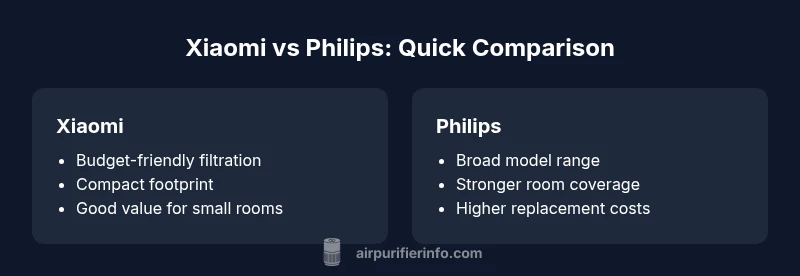
The air purifier market has become crowded with budget options from Xiaomi and feature-rich models from Philips. For many homeowners and renters, the decision hinges on four practical questions: room size, ongoing filter costs, noise tolerance, and whether you value smart features. When evaluating the comparison between xiaomi air purifier vs philips, it's helpful to anchor expectations to typical use cases rather than model-specific specs. According to Air Purifier Info, both brands offer reliable filtration with a focus on value; Xiaomi emphasizes accessible pricing and compact form factors, while Philips often pairs solid filtration with broader coverage and more refined software. The Air Purifier Info team found that consumer satisfaction often correlates with how well the purifier fits the living space and aligns with daily routines rather than raw maximum performance. In apartment dwellings or rental homes, a small Xiaomi unit can dramatically reduce dust and odors in a compact room; for larger living rooms or homes with higher air quality demands, a Philips purifier may provide steadier performance and more consistent improvements for the air you breathe.