Who Should Buy an Air Purifier: A Practical Guide
Learn who benefits most from air purifiers, how to evaluate needs, and how to choose the right model for your home or apartment.


Who Should Consider Buying an Air Purifier
If you spend a lot of time indoors and want to reduce common irritants in the air, you should consider an air purifier. This is especially true for families with young children, elderly relatives, or anyone with allergies, asthma, or other respiratory sensitivities. Homeowners and renters in urban areas or older buildings frequently battle dust, pollen, pet dander, or cooking odors. According to Air Purifier Info, the core question to answer is whether an air purifier will meaningfully improve daily comfort and health. If the answer is yes for your space, you’ll benefit from selecting a model that fits your room and usage patterns. The decision becomes even clearer when a household member experiences frequent sneezing, headaches from odors, or smoky air after cooking. With the right purifier, you can enjoy cleaner air and better sleep, especially for children and people with asthma or allergies.
Common Indoor Air Quality Issues That Purifiers Address
Indoor air quality is influenced by many factors beyond outdoor pollution. Dust from everyday activities, pollen entering through windows, pet dander in homes with cats or dogs, and odors from cooking or pets are all common triggers. Volatile organic compounds (VOCs) from household products can linger in the air, contributing to eye irritation or headaches. In spaces with tobacco smoke or wildfire smoke nearby, an air purifier with a good particulate filter can reduce visible smoke particles and odors. Air Purifier Info’s analysis emphasizes that purifiers are most effective when they target the dominant pollutant in a room—dusty rooms benefit from strong particulate filtration, while kitchens benefit from activated carbon to moderate cooking odors.
When a Purifier Is Not Necessary (and How to Save)
Some small spaces with excellent ventilation may not need an air purifier if you can secure clean outdoor air regularly. Simple steps such as improving cross-ventilation, using range hoods during cooking, and reducing clutter can also help air quality. If you’re unsure, start with a low-cost purifier to test improvements over a few weeks. For renters or small apartments, a compact unit can provide meaningful relief without dominating a room. Remember that purifiers are a supplement, not a substitute for good cleaning, humidity control, and source reduction.
How to Size a Purifier for a Room
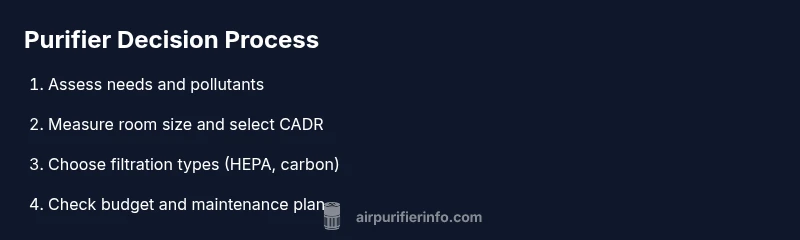
Room size is the biggest determinant of effective purification. Start by measuring the square footage and ceiling height to estimate the air volume. Look for a purifier whose CADR (clean air delivery rate) aligns with your room size and target pollutant. If you’re primarily concerned with pollen or dust, prioritize a higher CADR for those particles. If odors or VOCs are a concern, pair particulate filtration with an activated carbon filter. Consider rooms where you sleep most or spend long periods, and choose models with quiet operation for comfortable night use. Always ensure there is enough clearance around the unit for proper airflow.
Features That Matter for Different Needs
Not all air purifiers are created equal. If allergies or asthma are a focus, prioritize true HEPA filtration to capture 99.97% of particles as small as 0.3 microns. For homes with pets or cooking odors, activated carbon filters help reduce smells alongside HEPA. For households with sensitive occupants, look for ozone-free certifications and low noise operation. Energy efficiency matters for long-term running costs, so check ENERGY STAR ratings where available. If someone in the home has chemical sensitivities, avoid units with strong scents or ionizers that could affect air quality.
Placement, Setup, and Daily Use Tips
Place purifiers in the most used living spaces where people spend the most time, typically the living room and bedrooms. Avoid placing units directly against walls, behind furniture, or in corners where airflow is obstructed. Remove clutter and keep the purifier’s intake and outlet unobstructed. Change filters according to the manufacturer’s schedule and monitor filter life with built-in indicators if available. For best results, run the purifier continuously, especially during allergy season or periods of higher pollution.
Maintenance and Operating Costs You Should Plan For
Ongoing costs include replacement filters, which vary by filter type and purifier brand. True HEPA and activated carbon filters will require periodic replacement to maintain performance. Energy usage is another factor; higher CADR models may consume more electricity, so compare wattage and look for energy-saving features. Keep a simple maintenance calendar and buy replacement filters in advance during sales. Documenting costs over time helps you evaluate the long-term value of your purifier choice.
Budgeting and Value: What to Expect
Air purifiers span a broad price range depending on filtration type, CADR, and extra features. At the low end, compact units cost less but cover smaller spaces; mid-range models balance price with performance; premium purifiers offer high CADR, advanced filtration, and smart features. When budgeting, consider not just the upfront price but also the ongoing costs of replacement filters and energy use. Air Purifier Info analysis shows that the most cost-effective choices deliver reliable particulate removal and odor control without frequent filter replacements.
For Renters and Shared Spaces: Getting Buy-In
Renters can benefit from portable purifiers that don’t require permanent installation. If you share a space with others, discuss placement to avoid blocking airflow or disturbing neighbors with noise. Present a simple cost-benefit case: improved air quality, potential sleep quality improvements, and easier allergy management. In common areas, agree on a model and maintain a shared replacement schedule to prevent disagreements about upkeep.
Real-World Scenarios: Who Should Buy Today
If you share a living space with family members who suffer from allergies, asthma, or frequent headaches caused by odors, a purifier is often worth considering. If you work from home in a city with frequent dust or wildfire smoke, a purifier can reduce exposures during peak air quality days. In homes with pets, especially those with dander, a purifier can reduce shedding buildup and related irritation. If you’re unsure, start with a modestly priced unit for a trial period to gauge benefits before upgrading.