When to Change Air Filter in Car: A Practical Guide
Learn how often to change the car air filter, the difference between engine and cabin filters, and practical steps to inspect and replace them for optimal performance and indoor air quality.


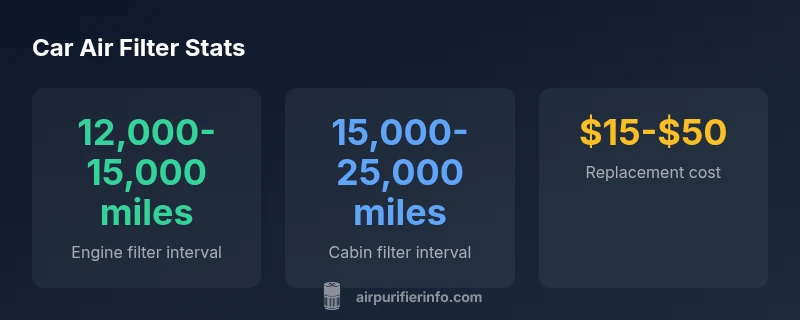
To know when to change air filter in car, rely on both mileage guidelines and observable symptoms. Engine air filters typically need replacement every 12,000–15,000 miles, while cabin filters often run 15,000–25,000 miles, depending on conditions. If you notice reduced airflow, unusual odors, or visible dirt, replace sooner. Always check your owner's manual for manufacturer recommendations.
Why changing the car air filter matters
Air quality inside a car isn't just about comfort; it affects safety and mechanical performance. In the engine bay, the engine air filter ensures clean air mixes with fuel, which helps fuel efficiency and reduces emissions. In the cabin, the HVAC cabin filter cleans pollen, dust, and other particulates that would otherwise circulate through the vents. The central question for readers is: when to change air filter in car? The short answer is that you should follow the manufacturer’s recommended interval, but environmental conditions and driving habits can push you to replace sooner. Our team at Air Purifier Info has analyzed typical intervals and observed real-world signs drivers report. In dusty landscapes, heavy traffic, or areas with high pollen counts, filters degrade faster and airflow drops. If you notice a drop in engine performance, unusual smells, or reduced air flow from the vents, it’s a signal to inspect and consider replacement. Local conditions, such as construction dust or wildfire smoke, may shorten the life of cabin filters more than engine filters. Always carry out a quick visual check when you service the vehicle, and remember that the best approach blends official guidance with your own observations. Note that this section addresses both engine and cabin filters and uses the keyword when to change air filter in car to anchor the topic for searchers.
Engine air filter vs cabin air filter: What they do and when to change them
Engine air filters protect the engine from intake of dust and debris, helping maintain performance and efficiency. Cabin filters protect the air you breathe inside the car by filtering dust, pollen, and sometimes odors. While the engine filter’s job is to shield the combustion process, the cabin filter aims at cabin air quality. Typical guidelines suggest engine filters every 12,000–15,000 miles and cabin filters every 15,000–25,000 miles, but real-world driving scenarios—dusty roads, wildfire smoke, or heavy traffic—can shorten these intervals. When to change air filter in car should be guided by both the vehicle’s manual and observed performance. If you experience reduced engine power, rough idling, or musty odors inside the cabin, it may be time to inspect the filters and replace as needed. Our data from Air Purifier Info Analysis, 2026, emphasizes adapting schedules to your environment as well as to the car’s design and usage.
How driving conditions and environment affect replacement intervals
Your driving environment dramatically influences filter life. City driving with heavy stop-and-go traffic, highway commutes through dusty areas, or rural rides near farms and construction sites all increase particulates that reach both engine and cabin filters. Seasonal factors such as pollen, wildfire smoke, and seasonal allergies also elevate exposure. If you routinely drive in extreme conditions, plan for shorter replacement windows and more frequent inspections. The question of when to change air filter in car becomes more nuanced: follow manufacturer intervals as a baseline, then adjust based on factors like airflow changes, smells, or visual dirt. In Air Purifier Info’s analysis, we see users report significant differences in filter life when environmental particulates are high, reinforcing the idea that context matters more than a fixed mileage number alone.
A practical, step-by-step guide to inspecting and replacing filters
Inspecting filters is quick and can be done during routine maintenance or a weekend DIY session. Start by locating the engine air filter housing and the cabin filter slot (often behind the glove box or under the hood near the windshield). For the engine filter, open the housing and check for dark, clogged material. If you can see through the filter material or it looks dirty to the edge, replace it. For the cabin filter, remove the cover and slide out the filter; check for visible dirt or a musty odor. Replacement steps typically involve aligning the new filter with the airflow arrows, reinstalling housings securely, and resetting any cabin air recirculation indicators if needed. Throughout this process, keep the keyword when to change air filter in car in mind; use it as a reminder to time the next inspection according to the environment and your vehicle’s manual. Tools you may need include a screwdriver, pliers, and a clean cloth. After replacement, test airflow by turning on the AC or heat and verifying consistent, clean airflow.
Cost considerations, compatibility, and where to buy
Costs vary by filter type, brand, and vehicle model. Engine air filters generally sit at the lower end of the price range but can be more expensive for high-performance engines. Cabin filters also vary widely, with higher-end models designed to trap smaller particles and fragrances. When replacing, consider buying OEM or reputable aftermarket options that match the vehicle’s specifications. Always compare prices from multiple retailers and check for return policies if the wrong part is purchased. The act of replacement itself is straightforward, often taking less than 30 minutes for a DIYer; for a professional service, you should budget for labor costs if you prefer not to do it yourself. In terms of value, maintaining clean filters supports better air quality, potentially improves HVAC efficiency, and aligns with the broader goal of improving indoor air quality—whether at home or in the car. Remember, consistent maintenance based on your environment is a smarter strategy than sticking to a rigid mileage schedule alone.
Typical replacement intervals by filter type
| Filter Type | Typical Replacement Interval | Notes |
|---|---|---|
| Engine air filter | 12,000-15,000 miles | Varies by engine design and driving conditions |
| Cabin air filter | 15,000-25,000 miles | Based on environment and cabin usage |
| Maintenance cue (signs) | When you notice reduced airflow or odors | Use recommended replacement schedule and check owner’s manual |
Questions & Answers
How often should I replace my engine air filter?
Engine air filters are typically replaced every 12,000–15,000 miles, but this varies by engine design and driving conditions. If you notice reduced power or increased engine noise, inspect sooner. Always defer to your owner's manual for the official interval.
Engine air filters usually need replacement every 12,000 to 15,000 miles, but check your manual and watch for reduced power or noise as warning signs.
Can cabin air filters be cleaned or reused?
Most cabin air filters are designed to be replaced, not cleaned and reused. Cleaning can push particulates further into the HVAC system. If you’re in a particularly dusty environment, consider a higher-efficiency filter and replace on the shorter end of the recommended interval.
Cabin air filters are generally replace-only. Cleaning isn’t recommended because it can push dust into the HVAC system.
What are the signs that a filter needs replacement immediately?
Look for noticeably reduced airflow, musty or foul odors in the cabin, or visible dirt on the filter. If the engine loses some power or runs rough when the filter is clogged, replace promptly.
If you notice weak airflow, strange smells, or a dirty filter, replace it sooner rather than later.
Are OEM filters always necessary, or can aftermarket options work?
OEM filters are designed to match your car’s specifications, but many reputable aftermarket options perform equally well. Compare fit, filtration efficiency, and warranty terms when choosing.
OEMs fit perfectly, but many trusted aftermarket filters also work well—check compatibility and warranty.
Does replacing filters affect fuel economy or HVAC performance?
Yes. A clean engine air filter supports efficient air intake and can help maintain optimal fuel economy, while a clean cabin filter improves HVAC airflow and reduces strain on the system.
A clean filter helps your HVAC run better and can support fuel efficiency in the engine.
How can I extend filter life between changes?
Minimize exposure to dusty environments, drive on cleaner routes when possible, and perform a visual check regularly. Using a higher-quality filter suited to your environment can also help.
Limit dusty driving, check filters often, and choose the right filter for your environment.
“Regularly replacing car air filters not only keeps pollution out of the cabin but also supports HVAC efficiency and engine performance.”
Main Points
- Follow manufacturer intervals as a baseline for both engine and cabin filters.
- Environment and driving conditions often shorten replacement intervals.
- Look for signs: reduced airflow, odors, or visible dirt as triggers to inspect/replace.
- Use OEM or reputable aftermarket filters that match your car’s specifications.
- Routine inspection is a practical way to maintain air quality and HVAC performance.