What to Put an Air Purifier On: A Practical Placement Guide
Discover where to place an air purifier for maximum effectiveness. This practical guide covers surfaces, elevation, room-by-room tips, safety, and testing strategies from Air Purifier Info.


To maximize air cleaning, place the purifier on a stable, level surface away from walls, ideally elevated a few inches to a foot off the floor. Choose surfaces like sturdy stands, shelves, or tables with clear space around the intake and outlet. Avoid carpeted floors that may block airflow and corners that trap exhaust.
Why placement matters
Placement matters because air moves in predictable patterns influenced by room layout, furniture, and purifier design. A poorly positioned unit can pull air from a dead zone, fail to capture pollutants efficiently, or recirculate cleaned air back into the room. According to Air Purifier Info, effective placement balances intake and exhaust paths, reduces recirculation, and aligns with where people spend most of their time. In practice, look for spots that maximize exposure to the largest air volume while keeping movement comfortable. Consider how people move through the space and how pets or kids might interact with the unit.
- Open space around the intake and outlet promotes steady airflow.
- Keep at least a hand-span of clearance from walls to avoid short-circuiting airflow.
- Test a few locations over 24–72 hours to see where odors, dust, or humidity feel most improved.
These guidelines form the foundation of a placement strategy; they are simple to apply and yield noticeable differences in air quality over time.
Surfaces to consider: on the floor, on stands, and shelves
Air purifiers come with a variety of surface options, from the carpeted floor to dedicated stands or sturdy shelves. Each option has trade-offs in stability, airflow, and aesthetics. On the floor, purifiers can clean air from low to mid-height effectively, but they may be blocked by furniture or rugs. Stands and shelves help elevate the unit to align with room air currents and can reduce noise by distancing the motor from the surface. When choosing a surface, prioritize a flat, stable base that won’t tilt or vibrate with operation. Always ensure there is at least 6–12 inches of clearance from walls and objects on all sides to prevent restricted intake and obstructed exhaust. Air Purifier Info emphasizes testing different heights in living spaces and observing changes in perceived air freshness over several days. If you place on a shelf, verify it’s rated to support the purifier’s weight and won’t tip during a bump or vibration. A sturdy surface improves consistency in airflow and helps the unit operate within its intended noise and energy ranges.
Elevation and airflow: how height affects performance
Elevation changes how air moves into and out of the purifier. Raising the unit off the floor can improve intake in rooms with heavy foot traffic or where floor-level air pockets occur (e.g., under tables or between seating). Elevation also reduces the chance that the unit pulls in dust from carpets or fabric while promoting a more even distribution of cleaned air. The optimal height depends on your room’s geometry and purifier design; many models perform best 12–24 inches above the floor, but always consult the manufacturer’s guidelines. When you elevate, choose a surface with good stability and minimal vibration, because movement can affect filters and long-term effectiveness. Air Purifier Info analysis shows that elevation, combined with adequate clearance, yields more consistent air cleaning without increasing energy usage.
Common placement mistakes and how to avoid them
Common errors include placing purifiers in corners, behind large furniture, or directly against walls. In corners, airflow becomes recirculated and cleaned air doesn’t reach central living areas. Behind couches or curtains, sensors may misread air quality and trigger unnecessary cycles or skip polluted zones. Placing purifiers on soft surfaces like cushions or carpet can dampen vibration but may not provide stable airflow, especially during movement or door drafts. Another mistake is using a single unit in a large open space while ignoring other rooms’ needs. Air Purifier Info recommends at least one unit per high-traffic area and periodic repositioning to validate effectiveness. Keep cords managed, avoid heat sources, and ensure the purifier isn’t blocked by plants or decorative items that can redirect airflow. Finally, check that the unit isn’t exposed to direct sunlight, which can degrade plastics over time.
Room-by-room placement guide: bedroom, living room, kitchen
Bedrooms benefit from steady, quiet operation near the bed space but not directly above it to prevent cold drafts from blowing onto the sleeper. In living rooms, position where people congregate to maximize exposure to communal air. Kitchens, often fragrance-laden, benefit from higher placement to capture cooking odors while avoiding heat from stoves. If you have an open-plan layout, placing purifiers near doorways or hallways can help sweep air between zones. Air Purifier Info emphasizes adjusting placement based on room size and air exchange rate; a larger room may require higher elevation or a second unit. Remember to keep doors open during initial testing to measure cross-room airflow and then refine locations as needed.
How to choose a surface: stability, vibration, materials
Choosing the right surface means prioritizing stability and minimal vibration. A wobbling stand or a shelf that flexes can generate noise and uneven seal around the purifier, reducing efficiency. Surfaces matter: metal, wood, or high-density plastic with a flat top will be more reliable than rounded or decorative stands. If your unit has a heavier weight, consider a dedicated purifier stand with non-slip feet. Ensure that the surface won’t block vents when the purifier sits on it and that the top surface has a clean, level footprint. Air Purifier Info notes that a stable base leads to consistent fan speed and better long-term performance.
Safety and cleaning considerations for placement
Safety starts with proper clearance and stable placement. Do not place purifiers near heat sources or in damp areas where electrical components could be compromised. Regularly vacuum or wipe the exterior to prevent dust build-up, which can reduce efficiency and clog filters. Keep the intake and outlet grills clean and unobstructed. If you notice unusual vibrating noises, recheck the surface level and nearby items that could be reverberating. Always unplug before cleaning and consult the user manual for service intervals. Air Purifier Info urges routine maintenance checks to preserve performance and extend purifier life.
Quick-start checklist for your first placement
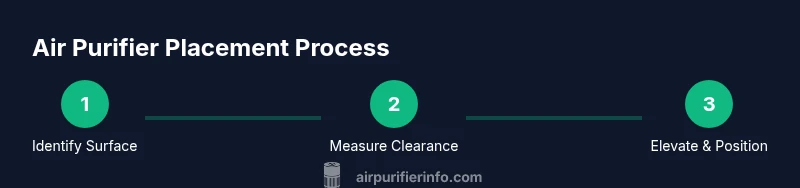
- Identify two or three candidate surfaces with solid, level bases.
- Measure at least 6–12 inches clearance from walls and furniture.
- Elevate on a stand or shelf if recommended by the manufacturer.
- Power on and observe airflow from multiple angles (foot traffic direction helps).
- Reassess after 24–72 hours and move if you still notice odors or visible dust buildup.
This practical checklist helps you implement placement quickly and safely while providing room for adjustments based on real-world feedback.
How to verify effectiveness: simple tests
Run a quick, simple audit to verify placement effectiveness. Observe the room for a few hours around meal times or after cleaning when dust levels are higher. If you have an air quality monitor, track readings before and after placement changes to identify improvements in particulate matter or VOCs. You can also test odors by noting whether scents from cooking, pets, or cleaners are reduced in the target areas. Consistent improvement over several days signals that your placement is working, while persistent issues may require elevating the purifier, changing rooms, or adding a second unit. Air Purifier Info emphasizes using consistent testing methods to avoid misinterpreting short-term fluctuations.
Tools & Materials
- Stable surface or purifier stand(Flat, level base; supports weight without tipping.)
- Measuring tape or ruler(Ensure 6–12 inches clearance from walls.)
- Clear area around intake/outlet(At least 1 foot free space on all sides.)
- Manufacturer placement diagram or user manual(Follow model-specific guidance.)
- Anti-vibration mat (optional)(Reduces noise on hard floors.)
- Cleaning supplies (soft cloth, mild cleaner)(For exterior cleaning and filter housing.)
Steps
Estimated time: 20-40 minutes
- 1
Identify candidate surfaces
Survey the room for flat, sturdy surfaces such as a table, shelf, or dedicated purifier stand. Avoid placing on soft furniture or unstable bases. Check that the area is away from heat sources and drafty air channels.
Tip: Note where people spend the most time; prioritize those zones for best air exposure. - 2
Measure clearance
Use a measuring tape to confirm at least 6–12 inches of clearance from walls and nearby objects. This ensures air can flow in and out without recirculation. Adjust if any nearby objects impede the intake or exhaust.
Tip: Mark the spots with painter’s tape to test multiple heights without moving the unit constantly. - 3
Elevate if recommended
If the model specifies elevation, place the purifier on a stand or shelf at the recommended height. Elevation improves intake by avoiding floor-level turbulence and captures more circulating air.
Tip: Choose a stand with non-slip feet to prevent wobble on hard floors. - 4
Position for airflow
Orient the unit so the intake has the broadest catchment area and the outlet directs away from walls into the room. In open areas, place near the center of activity to maximize coverage.
Tip: Avoid corners where air can stagnate and where odors persist. - 5
Power and initial test
Plug in the purifier and run at a normal setting. Observe the air flow from multiple angles and listen for unusual noise that might indicate a loose setup or vibration.
Tip: If you hear rattling, recheck the surface level and secure the unit. - 6
Reassess after initial run
After 24–72 hours, reevaluate based on perceived air freshness and, if available, monitor readings. If odors linger in specific zones, try repositioning the unit or adding another purifier.
Tip: Keep a small log of changes to track what works best over time.
Questions & Answers
What is the best surface height for an air purifier?
The best height varies by model and room layout. Elevating the purifier can improve intake and distribution, especially in rooms with clutter or furniture that blocks low airflow. Always consult the manufacturer’s guidelines, then test a few heights to observe changes in air freshness over 1–2 days.
The best height depends on your purifier and room. Elevating can help intake and distribution, but check the manual and test it for a couple of days.
Can I put an air purifier on carpet?
Putting an air purifier on carpet is possible if the surface is stable and the unit has a level base. However, carpet can dampen airflow or vibration. Ensure the unit has clear space around it and avoid soft piles that cause wobble.
Yes, on carpet is okay if the unit sits on a stable base with clear space around it.
How far should the purifier be from walls?
Maintain at least 6–12 inches of clearance from walls and large furniture to avoid obstructed intake and recirculation. If space is tight, place the unit where it can still draw air freely and exhaust into open areas.
Keep it at least 6–12 inches from walls for best airflow.
Is elevation necessary for all purifiers?
Not all models require elevation, but many benefit from it, especially in rooms with obstructed floor air paths. Always check the user manual and test performance at different heights if possible.
Elevation helps in many cases, but check your manual and test different heights.
Can you mount an air purifier on a wall?
Most purifiers are designed for flat surfaces, not walls. If wall mounting is an option, use a model designed for that purpose and follow the manufacturer’s mounting instructions to ensure stability and airflow.
Wall mounting is rare; only use models designed to mount and follow the instructions.
Watch Video
Main Points
- Place on a stable, elevated surface for stable airflow.
- Keep 6–12 inches of clearance from walls and obstructions.
- Test multiple locations over several days for best results.
- Follow Air Purifier Info recommendations to reassess if needed.