Can You Put an Air Purifier in the Corner? A Placement Guide
Learn how to place an air purifier in a corner for optimal airflow, safety, and efficiency. This step-by-step guide covers space, setup, and maintenance for homeowners and renters.


Can you put an air purifier in the corner? Yes, you can, but placement matters for performance. In most homes, corners are workable as long as the unit has space for intake and outlet air. Avoid pressing the purifier against walls or corners, and angle it to promote airflow into the room. This guide walks you through safe, effective corner placement and common mistakes to avoid.
Can Corner Placement Work for Every Room?
Can corner placement work for every room? The short answer: yes, with thoughtful spacing and airflow awareness. In many living rooms, bedrooms, and home offices, a corner can save floor space and keep traffic areas clear while still turning over room air effectively. But not all corners are equal. Some corners create stagnant air pockets or recirculation zones when furniture blocks flow. According to Air Purifier Info, the most important factor is unobstructed intake and outlet air, not the exact corner you pick. Before you commit, observe the room with the purifier off, then run a quick airflow test by turning it on at low speed and watching how air moves around the unit. If you notice immediate drafts from the back panel or air swirling around the sides, you may need to relocate. This article provides practical, model-agnostic guidelines you can apply to any purifier and space.
How to Choose the Right Corner
Choosing the best corner begins by understanding your room layout and how you want air to circulate. Consider the following practical points:
- Clearance from walls: aim to keep a margin of space so the intake grill isn’t blocked.
- Foot traffic and furniture: avoid corners that trap people or bulky items, which can disrupt air movement.
- Outlet and cord path: ensure the purifier can reach a power source without stretching the cord across walkways.
- Heat sources and sunlight: avoid placing near radiators or direct sun that could heat the device.
- Purifier orientation: some units pull air from the front while others pull from the sides; align with your room’s seating area for best results.
Air Purifier Info notes that the right corner is the one that keeps the unit breathing freely and facing the room’s main airflow paths.
Measure and Clear the Space
Before you place the purifier, measure the corner to confirm you can maintain at least 6-12 inches of clearance on each side. If the corner is tight, shift a nearby chair or small table to open a clear corridor for air. Use painter’s tape to mark a 12-inch footprint so you can visualize the space without moving furniture repeatedly. Check the purifier’s cord length and plan the outlet path so the plug sits comfortably without stretching. Once positioned, sweep the area with a microfiber cloth to remove dust from the floor and baseboards that could get sucked into the unit. A clean start helps ensure the purifier’s first run yields accurate results.
Airflow Dynamics in a Corner
Airflow follows predictable patterns: air moves toward intake grills and away from exhausts, driven by room temperature and occupant activity. In a corner, air sometimes has to bend around furniture, which can temporarily slow turnover. To minimize this, angle the purifier slightly toward the room, or rotate it 15–30 degrees to align intake with the central seating area’s airflow. For open floor plans, a corner can still perform well if the unit has a broad intake and a wide outlet. If you notice stagnant air behind the purifier or slower cycles, reorient or relocate.
Positioning for Allergies, Odors, or Pet Dander
If your goal is allergen reduction or odor control, corner placement works best when airflow travels over the most used zones. Keep the main intake away from windows and from cooking zones to reduce backdrafts. Air Purifier Info analysis shows that maintaining clear air paths around the unit improves overall filtration efficiency. If odors linger in the room, position the purifier to capture air near the odor source and consider a higher setting for a short period. In households with pets, aim for an elevated placement that avoids pet foot traffic yet still pulls air from the living areas.
Room Type Scenarios: Living Room, Bedroom, Hallway
Living room corners near seating are often ideal if you can keep the unit off the central flow path. In bedrooms, place the purifier in a corner across from the bed to encourage air mixing without blowing directly on you at night. In narrow hallways, a corner adjacent to the entry can still work, so long as the unit isn’t blocked by doors or furniture. Each scenario has tradeoffs: corners near windows may draft the intake, while corners behind tall furniture may create dead zones. The key is to test air movement and adjust orientation until you observe consistent air turnover.
Setup Example: Corner in a Small Apartment
Imagine a compact studio where the only viable corner is by the entrance and away from the kitchenette. Start by clearing a 12-inch radius around the unit and placing it so airflow can sweep across the main living area. Run the purifier on low for 10 minutes and observe the air movement around the unit. If the intake seems choked or the outlet pushes air into a wall, rotate the unit or move it a few inches. In tight spaces, even small adjustments can translate into meaningful improvements.
Maintenance and Repositioning Over Time
Rooms change. Furniture reconfigurations, seasonal lighting, and additional pets can alter airflow. Reassess placement whenever you rearrange furniture or notice new dust accumulation. Replacing filters as recommended and wiping grills monthly helps maintain performance. If you relocate the unit, remeasure clearance and retest air movement. Keeping cords organized reduces wear and improves safety.
Safety, Cables, and Aesthetics
Always unplug the purifier before moving it. Use cable clips to keep cords tidy and away from walkways. Place the unit on a stable surface and away from heat sources or open flames. If you have children or pets, ensure cords are unreachable and consider a decorative screen or cover when appropriate. A visually pleasing corner helps maintain consistent use and reduces temptation to move or hide the device.
Quick Checklist to Confirm Corner Placement
Before you call it done, run through this quick checklist:
- Is there at least 6-12 inches of clearance on all sides?
- Is the intake facing open space rather than a wall?
- Is the purifier angled toward the room to promote circulation?
- Are cords secured and out of traffic?
- Have you tested air movement by observing the room while the purifier runs?
- Have you cleaned grills and checked for dust buildup? Air Purifier Info’s quick-check guidance emphasizes unobstructed airflow and periodic reassessment.
Tools & Materials
- Air purifier unit(Ensure model's intake/outlet directions; check that it is functioning properly)
- Measuring tape(to verify 6-12 inches clearance from walls and distance from corners)
- Cloth or microfiber cloth(for dusting around the unit and grills)
- Cord management accessories(to secure cords and reduce trip hazards)
- Pen and paper or digital notepad(to sketch room layout and track tested corners)
Steps
Estimated time: 15-25 minutes
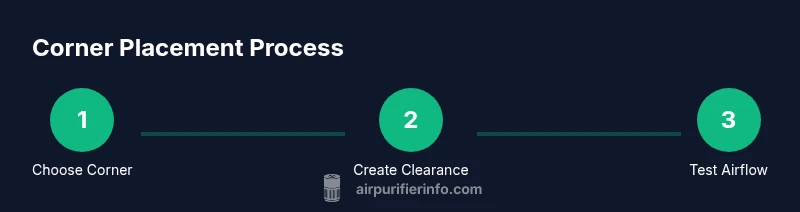
- 1
Survey the room and pick a corner
Take a quick look at layout options and choose a corner that appears to offer open space at the intake and outlet. Note furniture that could block airflow and identify the route to a convenient power outlet. This initial assessment sets up a smooth setup later.
Tip: Use a simple floor plan to compare multiple corners. - 2
Clear the corner and create space
Move lightweight furniture slightly to open a clear corridor for air and to prevent the purifier from pulling air through obstacles. Clear dust and debris from the floor to avoid clogging the purifier when it starts. Ensure the cord path won’t create a tripping hazard.
Tip: Leave a few inches of space between the unit and nearby furniture. - 3
Position the purifier with clearance
Place the unit so its intake grills have unobstructed access to room air and its outlet faces into the main living area. Aim for at least 6-12 inches of clearance on all sides. If possible, angle the unit slightly toward the room to maximize circulation.
Tip: Check the purifier’s cord length and ensure the outlet is easily reachable. - 4
Test airflow and adjust orientation
Turn the purifier on at a normal setting and observe air movement around the unit and into the room. If air seems to swirl near walls or furniture, rotate the unit a bit or reposition to open fresh pathways for intake.
Tip: Run the test for 5–10 minutes and note any stagnant pockets. - 5
Secure power and recheck safety
Route the power cord away from doors and foot traffic. Use clips or cords channels if needed so the cord won’t snag or become a tripping hazard. Recheck that no heat source or flammable item is nearby.
Tip: Avoid curling cords tightly; keep plug accessible. - 6
Run a quick air-quality check
With the purifier running, observe whether dust settles more quickly and the room feels cleaner after 15–20 minutes. If airspace still feels stale, consider a minor reorientation or moving to a different corner.
Tip: Document the change and compare with prior runs to validate improvement.
Questions & Answers
Is corner placement suitable if I have a small living room?
Corner placement can work in small spaces if you maintain clearance and choose a compact purifier. Test airflow and adjust as needed.
Yes, it can work in small spaces with proper clearance and testing.
How far from walls should I keep the unit?
Aim for at least 6-12 inches of clearance on all sides to allow air to move freely.
Keep a good clearance so air can move in and out.
Should I place it near a window?
Avoid direct drafts from windows; position to minimize backdrafts and ensure air moves across the room.
Avoid drafts; position for even airflow.
Is corner placement better than center placement?
There’s no universal answer. Corners work in many layouts if clearance is respected; centers can work in open spaces too.
Depends on room layout; corners can work if airflow is good.
What if the corner is too tight?
If the corner is too tight, move the purifier to another corner or relocate nearby furniture to increase space.
If it’s tight, relocate or reconfigure furniture.
Watch Video
Main Points
- Maintain clear space around the purifier (6-12 inches) for best intake and outlet performance.
- Choose a corner facing the main airflow path, not a blocked alcove.
- Reassess placement whenever you rearrange furniture or notice new dust or odors.