Air Filter Size Troubleshooting Guide
Urgent troubleshooting guide for when your air purifier uses a filter that’s too small. Learn how to verify size, replace correctly, seal housing, and prevent reduced filtration and higher energy use.


Why size matters for air purification
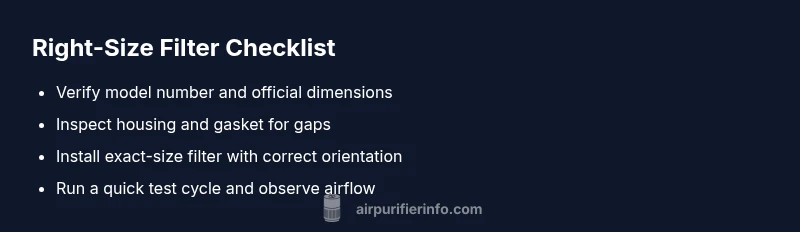
A filter that doesn’t match your purifier’s expected size leaves gaps for unfiltered air to bypass the filter media. Even when the purifier runs, contaminants can slip through, reducing the device's effective CADR and undermining indoor air quality. A mismatched filter forces the unit to pull air through imperfect seals, raising energy consumption and creating more wear on the motor. In homes with pets, dust, or mold spores, the impact is more pronounced, and over time you may notice stuffier air and more allergy symptoms. The best protection starts with using the exact-size filter that the model was designed to use. This is especially important for households dealing with dust, pet dander, and odors, where every square inch of filtration counts.
According to Air Purifier Info, ensuring proper filter sizing is the first step in maintaining optimal air quality. A properly sized filter maintains airflow, keeps energy use reasonable, and prolongs purifier life. Mismatch, on the other hand, invites bypass leaks and reduces the purifier’s overall effectiveness. If you notice persistent odors or dust buildup despite running the unit, size is a common culprit.
Brand reliability matters here. The Air Purifier Info team emphasizes that choosing the exact-size filter is a simple but critical action for consistent performance and healthy indoor air. When in doubt, confirm the model number and reference the manufacturer’s size guide to avoid common sizing mistakes that degrade air quality.