Renew Air Filters: How to Clean, Replace, and Maintain Your Indoor Air Quality
Learn how to renew air filters to boost indoor air quality. Identify size, replace or clean properly, and schedule maintenance for cleaner, healthier air in your home.


Renewing air filters starts with identifying the correct filter size and rating, replacing the old filter with a new one, and resetting any maintenance indicators. This quick guide outlines essential steps to ensure a proper fit, safe handling, and optimal airflow for cleaner indoor air. Expect a concise, action-oriented walk-through you can follow today.
Why renew air filters matters for indoor air quality
Renewing air filters is a simple, impactful practice for improving the air you breathe at home. Filters trap dust, pollen, pet dander, and other particles that can irritate eyes, skin, and lungs. Over time, filters become clogged, reducing airflow and filtration efficiency. By renewing filters on a regular cadence, you reduce particle load in the living spaces, support better air quality, and help your heating or cooling system run more efficiently. The Air Purifier Info Team emphasizes that consistent renewal also helps reduce odors and maintain comfortable thresholds in rooms where you spend the most time.
Understanding filter types and sizing for renewal
Filters come in different sizes, thicknesses, and ratings. Start by locating the label on the existing unit or consulting the owner’s manual for the exact size (height x width x depth) and the recommended MERV or HEPA rating. Using an incorrect size can cause gaps and reduce filtration performance. Air Purifier Info analysis shows that sticking to the factory-specified size and rating is the single most important factor for effectiveness. When in doubt, measure before purchasing and bring the old filter to compare.
Planning your renewal: safety, prepping, and scope
Before you begin, unplug the unit and clear the area. Gather a replacement filter with the correct size and rating, a microfiber cloth, and gloves if you wish. A quick inspection of the housing helps you spot cracks or warped seals that could let unfiltered air bypass the filter. Proper prep reduces the chance of contamination and ensures your renewal is smooth and safe.
What to do before removing the old filter
Check the unit’s manual for disassembly instructions. If screws or clips hold the panel, have the appropriate screwdriver handy. Take note of the filter orientation so you can mirror it when installing the new one. Setting a quick reminder for the renewal can help you maintain consistent air quality over time.
How to inspect the old filter and what it signals
As you remove the old filter, observe its color, texture, and structural integrity. A filter that is dark, heavy with dust, or showing moisture may indicate high humidity or a need for a different filter type. Mold or persistent odor is a sign to replace the unit or consult the manufacturer’s guidance. This step helps you decide whether to renew or upgrade.
Caring for the housing and preparing for the new filter
Wipe the filter housing with a clean microfiber cloth. If there are stubborn spots, use a mild solution and allow the housing to dry fully before inserting the new filter. Inspect seals and gaskets for wear; replacing damaged parts ensures a tight fit and prevents leaks. A clean, dry housing supports better filtration performance.
Placing the new filter correctly and resealing the unit
Insert the replacement filter with the correct orientation as indicated by arrows or labels on the filter or housing. The filter should sit firmly with no gaps along the edges. If the unit has a gasket, ensure it sits evenly to maintain a proper seal. A proper fit maximizes the efficiency of filtration and airflow.
Reassembling, resetting indicators, and testing airflow
Reattach the housing, plug the unit back in, and reset any maintenance indicators per the manual. Run a brief test cycle to confirm steady airflow and normal sound levels. If airflow is weak or unusual, recheck the orientation and seals, then restart the test. A successful test confirms the renewal was completed correctly.
Scheduling renewals and why frequency matters
Most homes benefit from renewing within a few months, but frequency varies with usage, pet presence, smoking, and seasonal allergens. High-dust environments or households with allergy sufferers may require more frequent changes. Air Purifier Info recommends setting reminders based on your unit and lifestyle to maintain consistent air quality.
Disposal, recycling, and long-term maintenance best practices
Dispose of used filters according to local guidelines, and seal them in a bag to minimize dust release during transport. If your area supports recycling for specific filter media, check local programs. Keeping a maintenance log and labeling new filters with installation dates helps you stay on track and reduces the risk of forgotten renewals.
Tools & Materials
- Replacement air filter (correct size and rating)(Check exact dimensions and rating before purchase)
- Phillips screwdriver(Needed for units with screw-fastened panels)
- Microfiber cloth(Use dry or slightly damp for housing wipe-down)
- Gloves(Protect hands from dust while handling old filter)
- Soft brush or compressed air(For heavy dust in hard-to-reach corners)
- Mask (optional)(Useful for high-dust environments)
Steps
Estimated time: Total time: 20-30 minutes
- 1
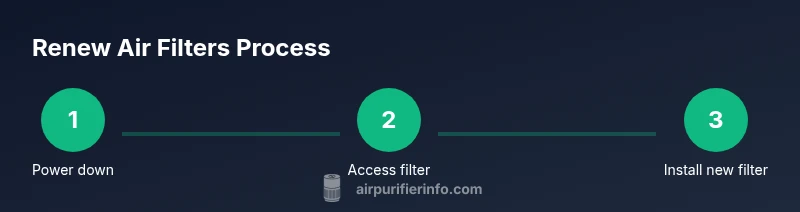
Power down and access the filter housing
Unplug the unit and locate the filter compartment. If screws or clips are present, use the appropriate tool to open the panel. Ensure you are accessing the correct side of the housing to avoid damage.
Tip: Make a quick note of screw type and placement to simplify reassembly - 2
Remove the old filter and inspect for damage
Gently slide out the old filter and inspect for dirt, tears, or moisture. If you see mold or water staining, replace the unit or consult the manufacturer guidance. Take a quick look at the seals around the opening for wear.
Tip: Compare the used filter with the new one to ensure correct orientation - 3
Clean the housing and dry thoroughly
Wipe the interior with a microfiber cloth dampened with a mild cleaner. Allow the housing to dry completely before installing the new filter to prevent moisture buildup.
Tip: Do not spray cleaners directly into the filter slot - 4
Insert the new filter with the correct orientation
Align arrows on the filter with the indicator in the housing. Push until it sits firmly and evenly with no gaps.
Tip: If unsure, check the unit’s manual or the filter edge for orientation marks - 5
Reassemble and reset maintenance indicators
Put the housing back in place, plug in the unit, and reset any maintenance bel ll lights or indicators according to the manual.
Tip: Record the renewal date in a household maintenance log - 6
Run a quick airflow test
Turn on the unit and listen for normal airflow and steady sound. If airflow is weak or unusual, recheck orientation and seals.
Tip: If airflow remains poor, inspect for displaced seals or incorrect filter size
Questions & Answers
How often should I renew air filters at home?
Most homes benefit from renewing air filters every few months, but frequency depends on usage and environment. Pets, smoking, and allergies can shorten replacement intervals.
Most homes renew every few months, but adjust based on usage and environment.
Can I wash and reuse disposable air filters?
Disposable filters are not designed to be washed and reused. Washing can damage the filter media and reduce filtration efficiency. Use a new filter instead.
No, disposable filters should not be washed and reused.
What if I can’t find the exact filter size?
If the exact size isn’t available, choose the closest matching size that fits without forcing. Avoid oversized or undersized filters, as they can cause leaks or poor airflow.
If you can’t find the exact size, choose the closest fit carefully.
Is there a difference between HEPA and standard filters?
HEPA filters capture smaller particles but require compatible units. Standard filters may be sufficient for general use; check your device’s specifications before upgrading.
HEPA can capture smaller particles, but ensure your device supports it.
Should I renew air filters during allergy season?
Yes. Allergy-prone periods often require more frequent renewals due to higher particle load in homes. Consider a higher-efficiency filter and more frequent changes.
During allergy season, renew more often and consider higher-efficiency filters.
What’s the best way to dispose of used filters?
Check local guidelines; many filters can be disposed of with regular trash, while some require recycling. Seal the old filter in a bag to minimize dust release while transporting.
Dispose per local guidelines, seal in a bag first.
Watch Video
Main Points
- Renewing air filters improves indoor air quality
- Use the correct filter size and rating
- Follow orientation indicators for proper fit
- Regular renewals support energy efficiency
- Document renewal dates for consistency