PCO Air Purifier: How to Choose, Use, and Maintain for Clean Air
Learn how to select, operate, and care for a PCO air purifier to improve indoor air quality. Compare models, understand filtration, and optimize performance for your space with practical steps from Air Purifier Info.


This guide shows you how to choose a PCO air purifier, set it up for optimal performance, and maintain it for long-term results. You’ll learn how to size units for a room, compare filtration options, and implement a practical setup plan. By following these steps, homeowners and renters can improve indoor air quality without guesswork.
Understanding PCO Air Purifier Technology
PCO stands for photocatalytic oxidation, a process that uses UV light to activate a catalyst (usually titanium dioxide) to break down pollutants in the air. In practice, a PCO stage aims to reduce odors, VOCs, and some surface contaminants by transforming them into less harmful substances. It is important to recognize that PCO is typically complementary to particle filtration, not a complete substitute for a true HEPA filter. The Air Purifier Info team emphasizes that for many homes, a balanced approach—combining high-quality particle filtration with a PCO or other gas-phase treatment—delivers the broadest coverage. When evaluating a pco air purifier, look for clear documentation of how the PCO stage interacts with the filtration system, the intended pollutant targets, and any maintenance implications. Real-world performance depends on room size, airflow, and how diligently the filters are maintained.
Safety and performance notes: ensure the device is ozone-free and certified for residential use. A well-designed PCO system will minimize secondary emissions and provide predictable operation in common living spaces. This section sets the stage for practical decision-making and aligns expectations with what PCO technology can realistically achieve in everyday homes.
How to Assess Your Space Before Buying
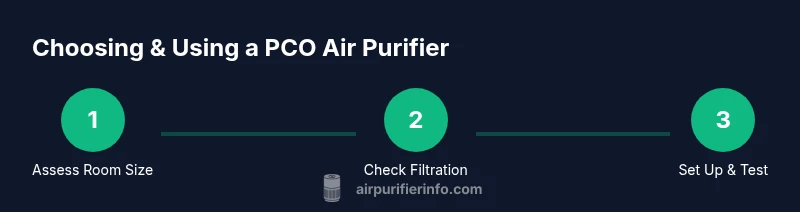
Before selecting a pco air purifier, measure the room: length x width x height to calculate volume and approximate air changes per hour. Identify the primary pollutant sources in the space—cooking aromas, pet dander, dust, or tobacco odors—to determine which features matter most. Look for a purifier whose CADR (Clean Air Delivery Rate) aligns with the room size; a unit rated for a larger area than your room provides a buffer against peak usage. Consider placement constraints, such as furniture, doors, and ceiling height, which influence airflow. Air Purifier Info analysis shows that buyers who plan around room geometry tend to experience steadier air quality and fewer odor hotspots. If you live in an open-concept home, you may need multiple devices or a unit with a broader coverage range. This upfront planning ensures you don’t over- or underbuy and helps you compare models with confidence.
Key Features to Look For in a PCO Air Purifier
When evaluating models, prioritize a robust filtration stack that includes at minimum a true HEPA filter (preferably H13) for particulates and an activated carbon stage for gases and odors. A PCO module should be clearly documented as a secondary treatment rather than the sole pollutant-removal method. Check that the unit is ozone-free and certified for household use, with low energy consumption and a noise profile suitable for your rooms. Pay attention to filter replacement costs and intervals, as these impact long-term value. Consider additional features like smart controls, a real-time air quality sensor, auto-mode operation, and a user-friendly indicator to simplify maintenance. Throughout your shopping, keep an eye on verified certifications and independent reviews to validate performance claims. The Air Purifier Info team notes that real-world use often hinges on how well the model handles simultaneous particle and gas contaminants in typical home environments.
How to Compare Models: A Practical Checklist
Use a side-by-side checklist to compare models: room coverage versus actual room size, filtration stages (HEPA, activated carbon, optional PCO), noise level, energy use, filter availability, and warranty terms. Confirm that the purifier can be serviced locally and that replacement filters are readily available. Look for devices with a simple maintenance routine, clear guidance on filter replacement timing, and a design that minimizes hiding dust around the unit. If you have allergies or asthma, prioritize models with documented allergen reduction performance and VOC reduction capabilities. Always verify that the unit is marketed as ozone-free and suitable for living spaces. For larger homes, evaluate whether one unit suffices or if multiple devices are needed to maintain consistent air quality across zones.
Setting Up and Calibrating for Best Performance
Start by selecting a central location away from walls and furniture to encourage free air flow in all directions. Place the purifier on a stable, level surface at a height that optimizes intake and exhaust paths—generally several inches off the floor and not tucked into corners. Plug the device into a grounded outlet and power it on. Set initial preferences to Auto or a balanced mode to let the unit adjust to room conditions for the first 24–48 hours. If you have a room with multiple sources of pollution, consider running the unit on a higher fan speed during peak activity and then tapering to a quieter setting at night. After an initial run, monitor for odor changes and adjust placement if necessary. The goal is to achieve steady air flow without creating dead zones where air stagnates. Air Purifier Info emphasizes testing different settings in real living conditions to understand how the purifier interacts with your space.
Maintenance: Filters, Replacement, and Longevity
Effective maintenance starts with knowing when to replace filters and how to handle the PCO catalyst if present. Follow the manufacturer’s suggested replacement intervals and use the device’s filter indicator if available. Regularly inspect filters for visible dust buildup and replace them as needed to maintain performance. Keep the exterior clean and free of dust to prevent debris from entering the intake. For units that include a PCO stage, be mindful of any cleaning procedures required to avoid mineral buildup on the catalyst surface. Label replacement dates on the filters themselves or in your home calendar to ensure you stay current. The goal is to sustain filtration efficiency and prevent odors from creeping back into the living space. In my capacity as a reviewer, I recommend scheduling filter checks every few months and a full replacement as the manufacturer advises.
Safety and Health Considerations
Any air purifier should complement, not replace, proper ventilation and regular cleaning. Avoid devices that emit ozone or use aggressive chemical outputs that could irritate eyes or lungs, especially in bedrooms or nurseries. Verify that the unit is certified for indoor use and has protective shielding around UV sources to prevent direct exposure. If you or a household member has respiratory sensitivity, consult product documentation and consider devices with documented low or zero ozone emissions. Use the unit in well-ventilated areas and follow all safety guidelines for operation, placement, and maintenance. The goal is to improve air quality without introducing new risks into your home.
Real-World Use Cases: Living Rooms, Bedrooms, and Home Offices
Living rooms often benefit from a higher-performance purifier due to size and activity levels. In bedrooms, prioritize quiet operation and reliable night-mode settings to avoid sleep disruptions. Home offices may require consistent air exchange, particularly in spaces with printers or electronics emitting volatile compounds. For all spaces, test the purifier’s effectiveness by monitoring odors, dust on surfaces, and any seasonal allergy symptoms. When used consistently, a PCO air purifier can contribute to a noticeable improvement in perceived air quality, especially for households with pets, cooking odors, or urban pollution. The key is matching device capabilities with real-world usage patterns and adjusting placement and settings as your routine evolves.
Practical Tips for Daily Use and Long-Term Satisfaction
To maximize benefits, keep doors and windows reasonably closed when the unit is running to avoid short-circuiting airflow. Maintain a regular cleaning schedule for the purifier’s exterior and intake grill to prevent dust accumulation. Use fresh filters and replace them as recommended; create a maintenance checklist so you never miss a change. If odor persistence remains a concern after initial setup, re-evaluate placement and consider a model with an additional stage of filtration. The Air Purifier Info team recommends documenting performance with simple in-home tests (odor presence, dust on surfaces, and perceived freshness) to gauge progress over time. Consistency is the key to long-term air quality improvements.
Tools & Materials
- PCO air purifier unit(Choose a model sized for your room and with an ozone-free certification)
- Replacement filter kit (HEPA + activated carbon)(Ensure compatibility with your purifier model)
- Measuring tape(For calculating room volume and placement precision)
- Extension cord(Optional if power outlet placement is far)
- Clean microfiber cloth(For exterior cleaning and intake grille maintenance)
Steps
Estimated time: 30-45 minutes
- 1
Measure the room and plan placement
Use a measuring tape to determine the room’s length, width, and height. Calculate volume and consider a central location away from walls and large furniture to maximize airflow.
Tip: Mark a preferred spot with painter’s tape to visualize airflow paths before you place the unit. - 2
Unbox and inspect filters
Open the purifier packaging, confirm the correct filter kit is included, and inspect filters for shipping damage or staining.
Tip: Keep the filters in a clean area to avoid contamination during installation. - 3
Install filters and connect power
Insert the HEPA and carbon filters in the correct orientation, then plug the unit into a grounded outlet.
Tip: If your unit has a separate PCO module, ensure it is seated securely. - 4
Set up initial preferences
Power on and choose Auto or Balanced mode. Allow the purifier to run for 24–48 hours to stabilize.
Tip: Avoid high-speed settings immediately in a quiet bedroom during the first night. - 5
Monitor performance and odors
Check the room after a day of operation for odor changes and dust accumulation on surfaces.
Tip: If odors persist, re-check placement and consider running at a higher setting for short intervals. - 6
Schedule maintenance
Create a reminder for filter replacement as recommended by the manufacturer and track any PCO catalyst maintenance needs.
Tip: Label the date on the filter to simplify the next maintenance cycle.
Questions & Answers
What does PCO stand for in air purifiers?
PCO stands for photocatalytic oxidation, a process that uses UV light to activate a catalyst and break down pollutants. It’s typically used to target gases and odors and is often combined with particle filtration for comprehensive air cleaning.
PCO stands for photocatalytic oxidation. It helps break down pollutants using light and a catalyst, usually alongside filter-based cleanup.
Is a PCO air purifier better for odors or particles than a HEPA purifier?
HEPA purifiers excel at capturing particles like dust and pollen, while PCO stages target gases and odors. For many homes, a unit with both high-quality filtration and a PCO stage offers broader protection.
HEPA catches particles; PCO helps with odors and gases. Many people prefer models that combine both.
How often should I replace filters in a PCO-based purifier?
Follow the manufacturer’s schedule and pay attention to the unit’s indicator. Replacement timing depends on usage, room conditions, and filter type; regular checks help maintain performance.
Replace filters as the manufacturer recommends and watch the indicator for changes.
Are PCO purifiers safe for households with children?
Most PCO purifiers are safe when used as directed and kept ozone-free. Avoid units that emit ozone or have aggressive chemical outputs, and ensure good room ventilation where children are present.
They’re generally safe when used as directed and ozone-free; avoid high-chemical outputs around kids.
Can a PCO purifier work well in an open-plan space?
Open-plan spaces dilute air more and may require multiple units or higher airflow designs. In some cases, a single high-capacity purifier can help, but effectiveness varies with layout and activity.
Open areas may need more airflow or extra units for consistent cleaning.
Do PCO purifiers emit ozone?
Only devices designed to emit ozone or those without proper safeguards pose risk. Always look for an ozone-free certification and verify the product does not produce ozone during normal operation.
Ozone-free models are safer for everyday use; check certification before buying.
Watch Video
Main Points
- Choose a unit sized for your room with a buffer for peak use.
- Prefer a true HEPA filter plus activated carbon, with a clear PCO stage documentation.
- Place the purifier centrally and maintain it regularly for best results.
- Monitor odor and dust changes to guide maintenance timing.