One Home Air Purifier: How to Choose and Use Effectively
Discover how to select and operate a single home air purifier that fits your space, delivers effective filtration, reduces dust and odors, and minimizes maintenance. A practical guide for homeowners and renters seeking better indoor air quality.


Goal: select and use a single home air purifier that fits your space and removes common indoor pollutants. Start by sizing the unit to your room (CADR roughly 2.5–3 times the room’s square footage in cubic feet per minute, depending on air turnover). Ensure true HEPA filtration, a carbon stage for odors, ozone-free operation, and easy filter maintenance.
What a single home air purifier does for your space
A single, well‑chosen purifier can dramatically improve indoor air quality in many homes by reducing dust, pollen, pet dander, smoke particles, and odors. For renters and homeowners alike, concentrating on one high‑quality unit simplifies setup and maintenance while delivering consistent filtration in common living zones. The goal is not to overwhelm a room with gadgetry, but to create a targeted, effective air cleanup that complements your existing ventilation. The Air Purifier Info team emphasizes balancing power with quiet operation so daily life isn’t disrupted while you improve air quality. When you focus on one device, you can optimize placement, filter life, and energy use with fewer moving parts to track.
Key takeaway: a single purifier works best when it’s properly sized, strategically placed, and equipped with a true HEPA filter and carbon stage to address both particles and smells. Always verify that the device is ozone-free and compliant with your local regulations.
Room sizing and placement basics
Choosing the right purifier for a single space starts with understanding the room you intend to treat. Measure the room’s square footage and note ceiling height, doorways, and typical activity patterns that affect air flow. Look for a model whose CADR (clean air delivery rate) matches the room size and the pollutants you care about most (dust/pollen, smoke, and odors). Place the purifier in a central location or near the main source of pollutants, avoiding corners and blocked airflow. If the room has multiple entrances, a slightly elevated height or a position away from walls can improve circulation. In open-plan areas, consider selecting a unit with a wider reach or using a second purifier if needed, but always start with one powerful option.
Airflow considerations matter: good purification relies on air moving freely into and out of the unit. The goal is to create a clean-air corridor that reduces the time air spends in the room before passing through the filter.
Filtration and features explained
A high‑quality single purifier typically includes a true HEPA filter to capture at least 99.97% of particles as small as 0.3 microns. A carbon or hybrid filtration stage helps reduce odors from cooking, smoke, and pets. Some models include a pre‑filter to catch larger particles and extend main filter life. Energy efficiency matters if you plan to run the purifier continuously; look for devices with ENERGY STAR ratings or similar efficiency credentials. Noise level is another practical consideration; check dB ratings at common speeds and aim for a model that maintains comfortable ambient sound, even when operating on higher fan speeds. Finally, verify that filters are readily available and that replacement intervals fit your lifestyle and budget.
Tip: prioritize models with easy filter access and clearly labeled replacement indicators so maintenance is straightforward.
Real-world placement scenarios
In a bedroom, place the purifier near the bed but not directly on a nightstand, allowing air to flow around the unit and toward the breathing zone. In living rooms with open layouts, situate the purifier where air from the main seating area circulates best; avoid blocking pathways. In offices or home workspaces, locate the unit so it cycles stale air without creating a direct breeze on you. For apartments with limited space, choose a compact model that still offers true HEPA filtration and a carbon stage. Consistency matters: run the purifier continuously to maintain cleaner air, rather than sporadic bursts.
Air Purifier Info emphasizes consistent operation paired with a visible maintenance schedule to keep performance reliable.
Maintenance and lifecycle planning
Filter replacement is the backbone of ongoing performance. Keep spare filters on hand and follow the manufacturer’s recommended replacement intervals, which vary by usage, air quality, and model. Routine exterior cleaning prevents dust buildup that can impede airflow and shorten filter life. Many purifiers include filter-life indicators or smartphone connectivity to alert you when a change is due; enabling these features helps maintain optimal performance. If you notice reduced airflow, unusual noises, or persistent odors, inspect the intake and exhaust, clean any obstruction, and verify the filter is seated correctly. Proper maintenance not only preserves efficiency but also extends the purifier’s overall lifespan.
Pro tip: note the date of purchase and track filter changes on a calendar or app so you stay on schedule.
Budgeting and value for a single purifier
When budgeting for a one‑device solution, think about upfront cost, ongoing filter expenses, energy use, and warranty coverage. Entry‑level purifiers often provide adequate filtration for small rooms, while mid‑range models offer stronger CADR, longer filter life, and quieter operation. Premium units may deliver advanced sensors, smarter scheduling, and higher energy efficiency, but they aren’t strictly necessary for most homes. Consider the total cost of ownership over several years, factoring anticipated filter replacements and potential refurbishment costs. A well‑chosen purifier can deliver a strong return in reduced dust, fewer allergy symptoms, and greater comfort, especially in high‑traffic living spaces. The Air Purifier Info approach favors a balance of performance, reliability, and affordability.
Open-plan living and multi-room considerations
If you live in an open-plan home, one purifier can still suffice if it’s placed to optimize central airflow. However, you may need a second unit for large spaces or for bedrooms separated by walls. The decision hinges on room dimensions, air turnover, and how often you notice irritation from dust or smells. Even in larger layouts, starting with a single appropriately sized purifier gives you a practical baseline; you can reassess after a few weeks of use and adjust as needed. Air Purifier Info recommends documenting your observations to compare before-and-after air quality.
Quick-start blueprint for beginners
Begin with a small, trusted model that has true HEPA filtration and a carbon stage. Measure the room and verify the CADR specification matches the space. Place the purifier centrally, away from walls, and run it continuously for a week while monitoring odor and dust levels. Schedule filter replacements at manufacturer intervals and keep a simple log. If air quality does not improve to your satisfaction, reassess placement, consider a model with higher CADR, or evaluate whether a second purifier would better serve your space. This approach keeps the process simple and scalable.
Common mistakes to avoid
Avoid selecting a purifier solely on price or a flashy feature list without confirming true HEPA performance and ozone-free operation. Don’t place a purifier in a closed cabinet or behind furniture that blocks intake or exhaust. Avoid running a purifier at high speed constantly in a large room if it leads to excessive noise; instead, balance speed with comfort. Finally, don’t ignore maintenance—skipping filter changes leads to reduced performance and potential odor buildup. The goal is consistent, reliable air clean-up with minimal hassle.
Tools & Materials
- One home air purifier(Select a model sized for the target room with true HEPA filtration and a carbon stage)
- Measuring tape(For estimating room size and air-flow considerations)
- Owner's manual(For maintenance intervals and filter replacement steps)
- Replacement filters(Keep at least one spare compatible with your model)
- Clean microfiber cloth(For gentle exterior cleaning and dust removal)
Steps
Estimated time: Total time: 30–60 minutes for setup and initial evaluation; ongoing maintenance varies by model
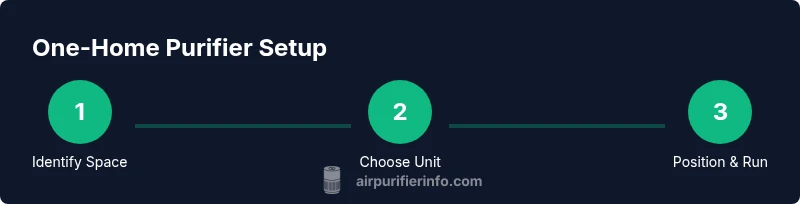
- 1
Identify the target space
Measure the room, note ceiling height, and identify pollution sources (pets, cooking, smoking, dust). This helps you select a purifier with appropriate CADR and filter features.
Tip: Record measurements and common pollutant sources to guide model selection. - 2
Choose a purifier with true HEPA and carbon filtration
Select a model that lists a true HEPA filter (not ‘HEPA-like’) and includes an activated carbon stage for odors. Ensure it’s ozone-free and has replacable filters.
Tip: Avoid devices that trade filtration quality for price or extra features. - 3
Check noise level and energy use
Review the noise specification at common speeds and compare annual energy cost estimates. Prioritize models that balance performance with quiet operation.
Tip: If possible, listen to a demo unit in a store before buying. - 4
Plan placement and airflow
Place the purifier away from walls, in a central location if possible, and ensure air can circulate freely. Position to optimize cross-room airflow in open layouts.
Tip: Avoid corners and area rugs that can impede intake. - 5
Set up maintenance reminders
Use the device’s indicator lights or app notifications to track filter life. Maintain a simple replacement log for consistency.
Tip: Keep a calendar reminder aligned with replacement intervals. - 6
Evaluate after a trial period
Run the purifier for 7–14 days and assess dust levels, odors, and any allergy symptoms. If needed, adjust placement or consider a higher CADR model.
Tip: Document changes to compare before/after air quality.
Questions & Answers
What does a 'one home air purifier' mean for a multi-room home?
It means selecting one well‑sized purifier that can effectively clean the air in a primary living area or a central open space. For larger homes, you may still benefit from placing one unit in the most-used area and reassessing air flow, rather than buying multiple devices upfront.
A single purifier can work well in a central living space. For larger homes, start with one unit and consider adding another if air quality is uneven.
Do I really need a dedicated carbon filter in addition to HEPA?
Yes, carbon filters target odors and certain chemical pollutants that HEPA alone cannot remove. A combination HEPA + activated carbon setup is common for most homes seeking comprehensive air cleanup.
HEPA captures particles, carbon handles odors. Together they cover more pollutants for everyday living.
What features are essential in a single purifier for a bedroom or living room?
Essential features include true HEPA filtration, a carbon stage, ozone-free operation, clearly labeled replacement indicators, and reasonable noise levels. Energy efficiency and reliable customer support are helpful extras.
Look for true HEPA, carbon filter, ozone-free, and a clear filter indicator. Noise and energy use matter for bedrooms.
How often should filters be replaced in typical use?
Replacement intervals vary by model and usage. Follow the manufacturer’s schedule and monitor indicator lights. Keeping a maintenance log helps ensure you replace filters before performance declines.
Check the filter life indicator and replace on schedule; log replacements to stay on track.
Can a purifier remove cooking odors effectively?
A purifier with an activated carbon stage can reduce cooking odors, particularly in open-plan spaces. It won’t eliminate all odors instantly but can significantly lessen lingering smells when run consistently.
Activated carbon helps with cooking odors, especially in open spaces with continuous use.
Is it better to use multiple purifiers in a larger home?
For very large homes or several high‑pollution zones, multiple purifiers can provide uniform air quality. Start with one strong unit in the most-used area and assess whether additional units improve overall cleanliness.
In big homes, one strong purifier helps most; add more if air quality varies by room.
Watch Video
Main Points
- Match purifier size to room and pollutant targets.
- Prioritize true HEPA plus carbon filtration with ozone-free operation.
- Place for optimal airflow and minimal obstructions.
- Schedule regular maintenance for consistent performance.
- Evaluate after a short trial and adjust as needed.