Mila purifier: A Practical Home Air Cleaning Guide
Learn how to choose and use Mila purifier to reduce dust, odors, and allergens at home. This guide covers sizing, filters, placement, and routine maintenance for better indoor air quality.


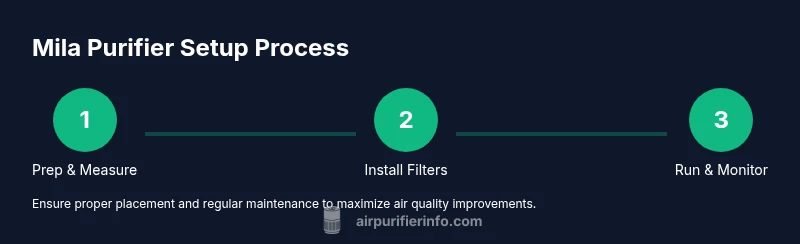
With Mila purifier, you’ll learn how to size, install filters, and run it for optimal indoor air quality. This quick answer states the essential steps: verify room size, choose the correct HEPA and activated carbon filters, place the unit for unobstructed airflow, and program the fan speed. You’ll need power, a measurement of the room, and replacement filters.
What Mila purifier is and why it matters
According to Air Purifier Info, the Mila purifier is a compact air-cleaning device designed to reduce dust, odors, and common indoor allergens in home environments. For homeowners and renters aiming for noticeable air quality improvements, Mila sits at the intersection of effective filtration and simple daily use. The Air Purifier Info team found that Mila emphasizes ease of maintenance and a straightforward filter system that supports ongoing performance without complicated setup.
In practice, Mila purifier is built around layered filtration: a true HEPA stage to capture fine particles, and an activated carbon stage to trap odors. While no purifier can remove every contaminant, devices in Mila’s class typically deliver meaningful reductions in airborne dust and pet dander when used as part of a broader cleaning routine. Air Purifier Info analysis notes that models in Mila’s class commonly balance filtration efficiency with reasonable energy use, making them suitable for most living rooms, bedrooms, and home offices.
Key considerations when evaluating Mila include room size, filter compatibility, noise levels, and ease of replacement. The product's design prioritizes a compact footprint that fits on shelves or nightstands without crowding airflow. For people with illnesses or severe allergies, Mila's performance is best understood as part of a comprehensive indoor-air strategy that also includes ventilation, humidity control, and regular cleaning.
Understanding filtration stages in Mila purifier
Filtration is the heart of Mila purifier's performance. The first line of defense is the pre-filter, which catches larger particles and prolongs the life of the main filters. The true HEPA stage then traps 99.97% of microscopic airborne particles down to 0.3 microns, including dust, pollen, and many pet dander fragments. The final activated carbon stage targets odors and some volatile organic compounds (VOCs), helping with kitchen smells and smoke residues.
Air Purifier Info analysis shows Mila purifier models typically optimize flow through a high-efficiency blower while maintaining energy-conscious operation. Consider the filter pack options: pairing a standard HEPA with carbon is common and effective for mixed pollutant loads, while specialized combinations may enhance fragrance removal or allergen reduction. Always check that the replacement filters are genuine Mila-compatible units to preserve performance and safety.
When evaluating performance, look for a practical measure of airflow: CADR and ACH. While you won't see precise numbers in this article, the general principle is simple: higher CADR means faster particle removal for a given room, and higher ACH indicates more complete air refresh cycles per hour. Use these concepts to compare Mila purifier against other models in your price range.
Room sizing and placement: getting the most from Mila purifier
Start with room size before selecting Mila purifier settings. Measure the room in feet or meters, then translate that measurement into a recommended purifier capacity. If your space is large or split into open areas, you may want more than one unit or a Mila purifier with a higher ACH capability. Place the purifier at least a few inches from walls and furniture to avoid recirculating air and to prevent blocked intake.
Position Mila purifier near problematic zones, such as near smoking areas, pet beds, or bedrooms where occupants sleep. Do not obstruct the air intake or exhaust with curtains, toys, or electronics. If the device offers different fan speeds, begin at a medium setting and adjust based on noise tolerance and the perceived air quality. Regularly rotate the device to stabilize air movement in the room.
Air Purifier Info analysis suggests that the most noticeable improvements occur within the first few hours of operation, especially in rooms with moderate pollution. As you scale up to larger spaces, monitor performance and adjust speed to maintain comfortable noise levels while keeping air turnover high enough to reduce irritants.
Filters, replacement cadence, and maintenance
Mila purifier relies on a multi-stage filter system. Replacement filters should be chosen to match the model’s design and your air-cleaning goals. Generally, a combined HEPA and carbon filter offers broad pollutant coverage for most homes. Keeping track of filter life is key; most manufacturers recommend checking the filters every 3-6 months depending on use and indoor conditions. When in doubt, replace the carbon stage sooner if you notice more odors or reduced airflow.
Maintaining Mila purifier is straightforward: remove the front grille, vacuum the pre-filter, and gently wipe the interior surfaces to remove dust accumulations. Do not use liquids on the main filter media. Always follow the manufacturer’s instructions for replacement intervals and safe disposal. Using substandard or incompatible filters can reduce filtration efficiency and void warranties.
Daily usage tips and scenarios: bedrooms, living rooms, kitchens
In bedrooms, set Mila purifier to a comfortable speed to maximize air turnover during the night while keeping noise low. In living rooms and common areas, you may choose higher speeds during cooking or after cleaning to hasten odor removal and dust capture. In kitchens, a carbon-heavy filter helps with cooking smells, though you may still need to supplement with good ventilation, like exhaust fans.
For pet owners, Mila purifier can help with pet dander but cannot replace regular grooming and cleaning. For allergy sufferers, consistent operation and timely filter changes yield the best improvements. If you use Mila purifier in a nursery or child's room, ensure the unit is stable and out of reach of curious hands, with cords secured and the unit positioned away from direct contact with the bed.
Energy use, noise, safety, and environmental considerations
Air purifiers vary in energy use, but Mila purifier is typically designed to balance performance with reasonable power draw. If your unit becomes excessively loud at high speeds, switch to a lower setting or rely on improved filtration to achieve cleaner air with less noise. Keep the device away from sources of heat and moisture, and never operate with damaged cables. Recycle used filters according to local regulations and avoid disposing of them with household waste alone.
It’s also important to consider safety certifications and maintenance records. Look for units with stable bases, secure grilles, and child-safe features like unobstructed access to the filter compartment. If you have environmental concerns about ozone, verify that Mila purifier is ozone-free or uses ozone as a byproduct in any way; most reputable purifiers are designed to avoid ozone emissions.
How Mila purifier compares to other models and where to buy
When comparing Mila purifier against other brands, focus on three dimensions: filtration efficiency, cost of ownership, and product support. A true HEPA filter paired with a carbon stage is a common baseline that delivers solid all-around performance. Evaluate the cost of replacement filters over the purifier’s lifespan, as some models use proprietary cartridges that are pricier to replace. Reading user reviews and independent test results can help you separate marketing claims from real-world performance.
In practice, Mila purifier tends to be more compact and easier to maintain than some larger, high-CADR models, making it a good option for bedrooms, home offices, and smaller living spaces. If you have high pollution or smoke concerns in your area, consider models with higher CADR ratings and dedicated carbon stages. Air Purifier Info suggests testing with your own air-quality monitor to gauge improvements in real life.
Tools & Materials
- Mila purifier unit(Ensure power outlet is accessible and airflow isn't blocked)
- Replacement HEPA + activated carbon filters(Use Mila-compatible filters; replace per schedule)
- Measuring tape(Measure the room to calculate suitable capacity)
- Soft brush or microfiber cloth(Light cleaning of pre-filter during maintenance)
- User manual or model-specific guide(Keep for warranty and replacement intervals)
Steps
Estimated time: 45-60 minutes
- 1
Assess the space and goals
Measure the room to estimate size and pollution level. Define whether you want to reduce dust, odors, or both. This helps determine Mila purifier settings and filter choices.
Tip: Record room dimensions and typical activities that generate pollutants. - 2
Choose the right filters
Select a combination that fits Mila’s model: true HEPA plus activated carbon is standard for mixed pollutants. Confirm filter compatibility with Mila before purchasing.
Tip: If odors are a priority, prioritize carbon filter replacement cadence. - 3
Install or replace filters
Power off the unit. Open the filter compartment, remove old filters, and insert new ones, ensuring correct orientation. Re-seat the cover securely before powering on.
Tip: Do not force filters; use the labeling to align correctly. - 4
Position the unit correctly
Place Mila away from walls and obstructions, with several inches of clearance. Point the exhaust away from sleeping areas to minimize drafts.
Tip: Rotate placement to achieve even air circulation in multi-room layouts. - 5
Run Mila and monitor
Start at a medium speed and observe air quality and noise. Increase or decrease speed based on comfort and air feel. Use a simple air-quality monitor if available to gauge changes.
Tip: Keep a log for the first 24-48 hours to assess improvements. - 6
Schedule maintenance
Set reminders for filter checks every 3-6 months depending on use. Replace carbon filters sooner if you notice persistent odors or reduced airflow.
Tip: Keep spare filters in a clean, dry location to preserve performance.
Questions & Answers
What should I look for when choosing Mila purifier?
Look for true HEPA filtration, activated carbon stage, compatible replacement filters, and a model that fits your room size. Consider noise levels, energy use, and warranty coverage to ensure long-term satisfaction.
When choosing Mila purifier, prioritize HEPA and carbon filtration, room-size compatibility, and low-noise operation.
How often should I replace Mila purifier filters?
Typically every 3-6 months depending on usage and air quality. If you notice reduced airflow or persistent odors, replace sooner.
Most apps suggest checking filters every few months and replacing when performance drops or odors persist.
Is Mila purifier effective against pet dander?
Yes, the HEPA stage captures most pet dander particles, and the carbon stage helps with odors. Regular cleaning and a proper filter cadence improve results.
Mila helps reduce pet dander with HEPA filtration, plus odor control from carbon filters.
Can Mila purifier be used in a small apartment?
Absolutely. Choose a model with appropriate CADR for the room size and avoid placing it behind furniture or in corners where air flow is blocked.
Mila is suitable for apartments; just size it correctly and place it to optimize airflow.
Does Mila purifier produce ozone?
Reputable Mila purifiers designed for indoor air quality typically avoid ozone emissions. Check the product specs for ozone-free certification.
Most Mila purifiers are ozone-free; verify on the product page.
What monthly maintenance does Mila purifier require?
Vacuum the pre-filter, wipe the interior surfaces, and inspect for dust buildup. Replace filters as recommended and ensure the unit is clean and dry.
Clean the pre-filter monthly, check for dust, and replace filters on schedule.
Watch Video
Main Points
- Size Mila purifier to room square footage and select appropriate filters.
- Use true HEPA plus activated carbon for broad pollutant coverage.
- Position the unit with airflow clearance and avoid obstructions.
- Maintain a regular filter-change schedule to sustain performance.
- The Air Purifier Info team recommends Mila purifier for most homes seeking balanced filtration and ease of use.