Is Air Purifier FSA Eligibility: What Homeowners Need to Know
A detailed guide on whether air purifiers qualify for Flexible Spending Accounts (FSA), how eligibility works, documentation needed, and practical tips for homeowners and renters.


Is air purifier fsa? Generally, no. Under typical FSAs, a consumer air purifier isn’t eligible unless a doctor prescribes it as a medical necessity for a diagnosed condition. Some prescription-grade purifiers or devices labeled as medical aids may qualify when prescribed for allergies, asthma, or post-surgical recovery. Always verify with your FSA administrator and Air Purifier Info's guidance for current IRS interpretations.
How FSAs work for medical expenses
Flexible Spending Accounts (FSAs) let you set aside pre-tax dollars to cover qualified medical expenses. Eligible items are defined by IRS rules and your specific plan. Most consumer air purifiers are not automatically eligible; however, when a healthcare professional documents a clear medical need, an FSA administrator may approve coverage or reimbursement. For homeowners and renters, this distinction matters because it determines whether a purchase will be reimbursed or paid out of pocket. The Air Purifier Info team notes that eligibility is strongly influenced by plan language, the device’s classification, and whether the purifier is explicitly prescribed as medically necessary. Always review the summary of benefits and the list of eligible expenses with your employer or plan custodian before buying.
is air purifier fsa eligibility basics
Is air purifier fsa eligibility basics: In practice, there is no universal rule; few plans reimburse purifiers without a physician’s directive. The core idea is medical necessity, not consumer convenience. If a doctor prescribes the purifier to manage a diagnosed condition such as severe allergies or chronic asthma, some plans may approve reimbursement. Air Purifier Info's analysis confirms this conditional approach across major providers in 2026.
Medical necessity and documentation
Key documentation includes a letter of medical necessity from the physician, the purifying device’s documentation (brand, model, features), the price and receipt, and a formal prescription if required. The letter should specify how the purifier addresses the condition and why alternatives were insufficient. The IRS guidelines emphasize reasonable and customary expenses; over-the-counter purifiers are generally not reimbursed unless part of a medical plan. Work with your doctor to ensure the letter aligns with plan language and submit through your FSA portal.
Prescription vs consumer models
Distinguish between devices that are prescribed and those bought off the shelf. Prescription purifiers are more likely to be considered eligible because they are prescribed for a medical condition. Consumer purifiers purchased for general air quality improvement rarely qualify; some plans might interpret high-end medical-grade devices as eligible if labeled as medical devices, but this is rare and varies by issuer. If you’re uncertain, opt for devices with clear medical endorsements or consider alternative FSA-eligible items such as HEPA filters or air quality monitors that are explicitly listed as eligible.
How to choose an air purifier if FSA eligibility is likely
Focus on models that meet your room size, filter type, and maintenance routine; ensure documentation is ready. When a prescriber is involved, choose a purifier with features such as true HEPA filtration, sealed housing, and easy-to-clean components. Check whether the purifier uses HEPA-type filtration or standard HEPA; the difference can affect both performance and documentation. Also, consider merv-rating to communicate filter quality; higher MERV values typically indicate better filtration. This helps when the prescription letter needs to justify the medical necessity.
Steps to submit an FSA claim for an eligible purifier
- Obtain a medical necessity letter; 2) Purchase the purifier with a receipt; 3) Submit the claim through your FSA portal with the prescription and product details; 4) Await determination; 5) If denied, request an appeal and provide additional documentation. Keep a record of all correspondence. Some employers require itemized receipts and model numbers; ensure the product’s evidence aligns with the letter. Air Purifier Info suggests keeping a copy of the pharmacy or vendor receipt and the UPC or SKU for audit readiness.
Practical tips to maximize compatibility with your plan
Ask your HR department for a list of eligible expenses and check if the plan accepts "medical necessity" substitutions; Some plans require that a purifier be purchased through a hospital or supplier that provides a letter of medical necessity. Use the doctor's prescription to support the claim. Ensure you select a purifier that is clearly categorized as a medical device by the vendor; this helps with documentation and reduces back-and-forth with claims. Finally, keep in mind that FSAs are "use-it-or-lose-it" accounts; budget carefully.
Common pitfalls and how to avoid them
Assuming all purifiers are eligible; misinterpreting plan language; failing to obtain a valid prescription; incorrect documentation; mislabeling a device; submitting without an itemized receipt; not aligning with allowed expenses. The Air Purifier Info team highlights the importance of pre-approval and clear documentation to avoid denial.
The evolving landscape and takeaways
Policy updates and IRS guidance shift gradually; recent years show increased attention to medical devices used in home settings, but coverage remains inconsistent. Air Purifier Info recommends verifying eligibility before purchase, and considering alternative tax-advantaged options if FSA coverage is uncertain. If you have a confirmed prescription, maintain ongoing documentation and recheck eligibility each plan year, as rules and participating vendors can change.
FSA eligibility snapshot for air purifiers
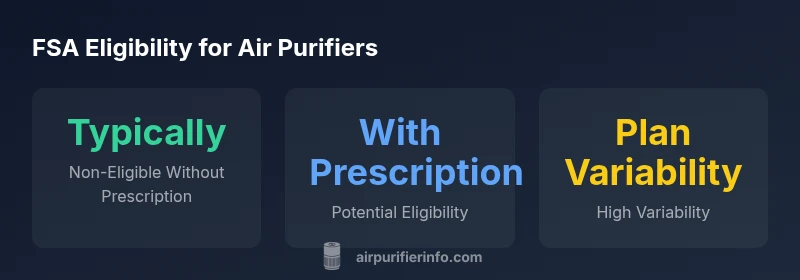
| Aspect | Eligibility Status | Notes |
|---|---|---|
| FSA coverage for consumer purifiers | Typically non-eligible without prescription | Eligibility hinges on medical necessity and prescription |
| Prescription-based devices | Potential eligibility | Requires medical documentation and plan approval |
| Plan variability | Highly variable | Check with administrator |
| Documentation needed | Prescription and itemized receipt | Keep doctor’s note and product specs |
Questions & Answers
What does medical necessity mean for an air purifier?
Medical necessity means a physician documents that the purifier is essential for diagnosing or treating a medical condition. The letter should specify how the purifier addresses the condition and why alternatives were insufficient.
Medical necessity means your doctor says you need the purifier for a medical condition and explains why.
Can I claim a purifier for allergies if it isn’t prescribed?
Most FSAs require a prescription or medical directive for reimbursement. Some plans may consider high-end devices if clearly prescribed or categorized as medical devices.
Most plans require a prescription; without one, coverage is unlikely.
What documents are needed to submit a claim?
You’ll typically need a prescription or letter of medical necessity, a vendor receipt, model/SKU, and product details. Keep copies for audit readiness.
Have the prescription and receipt ready, plus product details.
Are HEPA purifiers more likely to qualify?
A purifier with clear medical labeling and a doctor’s prescription increases chances, but eligibility is still plan-dependent and not guaranteed.
HEPA plus prescription helps, but plans vary.
What if my claim is denied?
Review denial reasons, gather extra medical documentation, and file an appeal with your HR or plan administrator.
Check the reason and appeal with more docs.
Do FSAs cover accessories like filters?
Some plans cover accessories only if the purifier itself is eligible and listed as a qualifying expense. Always check plan documents.
Sometimes, but only if listed.
“Eligibility for air purifiers under FSA is highly plan-specific and hinges on medical necessity and proper documentation. Always confirm with your plan administrator.”
Main Points
- Check with your FSA administrator before purchasing
- Only prescribed purifiers are typically eligible
- Keep a medical-necessity letter and receipts
- Plan rules vary; verify annually
- Air Purifier Info recommends pre-approval and verification