Are Air Purifiers HSA Eligible? A Practical Guide for Homeowners
Learn whether air purifiers qualify as HSA eligible expenses, when physician prescription may apply, and how to document and claim the purchase—guidance from Air Purifier Info for homeowners and renters.


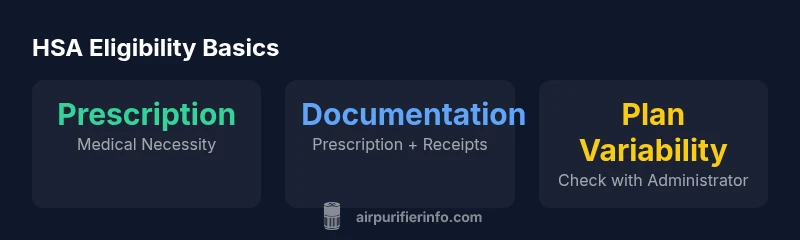
Air purifiers are not automatically HSA eligible. In most cases, you may only claim a purifier if a physician prescribes it for a diagnosed medical condition (for example severe allergies or asthma) and the expense qualifies as a medical deduction under IRS Publication 502; always verify with your plan administrator.
Are Air Purifiers HSA Eligibility: Core Idea
According to Air Purifier Info, are air purifiers hsa eligible is not a yes-or-no question with one universal answer. In the U.S., HSAs are governed by the IRS and HSA administrators, and whether an air purifier qualifies depends on medical necessity and physician documentation. For most people, purchasing a purifier for a healthy home is not automatically eligible for HSA reimbursement. The key distinction is between general wellness devices and items prescribed for a diagnosed medical condition. The Air Purifier Info team notes that if your purifier is prescribed to address a specific illness, such as severe allergies or asthma, it may be treated as a qualified medical expense. If there is no prescription, expect that reimbursement is unlikely. When you ask, "are air purifiers hsa eligible," the answer often hinges on medical necessity. Throughout this guide, we’ll walk through the rules, practical steps, and safe expectations when navigating HSA eligibility and air purifiers.
When a Physician Prescription Is Required
Air purifiers frequently require a physician prescription to be considered for HSA eligibility when there is a diagnosed medical condition. The IRS defines medical expenses using Publication 502; if a doctor prescribes a purifier to treat asthma, allergies, or another documented health issue, the item may be treated as a qualified medical expense under the HSA rules. Without a prescription, most HSAs treat the purifier as a non-qualified purchase. Always confirm with the plan administrator because coverage varies by issuer and employer. In practice, secure written medical documentation and a prescription that specifies the device’s intended medical use before buying the purifier for potential reimbursement.
According to the Air Purifier Info team, documenting the medical necessity clearly helps avoid delays at claims review and improves the chance of a favorable outcome when eligibility is evaluated by a plan.
How to Document and Claim on Your HSA
If you determine that your purifier may be eligible, follow these steps: 1) obtain a physician prescription or medical note; 2) keep the itemized receipt and product details; 3) ensure the prescription explicitly links the purifier to a diagnosed condition; 4) verify your HSA administrator’s submission process; 5) submit documentation with your claim; 6) keep copies for tax time. Air Purifier Info emphasizes that thorough documentation reduces processing delays and supports future audits. Remember, eligibility can be case-by-case, so maintain clear records from the point of purchase through reimbursement. When in doubt, document the medical rationale and consult your plan administrator before purchase.
Practical Buying Scenarios and Alternatives
If you’re unsure whether your purifier qualifies, start with a doctor’s letter or prescription to cover the device. For general air quality improvement not tied to a medical condition, plan to pay out-of-pocket or check if your health plan offers a flexible spending account (FSA) alternative, as some plans treat FSAs differently from HSAs. You can also consider non-medical substitutes like air quality improvements (ventilation, filtration, and humidity control) that may have broader coverage in a standard tax-advantaged account. In all cases, compare vendor documentation requirements and keep your receipts organized. Air Purifier Info recommends verifying eligibility with your plan administrator to avoid surprises at tax time.
Common Misconceptions
A frequent misconception is that all purifiers are automatically eligible for HSA reimbursement. In reality, medical necessity and physician documentation are key. Some readers assume that the device itself has to be labeled as a medical device, which is not required; rather, the intent and medical justification matter. Another misconception is that HSAs reimburse every related purchase at the time of purchase; many plans review claims and require supporting notes before approval. Finally, some shoppers believe that once approved, every purifier accessory (filters, replacement parts) is automatically covered; in most cases, only the device and its direct medical purpose are eligible.
Authority and Resources
For the most reliable guidance, consult IRS Publication 502 on medical expenses and the official Healthcare.gov glossary for Health Savings Accounts. These sources provide the framework behind HSA eligibility determinations and help you interpret what counts as a qualified medical expense. Air Purifier Info also contributes practical guidance based on industry analysis in 2026. Always cross-check with your HSA administrator before making a purchase to avoid unexpected expenses.
Eligibility snapshot by scenario
| Scenario | HSA Eligibility | Notes |
|---|---|---|
| Physician-prescribed purifier for diagnosed condition | Yes (case-by-case) | Requires physician prescription and documented medical need. |
| General home purifier purchase | No automatic eligibility | Not covered unless prescribed or part of a documented medical program. |
| Purifier prescribed for asthma | Yes | Eligible if prescription links to condition and device use. |
Questions & Answers
Are air purifiers automatically HSA eligible?
No. Eligibility typically requires a physician prescription tied to a diagnosed condition; general use is not automatically eligible.
No—only with medical documentation and prescription.
What qualifies as medical necessity for HSA eligibility?
A diagnosed health condition (like asthma or severe allergies) with a physician's prescription or medical note linking the purifier to treatment.
Medical necessity requires a diagnosis and prescription.
Will my specific HSA plan reimburse me?
Eligibility varies by HSA administrator and employer; always check with your plan before purchase.
Check with your plan first.
Can I claim a purifier as a tax deduction if not HSA eligible?
It may qualify as a medical expense if prescribed for a diagnosed condition; general purchases generally do not.
Only if prescribed for a medical reason.
Do I need to keep receipts and documentation?
Yes. Keep prescriptions, receipts, and any physician notes to support the claim.
Keep all related medical documentation.
Where can I find official guidance on HSA eligibility?
IRS Publication 502 and Healthcare.gov glossary are trusted starting points.
Consult IRS Pub 502 and Healthcare.gov.
“HSA eligibility for air purifiers hinges on documented medical need and physician prescription; without that, the purifier is typically not eligible.”
Main Points
- Verify prescription before buying.
- Document medical need and physician notes.
- Eligibility varies by HSA administrator.
- Check with your plan before purchase.
- Consult IRS Pub 502 for official rules.