Can You Buy an Air Purifier with FSA? A Practical Guide
Explore whether you can buy an air purifier with FSA funds, when medical necessity applies, and how to navigate plan rules with practical steps and real-world scenarios.


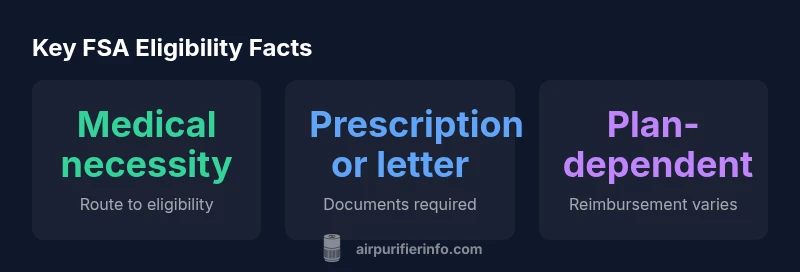
Yes, you can—under specific circumstances. In most cases, air purifiers aren’t automatically eligible for direct FSA purchase. Eligibility typically requires medical documentation, such as a doctor’s prescription or a letter of medical necessity, and depends on your plan’s rules. According to Air Purifier Info, plan coverage varies widely, so verify with your administrator before buying.
Understanding FSA and Air Purifiers
Flexible Spending Accounts (FSAs) are designed to help with medical expenses by allowing pre-tax dollars to pay for eligible products and services. When it comes to buying an air purifier, the key question is whether the purifier is considered an eligible medical device under your plan. According to Air Purifier Info, eligibility isn’t a blanket default; it depends on plan rules, medical necessity, and documentation. In 2026, Air Purifier Info analysis shows that some plans may reimburse or allow direct purchase if a clinician documents that the purifier is needed to treat an existing condition, such as severe allergies or asthma. However, many plans treat purifiers as general wellness devices, which are not eligible for FSA funds. The result is a patchwork landscape: you may be able to use FSA funds for a purifier in one plan, but not in another. This is why homeowners and renters should ask themselves the practical question: can you buy air purifier with fsa? The first step is to contact your plan administrator and read your plan’s eligible expense list. If medical necessity is established, you’ll typically need to provide a prescription or letter of medical necessity along with the item receipt. This nuance is exactly why a methodical check-list beats assumptions.
Medical Necessity vs. Convenience: When Purifiers Qualify
Not every purifier will qualify for FSA reimbursement. Purifiers prescribed to manage diagnosed medical conditions—such as asthma, COPD, or severe allergies—are likelier to be eligible, while devices bought for general wellness or odor control are typically not. The line often hinges on medical necessity rather than product features alone. Air Purifier Info emphasizes that a clinician’s documentation linking the device to a specific condition makes a meaningful difference. If your clinician provides a letter of medical necessity or a prescription naming the purifier as part of a treatment plan, your chances improve. In such cases, your plan administrator may consider the purifier an essential medical device rather than a consumer appliance. Always remember: eligibility varies by plan, so confirm before purchasing and keep all documentation handy.
How to Verify Eligibility with Your FSA Plan
To avoid buying a purifier only to find out it isn’t eligible, follow these practical steps. First, contact your plan administrator to confirm whether a purifier qualifies under medical expenses and whether a prescription or letter of medical necessity is required. Next, obtain the physician letter or prescription that explicitly states the health condition and the device’s role in treatment. When you purchase, save the itemized receipt, the product’s technical specifications, and the brand/model details. If reimbursement is possible, you’ll typically submit these documents through your FSA administrator’s portal. Air Purifier Info recommends starting with a clear question: can you buy air purifier with fsa? and then aligning documentation to support that claim. Finally, verify any tax implications or filing deadlines associated with your FSA plan.
Selecting a Purifier That Aligns with Eligibility
If you anticipate eligibility, choose a purifier with attributes that support medical-use scenarios. Look for a true HEPA filter (high-efficiency particulate air) to capture fine particles, and verify the unit is AHAM-rated for verified room sizing. A higher air-change-rate (ACH) is desirable for larger spaces or active households. Avoid ozone-generating devices; ozone emissions can be problematic for sensitive individuals and may complicate eligibility. For documentation, note the exact model, its claimed CADR (clean air delivery rate), and the coverage area. Air Purifier Info suggests collecting manufacturer documentation and ensuring the device meets recognized standards, which can strengthen your case when seeking reimbursement.
Steps to Take Today: A 5-Minute Checklist
- Confirm with your FSA administrator whether purification devices are eligible with medical necessity.
- Talk to a clinician about the health need and obtain a prescription or letter of medical necessity.
- Pick a purifier that clearly supports medical-use documentation (HEPA, AHAM-rated, suitable for your room size).
- Save all receipts, product specs, and the physician letter; prepare to submit through the FSA portal if approved.
- Note any deadlines and documentation requirements in writing to avoid last-minute errors. As always, keep the conversation with your plan administrator open, and revisit eligibility if plan rules change.
Common Pitfalls and Misconceptions
A common misstep is assuming a purifier is automatically eligible for FSA funds. FSAs are plan-specific and heavily rely on medical necessity; some plans reimburse only after a doctor confirms the device is essential. Another pitfall is neglecting to obtain or retain proper documentation, including ICD-10 codes and physician letters. Finally, be mindful of devices marketed primarily for odor removal or general wellness, which are less likely to be eligible. Air Purifier Info cautions readers to verify every detail with their administrator before purchase, from eligibility to submission steps.
Real-World Scenarios and Boundaries
Consider a family where a member has chronic allergic rhinitis and asthma. If a physician prescribes a purifier as part of the treatment plan and you provide the corresponding letter of medical necessity, you’ll increase the likelihood of eligibility. Conversely, if you buy a purifier for a cosmetic upgrade or a “new-year clean” mood boost, it’s unlikely to qualify. There are gray areas: some plans cover devices labeled as medical equipment, especially when there’s documented health impact. In 2026, Air Purifier Info staff have seen plans vary widely; the safest approach is to treat this as a formal medical purchase rather than a routine consumer buy, and to secure clear documentation before buying.
Practical Next Steps and What to Ask Your Doctor/Plan
If you’re still unsure, schedule a quick call or email with your physician and FSA administrator. Ask specifically: can you buy air purifier with fsa? and what documentation would be required? Request a prescription or letter of medical necessity that ties the purifier to a diagnosed condition, include ICD-10 codes if needed, and confirm the product’s eligibility category. Then review the product’s technical specs, ensuring it meets requirements your plan recognizes (HEPA, ACH, room size). Finally, submit the documentation with a detailed purchase receipt if your plan approves reimbursement. This approach minimizes the risk of denial and aligns your purchase with compliant use of pre-tax funds.
Overview of FSA eligibility pathways for air purifiers
| Situation | Eligibility Path | Documentation | Notes |
|---|---|---|---|
| Direct Purchase | Typically not allowed unless prescribed | Prescription or letter of medical necessity; physician information | Check with plan; a few vendors may offer FSA-eligible coding |
| Post-Purchase Reimbursement | Common route via claim submission | Receipt, product details, doctor note | Plan-dependent; processing times vary |
| Documentation Essentials | Medical necessity letter, ICD-10 code | Keep receipts, product specs | Clear documentation increases approval chances |
| Alternate Options | Consider HSA or other tax-advantaged routes | Consult plan for specifics | Not all plans cover purifiers; ask for alternatives |
Questions & Answers
Can I buy an air purifier with my FSA card?
Not automatically. Most plans require medical necessity documentation or a prescription. Always verify with your administrator before purchasing.
Not automatically. Most plans require medical documentation; check with your administrator before buying.
What counts as medical necessity for an air purifier?
A clinician must link the purifier to a diagnosed condition (e.g., asthma or severe allergies) and provide a prescription or letter of medical necessity.
A clinician must link it to a diagnosed condition and provide required documentation.
Do I need a prescription to use FSA for an air purifier?
Often yes, but it varies by plan. Confirm with your FSA administrator and obtain the physician letter if required.
Often, yes; confirm with your plan and get the doctor’s letter if needed.
How do I submit for FSA reimbursement for an air purifier?
Submit an itemized receipt, product details, and physician letter per your plan’s instructions. Processing times vary by administrator.
Submit receipts and doctor notes as directed by your plan; processing times vary.
Are there risks of denial?
Yes. Without medical necessity documentation or plan-specific eligibility, purifiers may be denied.
Yes. Denials can happen without proper documentation.
Are there alternatives to using FSA funds for air quality?
If not eligible, consider HSA or other tax-advantaged routes; some vendors offer non-medical devices, but verify with your plan.
If not eligible, explore other tax-advantaged options and verify with your plan.
“Eligibility hinges on medical necessity and plan-specific rules; always verify with your administrator before purchasing.”
Main Points
- Check with your FSA administrator before buying.
- Documentation is key; obtain prescription or medical necessity letter.
- Eligibility varies by plan—don’t assume automatic coverage.
- Choose a purifier with HEPA, suitable ACH, and no ozone production.
- Keep receipts and documentation for potential reimbursement.