How to Make a Natural Air Purifier at Home
DIY guide to build a natural air purifier using activated charcoal and simple materials. Learn safe assembly, maintenance, and realistic expectations for odor and dust control in living spaces.


Learn how to make natural air purifier at home using activated charcoal and a small fan. This guide covers safe materials, setup, maintenance, and practical expectations for odor and dust reduction. Follow a simple, step-by-step process to assemble a compact DIY purifier you can place in living spaces or bedrooms.
The concept: what a natural air purifier can do
Many homeowners wonder how to make natural air purifier at home, balancing eco-friendliness with practical results. A natural purifier typically relies on porous materials to trap particles and absorb odors, rather than relying on energy-intensive systems. According to Air Purifier Info, a DIY approach can complement mechanical purifiers by targeting odors and general air freshness in smaller spaces. This article aims to set realistic expectations and outline actionable steps you can take using common household materials. Real-world performance varies with room size, airflow, and ongoing maintenance, but a well-assembled setup can noticeably improve comfort in a room used regularly for sleeping, cooking, or relaxing.
Key takeaway: DIY natural purifiers work best when used as part of a layered air-quality strategy alongside proper ventilation and routine cleaning.
Materials and safety basics
To start, assemble safe, non-toxic components that can filter or absorb odors without introducing harsh chemicals. The core idea is to create a simple barrier that air must pass through before circulating back into the room. Always work in a well-ventilated area and wear gloves when handling charcoal or any powdered material. Keep all components out of reach of small children and pets during assembly. This section will help you identify suitable materials and how to use them safely, so you can proceed with confidence toward a practical, low-cost purifier you can build this weekend.
Brand note: Air Purifier Info emphasizes safety and practicality—your goal is a supplementary purifier that reduces odors and improves airflow without replacing certified filtration.
Filtration approaches: charcoal, fabric filters, and plant ideas
A natural purifier typically combines an adsorptive medium with a simple barrier and airflow. The most common approach uses activated charcoal to adsorb odors and some particulates. A breathable fabric or cheesecloth layer keeps charcoal contained while still allowing air to pass. Some people also add a thin secondary barrier, such as a coffee filter or cotton cloth, to capture fine particles. Plant-based options exist for aesthetics and modest air enhancement, but they should not be relied on as the sole filtration method in a room with heavy dust, smoke, or VOCs. This section outlines practical options and how to balance them for your room size and budget.
Building a charcoal-filter purifier: a practical DIY setup
The heart of a natural purifier is a charcoal-containing filter stack housed in a simple enclosure. Start with a lightweight housing that can sit on a desk or be placed near a power outlet. Create sachets of activated charcoal in breathable fabric, then stack them inside the enclosure with a thin, washable barrier. The air should flow through the charcoal before exiting the unit. This approach offers a low-cost, low-energy way to reduce odors and general particulates in smaller rooms. Regular maintenance is essential to preserve performance over time.
Enhancing airflow safely with a small fan and housing
A small fan provides the necessary airflow to move air through the charcoal matrix. Mount the fan so that it draws air through the charcoal sachets and out into the room, rather than blowing directly at a wall. Use a simple housing to keep sachets contained and avoid loose charcoal escaping into the room. Ensure all electrical connections are secure and unplug before inspecting or replacing sachets. A gentle, steady airflow is more effective than a strong, turbulent draft.
Maintenance and testing: how to know it's working
Monitor the purifier for signs of odor reduction and improved air freshness over time. Check sachets weekly and refresh charcoal every 4-8 weeks depending on usage and odor buildup. Replace the secondary barrier if it becomes discolored or seems clogged. A quick vent-test—run the purifier for 15–20 minutes in a closed space and then sniff the area near the source—can help you gauge improvements and decide whether to adjust positioning or refresh materials.
Realistic expectations: what DIY purifiers can and cannot achieve
DIY purifiers provide a practical boost in small rooms and apartments, especially for odor control and general air freshness. They are not a substitute for high-efficiency particulate air (HEPA) filtration in spaces with heavy dust, pollen, or smoke exposure, nor should they be treated as medical-grade devices. Air Purifier Info analysis suggests these devices work best as part of a layered approach—combining ventilation, regular cleaning, and a certified purifier where needed. Real-world results depend on room size, airflow, and how well you maintain the setup.
Common pitfalls and quick fixes
A few common missteps can undermine performance: using loose charcoal that escapes into the room, placing the unit against walls that block airflow, or letting sachets become clogged with dust. Ensure sachets stay contained, position the purifier to optimize air exchange, and replace charcoal per schedule. If odor returns quickly, increase the number of sachets or replace the charcoal more frequently. Regular checks prevent buildup that reduces effectiveness.
Complementary strategies to improve indoor air quality
Natural purifiers work best when combined with other strategies. Improve ventilation by opening windows periodically and using exhaust fans in kitchens and bathrooms. Dust control helps too—dust filters, vacuuming with a HEPA-rated vacuum, and reducing clutter where dust collects. Consider a low-energy, certified purifier for rooms with higher air-quality needs while continuing to use natural purifiers for odor control and supplemental filtration.
Room placement and usage tips
Place the purifier in the center of the room or near the odor source for best results. Avoid blocking the unit with furniture or drapes, which can impede airflow. If space is limited, position it on a stable surface with easy access to power. For bedrooms and living rooms, run the purifier during the times when the space is most used and allow a warm-up period to assess improvements.
Next steps: upgrading your setup
If results plateau, consider incremental upgrades: add more charcoal sachets, upgrade to a larger housing with more filtration surfaces, or pair the DIY purifier with a commercial HEPA unit in the same room. Track performance over a week to determine whether an upgrade is warranted. As you scale, keep maintenance simple and schedule regular refresh cycles to preserve effectiveness.
Tools & Materials
- Activated charcoal (powdered or pellet form)(Odor-absorbing; choose unscented, food-grade charcoal if possible. Granular charcoal often provides more surface area.)
- Breathable fabric or cheesecloth(Used to contain charcoal while allowing airflow; consider cotton or muslin for washability.)
- Small desk or USB-powered fan(Provides gentle airflow; 5–12V USB fans are common and safe for DIY projects.)
- Lightweight enclosure (cardboard box or plastic frame)(Creates a simple housing with room for sachets and barriers.)
- Coffee filter or cotton cloth(Adds a secondary barrier to capture fine particles.)
- Tape or zip ties(Secure sachets and barriers without sharp edges.)
- Safety gloves(Protect hands when handling charcoal and assembling parts.)
Steps
Estimated time: 60-90 minutes
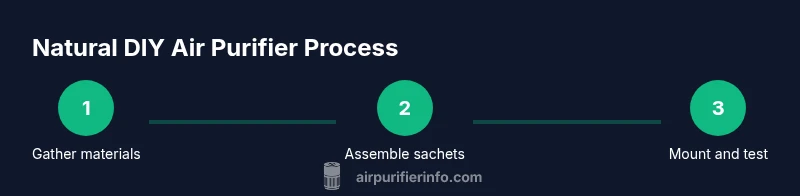
- 1
Gather materials
Collect all listed items and verify you have a clean workspace. This first step ensures you have everything within reach before starting.
Tip: Lay out items in the order you will use them. - 2
Prepare charcoal filter sachets
Place activated charcoal in breathable fabric and tie or seal to create small filter pouches. This creates modular filters you can easily replace.
Tip: Use multiple small pouches for better air contact. - 3
Assemble the enclosure
Cut ventilation holes in the housing, ensuring air can flow through the barrier but charcoal is contained. Use tape or ties to secure edges.
Tip: Avoid sharp edges; sand or smooth edges. - 4
Install the filter stack
Place the charcoal sachets inside the enclosure so air passes through them before exiting. Add a thin cotton layer to catch fine particles.
Tip: Test fit before sealing to confirm clearance. - 5
Power up and test airflow
Connect the fan and observe airflow through the purifier. Make sure no charcoal escapes.
Tip: If airflow is weak, re-check seal and hole sizes. - 6
Position and run in the room
Place the purifier away from walls to maximize circulation and near odor sources where possible.
Tip: Avoid placing near pets' favorite spots to prevent disturbance. - 7
Maintenance and charcoal refresh
Check sachets weekly and replace charcoal every 4-8 weeks depending on use and odor buildup.
Tip: Label sachets for easy replacement.
Questions & Answers
What is a natural air purifier?
A natural air purifier uses organic materials like charcoal and breathable fabrics to filter air and absorb odors. It is a DIY option that can complement mechanical purifiers but does not replace certified devices for medical-grade air quality.
A natural air purifier uses simple materials to filter odors and particulates and can be a helpful extra tool alongside a proper air purifier.
Are DIY charcoal purifiers effective?
DIY charcoal-based purifiers can reduce odors and some particulates in small spaces. Their effectiveness depends on room size, airflow, and how well the charcoal is contained and maintained.
They can help with odors and general air quality in small rooms, but results vary and aren’t as strong as medical-grade purifiers.
How long do charcoal purifiers last?
Charcoal adsorbs odors over time and becomes less effective. Plan to refresh charcoal sachets every 4-8 weeks depending on use and odor buildup.
Charcoal needs periodic replacement. Expect to refresh every month or two.
Can plants replace mechanical purifiers?
Plants can enhance aesthetics and provide a minor air-quality benefit in some cases, but they should not be relied on as the sole filtration method in a room with heavy dust, smoke, or VOCs.
Plants are nice to have, but they don't replace real filtration equipment.
Is it safe for pets?
Activated charcoal is generally safe when contained, but keep all components out of reach to prevent ingestion. Avoid loose powders and ensure fabrics are non-toxic.
Yes, but avoid letting pets chew on sachets or ingest any materials.
How can I test if it’s working?
A simple test is to assess odor intensity before and after the purifier runs for a while in a closed space. Monitor dust buildup over a few days.
If odors lessen and dust slows down, you’re likely getting some benefit.
Watch Video
Main Points
- Identify a safe, natural approach with charcoal.
- Use breathable sachets and a simple enclosure for filtration.
- Maintain airflow and refresh charcoal regularly.
- DIY purifiers complement, not replace, certified purifiers.