How to Make Your Air Purifier More Effective: A Practical Guide
Learn proven steps to boost air purifier performance: optimize placement, maintain filters, align CADR with room size, and adjust usage for consistently cleaner, healthier indoor air.


How air purifiers work and why effectiveness matters
Air purifiers remove contaminants from indoor air by pulling air through filters, capturing particles and pollutants. The most important performance metric for most homes is CADR (clean air delivery rate), which should be matched to room size for effective filtration. In practical terms, a purifier with a higher CADR cleans a space faster, but placement and maintenance matter just as much. According to Air Purifier Info, optimizing both device capabilities and environmental factors yields real gains in air quality. If you want to reduce dust, dander, and odors in your living space, understanding these basics helps you choose and use a purifier more wisely. In 2026, many models offer true HEPA filtration and energy-efficient operation, but the best results come from aligning the purifier’s strengths with how you actually use the space. This section sets the stage for practical changes you can implement today.
Optimize placement and room airflow
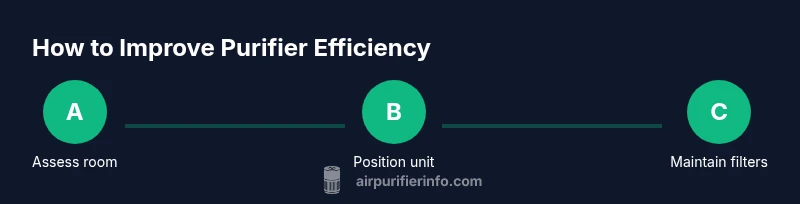
Effective air cleaning starts with where you put the purifier. Avoid placing it directly against walls or in enclosed corners where air can stagnate. The best location is usually near the center of the room or along open pathways where air can circulate freely. If you have a long, narrow room, placing the purifier to promote cross-ventilation can dramatically improve pollutant capture. Keep at least a few inches of clearance on all sides to prevent recirculation and ensure the exhaust air doesn’t blow directly toward walls, windows, or soft furnishings that can reintroduce dust. When possible, position purifiers away from sources of heat or moisture that can degrade filters. Airflow should feel steady around the unit; use a tissue test or a simple airflow check to confirm air is moving through the intake without creating drafts that pull air from other rooms.
Filter care and maintenance for peak performance
Filters are the heart of any purifier. A dirty or clogged filter reduces airflow, lowers CADR, and can shorten the device’s lifespan. Start by confirming you have the correct replacement filters for your model, and replace them at the intervals recommended by the manufacturer. Check both the main filter (often HEPA) and any pre-filters, which can trap larger particles and extend the life of the primary filter. When cleaning, unplug the unit first and gently remove dust buildup with a soft brush or cloth. Avoid saturating filters or washing HEPA elements unless the manufacturer permits it. Pre-filters can usually be cleaned or vacuumed, then reinstalled to maintain overall performance. Seals and gaskets should be inspected for wear; a loose seal can allow unfiltered air to bypass the filter, diminishing effectiveness. Regular maintenance ensures consistent filtration and better overall indoor air quality over time.
Align purifier capabilities with room size and features
For best results, choose a purifier with a CADR that matches the size of the room where it will operate. A device with too low a CADR will slow air turnover, while an oversized unit can be loud and waste energy. If you measure a typical living room at around 200–400 square feet, look for a model that explicitly states a CADR suitable for spaces within that range. Check whether the purifier uses a true HEPA filter and what the filter life is under normal use. Some models include activated carbon for odors and VOCs, which can be a major benefit in kitchens or DIY spaces. If you have multiple rooms of similar size, consider a multi-unit setup or a higher-capacity purifier to cover the total volume efficiently. A smart feature set—auto mode that adjusts fan speed based on detected particulate matter—can help maintain consistent air quality with less manual tweaking.
Practical usage patterns for steady air quality
Consistency matters. Running your purifier continuously at a moderate setting often provides steadier air quality than short bursts at high speed. Many users find that a medium speed throughout the day, with a higher setting during cooking or allergy seasons, offers a good balance between performance and energy use. Use timers if your device supports them, so you’re not wasting energy overnight. Position the purifier to flow across high-traffic areas (e.g., living rooms, dining spaces) where air exchange occurs most often. If bagless vacuuming is common in your home, run the purifier afterward or during the next few cycles to catch any residual particles that the vacuum release can stir up. For homes with pets, consider running at least one purifier in the main living areas during peak pet activity times and use carbon-enhanced filters to address odors.
Addressing odors, allergens, and pet dander strategies
Odors and VOCs respond well to models with activated carbon or chemisorption filters in addition to a true HEPA element. For allergy-prone households, look for high-efficiency filtration and sealed housings to prevent bypass. Pet dander tends to be light and airborne, so ensuring the purifier’s intake is not blocked by furniture is crucial. Regularly replace filters according to the manufacturer’s schedule, and consider a second unit in larger homes or open-plan living spaces to ensure thorough coverage. Remember that no purifier can eliminate all contaminants instantly; use it as part of a layered approach to indoor air quality that includes regular cleaning, dust control, and minimizing pollutant sources.
Authority sources and credibility
This guidance aligns with established guidelines and recent research on indoor air quality. For foundational information, see the EPA’s guide to air cleaners for homes, which discusses CADR, room size, and filter types. Additional perspective comes from related public health research on air pollution and health outcomes. Readers can consult major health and environmental science publications for deeper context. The following sources provide credible, policy-relevant information to support the recommendations in this article:
- EPA: https://www.epa.gov/indoor-air-quality-iaq/guide-air-cleaners-home
- NIEHS (National Institute of Environmental Health Sciences): https://www.niehs.nih.gov/health/topics/agents/air-pollution/index.cfm
- WHO (World Health Organization): https://www.who.int/news-room/fact-sheets/detail/air-pollution-and-health