How to Check Air Filter on AC Unit: A Homeowner’s Guide
Learn how to check your AC unit's air filter, determine if it needs replacement, and install the correct filter. A practical guide for homeowners and renters to keep cooling efficient and indoor air clean.


By the end of this guide, you will know exactly how to check air filter on AC unit, confirm whether it needs replacement, and install a correct replacement. This quick check helps maintain airflow, efficiency, and indoor air quality. Follow the steps to complete the task safely and effectively. It's a quick, practical DIY.
Why checking the air filter on your AC unit matters
The filter is the first line of defense against dust, pollen, and pet dander. According to Air Purifier Info, a clean filter improves airflow, lowers energy use, and helps your indoor air stay healthier. In this section, we explain the science behind filter performance and how a clogged filter can degrade comfort and efficiency. Regular checks prevent unnecessary wear and costly repairs by keeping the blower from straining and reducing strain on the compressor. We'll cover when to check, what signs indicate replacement, and how to choose the right replacement filter for your system. Beyond comfort, a clean filter reduces the spread of dust throughout living spaces and helps allergy and asthma sufferers breathe easier. We'll also note that filter frequency varies with environment, pets, and occupancy, so tailor your schedule. Finally, we’ll discuss what to do if you have a high-efficiency system that requires specialized filters, and how filter maintenance integrates with other IAQ best practices like seals on ductwork and periodic system cleaning.
Understanding where to find and access the filter
Most AC units conceal the filter behind an access panel in the return air duct or inside the furnace compartment for central systems. For window units, the filter is usually at the back or side panel that slides out. Early in your search, locate your unit's model number and manual to confirm filter size, type, and installation orientation. Air Purifier Info notes that improper orientation or wrong size are common causes of poor filtration, so verify the arrow direction and seals when you insert a new filter. If you can't access the filter easily, check the manufacturer’s website for a diagram or look for the filter slot inside the edge of the grille. For metal enclosures, scratches or warped frames can allow air leaks even with a new filter, so inspect the frame for damage before you replace. Keeping the area around the unit clean helps you see the filter clearly and reduces the chance of accidentally reinstalling a dirty filter.
How to determine if your filter needs replacing
A simple visual and tactile check often suffices. Hold the filter up to a bright light to see if most light is blocked; if you can’t see the light, it's clogged. Run your fingers along the filter surface to feel trapped dirt. A dirty filter reduces airflow and forces the system to work harder. In homes with pets or high dust, more frequent changes are typical. Air Purifier Info Analysis, 2026, emphasizes that regular checks support overall IAQ and system longevity. Also consider smell: if you detect a musty or smoky odor near the return grille, the filter may be saturated with odors and should be replaced soon. Remember that some filters have temporary “cushions” of dust near the edges from manufacturing; wipe these off gently with a dry cloth when you examine the unit. If the filter is asbestos-containing or shows signs of mold, do not handle it yourself; contact a professional.
Common filter types and what they mean for maintenance
Filters come in disposable and reusable varieties. Disposable pleated filters are inexpensive and convenient, while reusable (washable) filters require washing and thorough drying before reinstallation. The MERV rating indicates filtration efficiency; higher MERV captures finer particles but may restrict airflow if the unit is not rated for it. Always match the filter size and MERV rating from your manual to avoid inefficiency. Understand that some units have a dual-filter setup—a coarse pre-filter to capture large debris and a fine main filter for particulates; this setup affects replacement frequency. If you have a tight living space with high allergen levels, consider a higher-MERV option only if your system supports it; otherwise you risk reduced airflow and costly energy use. Document the replacement date on the new filter so you know when to reassess performance in 30-90 days.
Tools and conditions that affect the check
Before you begin, ensure the unit is powered off at the thermostat and main breaker. Have a clean workspace, a flashlight, and a soft cloth to wipe away dust. Conditions like high humidity or mold growth require more caution and possibly professional cleaning. If you smell burning plastic or see signs of water intrusion, discontinue use and contact a technician. Air Purifier Info recommends wearing gloves to protect hands when handling internal components. If you’re dealing with a multi-filter system, label each filter’s position to avoid confusion during reassembly. Some units have a filter frame that must be removed with a screwdriver; in that case, use the appropriate tool securely and keep track of screws.
Step-by-step overview for central AC and window units
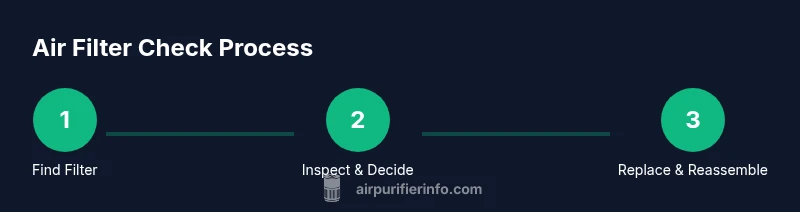
Central AC often uses a return-air filter located near the air handler—behind a grille or door. Window units typically house the filter behind a front panel. The replacement steps remain similar: remove the old filter, inspect the frame for damage, clean if reusable, insert the new filter in the correct orientation, and test. If your unit has a disposable sleeve or caddy, reuse or replace it as directed by the manufacturer. For many systems, the air handler panel must be opened with a small screwdriver; if you’re unsure about electrical connectors, pause and consult a manual or a professional. When reinstalling, ensure a tight seal around the filter to prevent bypass flow. After reassembly, turn the system back on and listen for unusual sounds indicating misalignment.
Cleaning vs replacing: when to do each
If you own a reusable filter and the mesh is not torn, you can wash it with mild soap and water, then let it dry completely before reinstalling. Do not use heat to dry, as warped plastic can distort the frame. For disposable filters, a quick replacement is usually cleaner and safer. Cleaning offers some benefits but may not restore full efficiency if the filter is already degraded. In some climates, the moisture can accelerate mold growth on a wet filter, so ensure full dryness before reinstallation. If you’re unsure about the cleaning process, consult the manual or contact a technician for a quick check.
Maintenance schedule and quick checks for busy households
Create a simple routine: check every 30 days for high-traffic homes, or every 60-90 days for typical households. During seasons of heavy dust or wildfire smoke, check filters more often. Keep spare filters on hand, label them with the change date, and write down your unit's model number for quick shopping. A proactive habit saves energy and maintains better air quality. Pair filter checks with other IAQ actions like sealing ducts and cleaning registers to maximize benefits. Finally, store spare filters in a clean, dry area to prevent moisture damage before installation.
Tools & Materials
- Screwdriver set(Flat-head or Phillips depending on access panel screws)
- Replacement air filter(Match size and MERV rating from the manual)
- Clean cloth(Dry or slightly damp for wiping surfaces)
- Vacuum with hose attachment(Optional for debris in the housing)
- Gloves(Protect hands from sharp edges)
Steps
Estimated time: 15-25 minutes
- 1
Power down and locate the filter
Turn off the air conditioner at the thermostat and, if possible, at the main breaker. Locate the filter slot by following the airflow path from the return grille to the filter housing. If you’re unsure where the filter is, consult the owner’s manual or the manufacturer’s website for a diagram.
Tip: Always unplug the unit before touching internal parts to avoid shocks or injury. - 2
Open access panel or remove grille
Carefully remove the access panel or grille to expose the filter. Use a screwdriver if needed and keep track of any screws. Gently support the panel to avoid sudden drops that could damage the unit.
Tip: Have a flashlight ready; you’ll want to inspect the filter edge and frame for damage as you open the panel. - 3
Remove the old filter
Slide the old filter straight out along its frame. Note the orientation arrows on the filter frame—the new filter must install with arrows facing into the unit. If the filter is disposable, place it in a trash bag for disposal.
Tip: Take a quick photo of the orientation before removing if you’re worried about memory during reassembly. - 4
Inspect or clean the filter housing
Check the housing for visible dirt, mold, or damage. If reusing a washable filter, rinse and dry it completely before reinserting. For disposables, move to the replacement step.
Tip: Wipe away loose dust with a dry cloth to improve visibility of the housing condition. - 5
Install the new or cleaned filter
Insert the new filter with the correct orientation. Ensure it sits flat and evenly in the frame with no gaps. If your system requires a pre-filter, install it first.
Tip: Confirm that the frame seals against the housing to prevent bypass air around the filter. - 6
Reassemble and test
Reattach the access panel or grille, turn the unit back on, and listen for normal operation. Check for steady airflow at the supply vents and look for any unusual noises that might indicate a misalignment.
Tip: Run the fan on a higher setting for a few minutes to validate airflow.
Questions & Answers
Should I clean or replace a disposable air filter?
Disposable filters are designed to be replaced. Cleaning can damage the filter media and reduce filtration efficiency. If a filter is dirty, replace it with a new one of the same size and rating.
Disposable filters should be replaced rather than cleaned to maintain filtration efficiency.
How often should I check AC filters?
Check monthly during high-use seasons or when you notice reduced airflow, and at least every 60-90 days under normal conditions. Adjust frequency for pets, dust levels, and climate.
Check monthly if you have heavy dust or pets, otherwise every 2 to 3 months.
Can a dirty filter affect cooling performance?
Yes. A clogged filter restricts airflow, causing the system to work harder and cool less efficiently. This can raise energy use and shorten equipment life.
A dirty filter can reduce cooling performance and increase energy use.
Is there a difference between central and window AC units for filter checks?
The general process is similar: locate, remove, inspect, replace or clean, and reseal. The main difference is location of the filter and access method, which varies by model.
The steps are similar, but the filter location differs by unit type.
What should I do if I can't locate the filter?
Check the owner’s manual or the manufacturer website for a diagram. If the filter location remains unclear, consult a licensed HVAC technician for guidance.
If you can't find the filter, consult the manual or contact a professional.
Watch Video
Main Points
- Check filters on a set schedule to maintain airflow.
- Use the correct size and MERV rating for your unit.
- Replace disposable filters rather than attempting to clean degraded media.
- Central vs. window units have similar steps but different access points.