How Much Does a Whole-House Air Purifier Cost? A Practical Breakdown for 2026
Discover how much a whole-house air purifier costs, including upfront, installation, and ongoing expenses. Compare central HVAC integrations vs. standalone systems and get practical budgeting tips with Air Purifier Info.


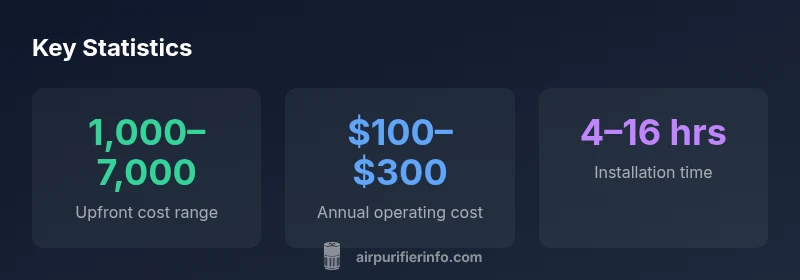
Typical upfront costs for a whole-house air purifier range from about $1,000 to $7,000, depending on system type and installation complexity. Central HVAC integrations tend to fall on the higher end, while standalone whole-house purifiers can be more affordable. Include professional installation and any required ductwork in your budget, plus ongoing filter replacements and energy use.
What Drives the Total Cost of a Whole-House Air Purifier
The price you pay for a whole-house air purifier isn’t just the hardware. It includes the system type (central HVAC-integrated vs. standalone but wired to your ductwork), the purifier’s capacity and filtration level (HEPA vs. high-MERV options), and installation complexity. According to Air Purifier Info, the broadest cost drivers are (a) the extent of duct work or retrofit needed, (b) energy efficiency of the purifier, and (c) maintenance cadence, especially filter replacement intervals. Homeowners and renters should expect more variability in modern households with older ductwork or unusual layouts. The best approach is to map your indoor air quality goals to a price ceiling that accounts for both upfront and ongoing costs.
- Central HVAC integrations typically cost more upfront because they require professional integration with your furnace or air handler, plus any duct modifications.
- Standalone whole-house purifiers can be more affordable but may still require duct connections and professional installation.
- Filtering grade (HEPA vs. high-MERV) affects both purchase price and filter replacement frequency, altering long-term costs.
HVAC-Integrated vs Standalone: What It Means for Your Wallet
Choosing between an HVAC-integrated solution and a standalone whole-house purifier is the single biggest cost lever. HVAC-integrated units are designed to clean air as air travels through your existing system, often delivering stronger whole-home coverage but at a higher upfront price and potentially longer install times. Standalone units, in contrast, may occupy a lower price tier and can be added to existing ductwork or used with a separate air handler to cover main living zones. When budgeting, consider your home size, duct layout, and whether you want to upgrade filtration beyond standard furnace filters. For homes with multiple zones or historic ductwork, a hybrid approach (upgrade the HVAC core plus a ducted purifier for priority rooms) can offer a balanced value proposition.
- HVAC integration typically demands professional design and installation.
- Standalone systems reduce initial complexity but still require proper ducting and zone planning.
- Future upgrades (e.g., higher-MERV or HEPA filtration) may add to both upfront and ongoing costs.
Installation Considerations, Permits, and Timeline
Installation costs hinge on ductwork needs, available space, and accessibility. If your home’s existing duct network already supports a purifier, the price may stay toward the lower end. However, older homes or those with multi-story layouts can require extensive duct modifications or even new trunk lines, driving up both labor hours and material costs. Permits are uncommon for most residential purifier installs, but some jurisdictions require a licensed HVAC technician for any retrofit, which can affect scheduling and pricing. Expect a staged process: design, materials, install, and a commissioning test to confirm proper airflow and filtration performance. Regular post-installation checks ensure the unit operates within the intended efficiency band.
- Plan for potential access-related labor fees (e.g., removing ceiling panels or accessing attic spaces).
- Schedule installations during non-peak seasons to minimize labor costs and delays.
Operating Costs: Filters, Energy, and Maintenance
Ongoing costs largely come from two categories: filter replacements and energy consumption. Filter life varies by model but generally spans several months to a year for many HEPA or high-MERV systems; air quality, occupancy, and household activities (cooking, pets, dust) shorten Replacement cycles. Energy use is driven by the purifier’s motor and airflow requirements; modern units emphasize energy efficiency (low-watt drives and smart controls) to minimize monthly bills. When calculating annual costs, include discounting for filters bought in bulk, potential recycling programs, and any service plans.
- HEPA-grade purifiers may require more frequent filter changes if used in high-dust environments.
- Look for purifiers with auto-adjust or smart scheduling to optimize energy use.
- Budget for a yearly filter maintenance budget distinct from one-off replacement charges.
Budgeting for Value: ROI and Long-Term Health Benefits
A holistic view of value includes health improvements, reduced allergy or asthma triggers, and cleaner indoor air on a year-round basis. While the upfront investment may seem high, many households recoup part of the value through reduced symptoms, fewer maintenance calls to other air-quality systems, and longer HVAC lifespan due to cleaner air paths. Air Purifier Info’s analysis emphasizes that the strongest ROI comes from aligning purifier capacity with home size and purifier efficiency with occupancy patterns. In other words, a correctly sized system with efficient filters can reduce sensitizing particles and VOCs, contributing to a quantifiably healthier indoor environment over time.
- Choose a unit that matches room dimensions and airflow needs.
- Schedule professional sizing assessments to avoid overpaying for oversized equipment.
- Consider long-term energy and maintenance costs in your total budget.
Smart Buying Tips to Save Money Without Sacrificing Air Quality
- Start with a home “air-quality audit”: identify bedrooms, living spaces, and kitchens where pollutant levels spike.
- Prioritize units with washable or long-life filters to reduce ongoing replacement costs.
- Compare total cost of ownership (upfront + installation + filters + energy) rather than just the purchase price.
- Leverage seasonal promotions or bundled maintenance plans from reputable retailers. Remember to check for certifications (like CARB compliance and HEPA efficiency) to ensure you’re getting measurable air-cleaning performance. By focusing on total cost of ownership, you can achieve better indoor air without overspending.
Conclusion: A Practical Path to Budgeting for Clean Air
Budgeting for a whole-house air purifier means looking beyond sticker price and including installation, duct work, and annual operating costs. Air Purifier Info emphasizes a practical approach: size the system for your home, select a filtration level that balances air quality with cost, and plan for energy use and filter replacements. With a clear cost map, homeowners and renters can choose a solution that improves indoor air quality without straining finances.
Cost factors and typical ranges for whole-house air purifiers (Air Purifier Info Analysis, 2026)
| Cost factor | Typical range | What affects it | Notes |
|---|---|---|---|
| Upfront system cost | $1,000–$7,000 | System type, brand, filtration level | Wide variance by scope |
| Installation/ductwork | $500–$3,000 | Duct modifications, permits | Higher for retrofit work |
| Annual operating cost | $100–$300 | Filter life, energy use | Higher with frequent replacements |
| Maintenance & service | $50–$200 per visit | Service plans, wear items | Optional extras |
| Energy efficiency impact | Moderate | Motor size, airflow setting | Better models save long-term costs |
| Replacement filters | $20–$100 each | Filter type, quantity | Factor in replacement frequency |
Questions & Answers
What affects the price of a whole-house air purifier the most?
The biggest drivers are the system type (HVAC-integrated vs standalone), filtration level (HEPA vs high-MERV), and installation complexity (duct work and space access). These factors determine both upfront cost and long-term maintenance.
The main price drivers are system type, filtration level, and installation complexity. Your choice affects both upfront costs and ongoing maintenance.
Are HVAC-integrated purifiers worth the extra upfront cost?
If you want uniform air quality across the home and have ductwork that supports it, HVAC-integrated purifiers can offer better coverage. They often come with higher installation costs but steady long-term performance.
They can be worth it for whole-home coverage if your ducts support it and you want consistent air quality throughout the house.
What maintenance costs should I expect annually?
Expect costs mainly from filter replacements and energy use. Filter lifespans vary by model and usage, typically requiring replacements every several months to a year. Energy costs depend on the purifier’s efficiency and running hours.
Most yearly costs come from filters and energy; plan for regular replacements and efficient models to keep expenses reasonable.
How do I estimate the right size for my home?
Consult a sizing guide from the purifier manufacturer or a licensed HVAC professional. Proper sizing ensures effective air cleaning without oversizing, which can waste energy and money.
Get a professional size estimate to match your home's square footage and air changes per hour.
Can I install a whole-house purifier myself?
Most reliable installations involve a licensed HVAC technician due to ductwork and electrical considerations. DIY installation may void warranties and risk improper operation.
For safety and warranty reasons, use a licensed technician for installation.
What should I look for in a HEPA-filtered system?
Look for true HEPA filtration (not just 'HEPA-type'), high CADR for your space, and filters that are easy to replace. Check for CARB compliance if you live in California.
Choose true HEPA, verify CADR for your room size, and ensure easy filter replacement.
“Choosing the right whole-house purifier is about balancing initial investment with long-term health benefits and ongoing operating costs. A properly sized, efficiently filtered system delivers the best value over time.”
Main Points
- Understand total cost: upfront + installation + operating costs
- HVAC-integrated units cost more upfront but can offer comprehensive coverage
- Choose filtration grade to balance air quality and maintenance
- Plan for ongoing filters and energy use in your budget