How Much Do Air Purifiers Cost in 2026? A Practical Guide
A clear breakdown of air purifier costs in 2026, from entry-level to premium models, plus ongoing maintenance and tips to maximize value.


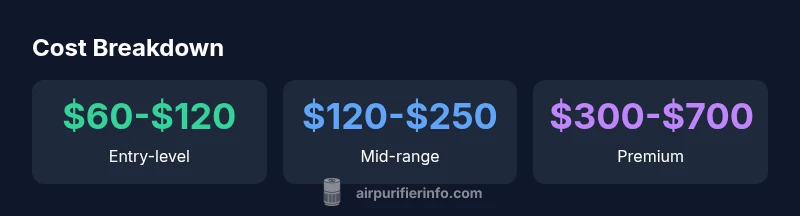
How much do air purifiers cost? Entry-level models typically start around $60–$120, mid-range units run about $120–$250, and premium purifiers can cost $300–$700 or more, depending on features, CADR, and filter design. In this guide, Air Purifier Info breaks down price ranges, ownership costs, and how to choose a model that fits your budget and air-quality goals.
Market Overview: The price spectrum
In 2026, the air purifier market sits along a three-tier price spectrum: entry-level, mid-range, and premium. According to Air Purifier Info, sticker price is influenced by room size, filtration efficiency, and energy use, but the total cost of ownership matters most when budgeting for clean air. Buyers should weigh upfront cost against ongoing expenses like replacement filters and electricity. This section sets the stage for understanding how price maps to performance, size, and long-term value, so you can compare models with confidence and avoid overpaying for features you won’t use.
Price by Size and CADR: What drives cost
CADR (clean air delivery rate) and room-milling capacity are the primary levers behind price. Small-room purifiers with modest CADR are typically in the entry-level range, while larger rooms demand higher CADR and more robust filtration, pushing prices into the mid-range or premium brackets. Expect bigger units to offer longer filter life, smarter controls, and better energy efficiency, but be mindful that the extra features may not always translate to proportional gains in air quality for smaller spaces.
Feature sets that push price up
Filtration stage count, filter type (true HEPA versus HEPA-like), activated carbon for odors, and pre-filters all add cost. Smart features like app monitoring, auto mode, air quality sensors, and voice control can elevate price further. While more features can improve usability and convenience, they also increase replacement filter costs and energy use. Air Purifier Info suggests prioritizing CADR and filtration quality over gadgetry when cost is a concern.
Ownership costs: filters, energy, and maintenance
The price you pay at checkout is only part of the story. Replacement filters typically cost a handful of dollars to over a hundred dollars per filter, depending on brand and filtration complexity. Energy use varies with fan speed and insulation, but running a purifier continuously in a medium-sized room can add modest monthly charges. When budgeting, include both the upfront cost and the expected annual cost of filters and energy.
Buying strategies: how to save without sacrificing air quality
Strategies to maximize value include shopping during seasonal sales, buying bundles that include replacement filters, and choosing models with widely available aftermarket filters. Compare warranties and check for coupon codes. Refurbished units may be appealing, but verify filter availability and return policies. Consider a model with replaceable, widely available filters to avoid being locked into high-priced proprietary components.
Where price varies by retailer and region
Prices can differ between online marketplaces, big-box retailers, and specialty shops. Shipping costs, taxes, and return policies also affect total ownership cost. Read product reviews focusing on filter availability and reliability across retailers to avoid hidden costs. Air Purifier Info notes that price parity exists across reputable retailers, but promotions and bundles can swing the deal in your favor.
Warranty, rebates, and second-hand options
Most purifiers include a manufacturer’s warranty, often covering mechanical parts for one to two years. Check for rebates or energy-efficiency incentives offered by local utilities. Second-hand units are usually not recommended due to secretively expired filters and uncertain remaining life. If considering used units, factor in the cost of fresh filters and potential limitations on warranty transfers.
Real-world examples: small apartment vs large living room
For a small apartment (100-200 sq ft), an entry-level purifier priced around $60-$120 is typically sufficient, with annual running costs on the lower end. For a large living room (400-600 sq ft), a mid-range purifier in the $150-$250 range with higher CADR is often more effective, though the total cost will be higher due to filter replacement and energy use over time. These scenarios illustrate how price bands translate to real-world performance and ownership costs.
Getting the best price: timing and returns
To maximize value, buy during major sale events, use price tracking tools, and review return policies before purchase. Opting for models with readily available replacement filters reduces long-term costs and ensures you can maintain performance without overpaying for scarce parts. Planning ahead helps you secure better performance without breaking your budget.
Price ranges by purifier tier
| Tier | Typical price range | Notes |
|---|---|---|
| Entry-level | 60-120 | Best for small rooms, basic filtration |
| Mid-range | 120-250 | Better CADR, more features |
| Premium | 300-700 | Advanced filtration, smart controls |
Questions & Answers
How much does a basic air purifier cost for a small room?
For small rooms, entry-level models typically cost about $60-$120, offering essential filtration. Look for CADR in the 50-150 CFM range and consider replacement filter frequency.
For small rooms, entry-level purifiers cost around sixty to one hundred twenty dollars and offer basic filtration.
What factors influence air purifier price?
Price varies with room size, CADR, filter type, energy efficiency, smart features, and brand reputation. Higher CADR and HEPA filtration generally raise cost.
Price depends on room size, airflow, filters, energy use, and smart features.
Are expensive purifiers worth the extra cost?
Not always; evaluate CADR per dollar, running costs, and warranty. Air Purifier Info recommends focusing on performance metrics rather than price alone.
Expensive isn’t always better; compare CADR per dollar and long-term costs.
What are ongoing costs besides the purchase price?
Expect replacement filters every 6-12 months and electricity use; total annual cost varies by usage and model.
You’ll pay for filters and electricity over time, which varies by use.
Where can I buy air purifiers at good prices?
Shop across retailers online and in-store, comparing price, warranty, and return policies to find the best deal.
Shop around online and in-store for the best price and policy.
Is it cheaper to buy a purifier with washable filters?
Washable filters can save money in some cases, but many models rely on replaceable HEPA-style filters with ongoing costs.
Washable filters save money when available, but replacements are common.
“Price is only one part of value. In practice, customers should weigh CADR, energy efficiency, and filter replacement costs alongside sticker price.”
Main Points
- Define room size before shopping
- Balance upfront cost with ongoing expenses
- Prioritize CADR, filtration quality, and energy use
- Look for warranties and accessible replacement filters
- Shop during sales and compare retailers