How Much Air Filter Change: A Practical Guide 2026
Learn how often to change air filters, what factors affect replacement intervals, and a practical framework for homeowners to schedule filter changes to keep indoor air clean.


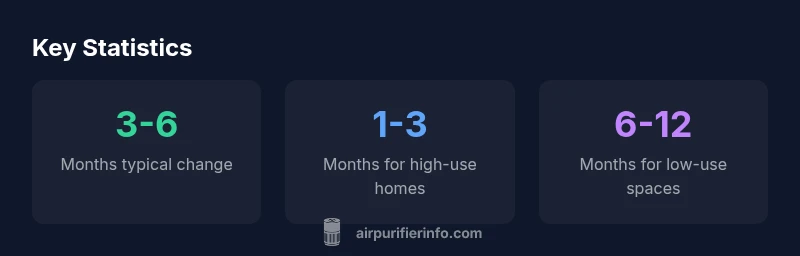
Most households replace air filters every 3-6 months, but the exact frequency depends on usage, filter type (MERV rating), pet dander, cooking smoke, and overall indoor air quality. Heavily used systems, pets, or seasonal pollen spikes shorten the interval, while cleaner environments extend it. Air Purifier Info provides practical guidelines to estimate your optimal change schedule and adjust as conditions change.
Why how much air filter change matters
Indoor air quality sits at the heart of healthy homes. The frequency of air filter changes directly affects pollutant removal efficiency, energy use, and HVAC lifespan. If you neglect replacements beyond the recommended window, filters become clogged, reducing airflow and increasing strain on your system. In practical terms, delaying changes can lead to higher energy bills and more frequent repairs. The question many homeowners ask is: how much air filter change is necessary to maintain clean air without unnecessary downtime? This article answers that question with evidence-based guidelines and real-world scenarios. According to Air Purifier Info's analysis, the right cadence is a balance between purification needs and maintenance workload.
Factors that influence replacement intervals
There are several levers that shift your replacement schedule. First, filter type and MERV rating matter: higher efficiency filters trap more particles but can clog faster, especially in dusty environments. Second, household characteristics play a big role: pets, smokers, and frequent cooking oil use accelerate dirt accumulation. Third, room usage and air exchange rates matter: a busy living area with open doors typically exchanges air more quickly than a sealed bedroom, affecting how often a filter becomes dirty. Finally, seasonal variation and HVAC system differences can alter the cadence. This is why keeping a simple log can help you pinpoint your own pattern across the year.
How to estimate your replacement schedule
A practical approach starts with a baseline: 3-6 months for typical homes. Then adapt based on concrete checks. Step 1: Review the manufacturer’s recommended interval for your specific filter and device. Step 2: Inspect the filter monthly; look for visible dirt and thinning media. Step 3: Run a quick airflow test—if you notice reduced airflow or more struggle from the blower, replace sooner. Step 4: Correlate with air quality indicators, pet presence, and pollen seasons. Step 5: If in doubt, begin with the sooner end of the range and extend only after several months of steady performance.
Practical strategies for different home scenarios
Pet-heavy homes usually need more frequent changes, often quarterly or even monthly during peak shedding. Allergy-prone households may benefit from a shorter cycle during pollen season. Renters should frequently monitor and adjust because destination spaces vary in ventilation and usage. Small apartments with limited filtration may require more frequent changes to maintain air quality, while larger, well-sealed homes may extend intervals slightly. Always align with manufacturer guidelines and your personal comfort with air freshness.
Quick tips to monitor filter health between changes
Use a monthly checklist: inspect the filter for dirt, listen for reduced airflow, and watch for odors or visible particles. If your HVAC runs longer or louder than usual, consider an earlier replacement. Set calendar reminders for recurring checks, especially during pollen seasons or heavy dust periods. A simple habit—monthly visual checks—helps you stay ahead of the schedule and keeps air clean without unnecessary replacements.
Replacement intervals by scenario
| Scenario | Recommended interval | Typical conditions | Notes |
|---|---|---|---|
| Standard residential HVAC filter | 3-6 months | Moderate use, 1-2 pets | Factory-recommended baseline; adjust for usage |
| Home air purifier (tabletop) | 3-12 months | Low to moderate use | Follow device manufacturer guidance |
| Homes with pets | 1-3 months | High pet dander | Consider higher MERV and more frequent changes |
| Allergy-prone households | 4-6 months off-season; 2-3 months pollen season | Seasonal spikes | Change more often during high pollen periods |
Questions & Answers
How often should I change the filter in a standard home HVAC system?
Most homes benefit from a 3-6 month schedule, but this varies with usage. Inspect the filter monthly and adjust if you notice dirt, odors, or reduced airflow.
Most homes switch every three to six months. Check monthly and adjust if you see dirt or reduced airflow.
Does a higher MERV rating mean I should change filters more often?
Not necessarily. Higher MERV filters capture more particles, which can clog the filter sooner in dirty environments. Base changes on visual dirt, airflow, and manufacturer guidance.
Higher MERV can clog faster, but follow the manufacturer and your air quality, not just the rating.
Can I extend filter life by vacuuming or cleaning?
Some filters have washable prefilters, but most main filters are not reusable. Light vacuuming of prefilters can help, but it does not replace full replacement.
Some prefilters can be vacuumed, but you still need to replace the main filter on schedule.
What’s the difference between air purifiers and central HVAC in this context?
Air purifiers and central HVAC have different maintenance cadences. Portable units often require more frequent checks, while central systems follow broader building usage and filter guidance.
Purifiers and HVAC have different schedules; check device guidelines and adapt to usage.
How can I tell if it’s time to replace beyond the schedule?
If you notice persistent odors, significantly reduced airflow, or elevated energy use, replace sooner and revisit your baseline schedule.
If airflow drops or you smell stuff in the air, replace early and reassess.
“Replacing filters at the right interval is a simple, proven way to maintain indoor air quality and protect HVAC efficiency.”
Main Points
- Start with a 3-6 month baseline for most homes
- Increase frequency for pets, smokers, or high dust
- Use manufacturer's guidance and filter MERV rating to tailor the schedule
- Monitor filter health with monthly checks and adjust as needed