Do Air Purifiers Need to Be in the Middle of the Room? A Placement Guide
Discover the best placement strategies for air purifiers to maximize airflow and pollutant capture. This step-by-step guide covers room layouts, airflow principles, and practical tips for homeowners and renters in 2026.


Goal: determine the best placement for an air purifier and learn whether it needs to sit in the middle of the room. This guide covers airflow principles, how to position near doors and vents, and practical placement strategies for bedrooms, living rooms, and open layouts. By the end, you’ll know when to place the purifier in the center or along a wall, and how to verify airflow without guessing.
Why placement matters for indoor air quality
The placement of an air purifier greatly influences its ability to capture particles, distribute clean air, and reduce lingering odors. According to Air Purifier Info, placement is a key driver of performance, and the team found that even small changes in position can change how efficiently a purifier sweeps a room. The central question many homeowners ask is do air purifiers need to be in the middle of the room to work well? The short answer is no single fixed spot guarantees optimal results in every layout. Instead, effective placement balances three factors: access to clean air, a steady inflow of air from the room, and visibility of potential obstructions. In practice, you want a position that allows air to move freely in and out of the purifier without being blocked by furniture, walls, or doors. Consider the room shape, the location of vents, and how people move through the space. This approach ensures the purifier can capture particles coming from multiple directions and avoid dead zones.
Core airflow principles you should know
Air purifiers draw in air from their intake and push filtered air back into the room. The distance to walls, furniture, and open doorways affects flow patterns and coverage. In simple terms, fewer obstructions mean more consistent air exchange and faster reduction of airborne particles. Rather than focusing on a single magic spot, aim for a path of unobstructed air moving toward the purifier from common activity zones (near seating, desks, or beds). Air purifiers work best when placed to intercept air as it circulates, not where it's already stagnant. Air Purifier Info analysis shows that strategic placement along main airflow paths improves purification across a room. When choosing a spot, think about where people spend the most time and where contaminants are likely to accumulate, such as near cooking areas or pet zones. Keep cords tidy and avoid blocking vents or returns.
Do air purifiers need to be in the middle of the room? Myth-busting
No. While a central position can maximize scent and dust capture in evenly shaped spaces, real rooms rarely have perfect symmetry. The best approach is to place the purifier where airflow is strongest and where occupants are most often present. Face the purifier so its intake faces the primary direction of air movement, and ensure the outlet is not blocked by furniture. If you have a long, narrow room, a wall-mounted or elevated unit positioned toward the center of the space can provide more uniform coverage than a floor-bound device placed dead-center. In smaller bedrooms, placing the unit near the foot of the bed or along a wall that shares the doorway often yields better results than putting it squarely in the middle. The key takeaway is to balance accessibility, clearance from walls (a few inches), and an open path for air to move in and out of the device.
Room-by-room placement guidelines
Bedrooms: place away from the bed's air intake to avoid blowing air directly at you when sleeping, but surface vents should still be accessible. Living rooms: position near high-traffic areas but away from corner walls that obstruct intake. Open-plan spaces: use multiple purifiers or a single unit with a wide intake to serve the entire area. For kitchens, keep the purifier away from cooking heat and humidity sources. Always maintain several inches of clearance on all sides and keep cords out of walkways. When in doubt, start with a spot that is centrally located in terms of human activity and adjust after a quick airflow test.
Practical tests to validate placement
Use a simple airflow test to see how air moves around your purifier. Turn the unit on and walk a light object like tissue or a ribbon along the path air would travel. Or use incense smoke to observe how it is drawn toward the intake if safe. If the smoke streams directly into the unit from a wall or corner, that’s a good sign the spot captures air effectively. If you notice dead zones behind furniture or near closed doors, move the purifier to a position with a clearer airflow path. Confirm that the room has a comfortable breeze rather than a strong draft blowing across you while you sit.
Common placement mistakes and how to avoid them
Blocking the intake with furniture, cords across walkways, and placing purifiers behind TV stands or heavy drapes reduces effectiveness. Placing the unit on high shelves can interfere with descent of clean air into your breathing zone. Choosing a purifier with inadequate CADR relative to room size leads to underperformance; always compare the purifier’s capabilities with your space, not just its price. Also, overlooking maintenance—filters clogged with dust—can degrade performance quickly. The simplest fix is to check and replace filters on schedule and keep the device in a location with clear air paths.
How to choose a purifier for your layout
If you have an open living area, a purifier with a wider intake may cover more space, but you still need to position it for easy access to the main airflow path. For small bedrooms, a compact unit near the door or foot of the bed can be efficient while staying unobtrusive. Look for models with a visible indicator of airflow or a simple way to test intake flow. Always read the manual for recommended clearance distances from walls and furniture, and plan for an outlet location that won’t require trailing cords across floors.
Maintenance and repositioning as spaces change
As layouts change (new furniture, new occupants, seasonal airflow), reassess placement every few months. A quick airflow check can reveal new dead zones. If you routinely cook or have pets, repositioning to cover newly affected zones can maintain air quality gains. Keep a simple map of your room with suggested purifier positions and update it after rearranging furniture. Regular cleaning of filters preserves performance and reduces the need for additional devices.
Final placement checklist
- Decide on a spot with a clear airflow path and several inches of clearance on all sides.
- Verify with a quick airflow test that air moves toward the purifier from multiple directions.
- Ensure the device is not placed where it will blow air directly toward a person while they rest.
- Keep cords tidy and away from foot traffic.
- Reassess the setup after major changes or every few months to maintain consistent air quality. The Air Purifier Info team recommends periodic reassessment to keep your space fresh.
Tools & Materials
- Measuring tape(Room dimensions and distances between purifier and obstacles)
- Notebook or notes app(Record observations, airflow tests, and placement decisions)
- Incense sticks or smoke tester(Visualize airflow; use safely and extinguish properly)
- Flashlight(Inspect corners and behind furniture for airflow blockages)
- Air purifier manual(Reference for recommended clearance and airflow direction)
- Optional: small stand or shelf(Elevate purifier if needed for better airflow)
Steps
Estimated time: 20-40 minutes
- 1
Define goals and constraints
Identify which room(s) require purification, how many people occupy the space, and any layout constraints that could affect airflow. This clears the path for a placement that balances coverage with practicality and safety.
Tip: Write down a concise goal list before moving furniture or plug points. - 2
Map the room and airflow sources
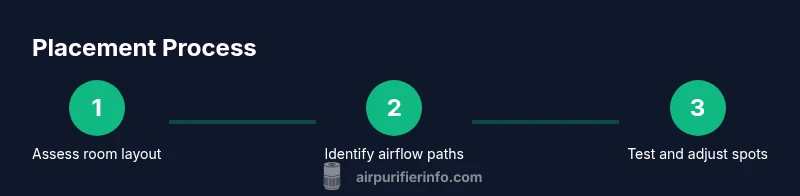
Measure room dimensions and locate vents, doors, and typical air movement paths. Understanding the flow helps you choose a placement that intercepts air moving toward the purifier.
Tip: Visualize the path air would travel from the most active zones. - 3
Identify candidate spots
Mark several spots that satisfy clearance and central activity considerations. Avoid dead zones behind furniture or in tight corners to prevent stifled airflow.
Tip: Have at least two viable spots to compare. - 4
Position the purifier with clearance
Place the purifier with space on all sides and a clear path for intake and outlet; ensure cables don’t block movement. Keep the unit level and stable.
Tip: Set it on a flat surface rather than on unstable furniture. - 5
Test airflow and compare spots
Turn on the purifier and perform a quick airflow test at each candidate spot, using tissue or incense to observe air movement toward the intake.
Tip: Prefer spots where air moves toward the unit from multiple directions. - 6
Finalize and schedule reassessment
Choose the best spot based on tests and practicality, and plan periodic reassessment when room layouts change.
Tip: Revisit placement after major furniture moves or seasonal changes.
Questions & Answers
Do air purifiers need to be in the middle of the room?
Not necessarily. Place the purifier where airflow is strongest and occupants spend time, ensuring clearance from walls and furniture.
You don't have to put it in the exact middle; aim for spots with good airflow and frequent occupancy.
Should I place purifiers near doors or vents?
Position them to intercept air moving in and out through doors or vents, but avoid blocking doorways or creating drafts directly toward occupants.
Near main air movement paths but away from direct drafts on beds or seating.
Can I place a purifier on the floor or on a stand?
Both can work. A stand or shelf can improve intake if it clears obstructions; ensure stability and easy access for maintenance.
Either floor or raised placement is fine, just keep it stable and accessible.
How close should a purifier be to a bed?
Avoid blowing air directly toward the bed. Place the purifier so it serves the room without creating uncomfortable drafts in the sleeping area.
Keep some distance from the bed and aim for airflow that reaches the breathing zone without jets of air on you.
Do purifiers produce ozone?
Most modern purifiers are ozone-free. Check the label or manufacturer’s documentation to confirm ozone safety for a specific model.
Most purifiers don’t produce ozone, but verify with the product details before purchase.
How can I tell if placement is effective?
Use simple airflow tests and monitor odor or dust reduction in the room. Look for a balanced flow toward the purifier from multiple directions.
If air moves toward the purifier from various spots and you notice fewer odors, the placement is working.
Watch Video
Main Points
- Assess room airflow paths before placing the purifier.
- Avoid blocking intake or outlet with obstacles.
- Test multiple spots and adjust based on real airflow observations.
- Reassess placement after layout changes to maintain air quality.