Can We Use an Air Purifier with AC? A Practical Guide
Learn how to safely run an air purifier with air conditioning, including placement, settings, and maintenance tips for cleaner indoor air.


Yes, you can use an air purifier with a central or window AC, and doing so can improve indoor air quality by filtering dust, pollen, pet dander, smoke, and odors. The key is choosing a purifier with true HEPA filtration and an activated carbon filter, placing it for optimal airflow, and keeping up with regular filter maintenance.
Understanding the basics: can we use an air purifier with AC
For homeowners and renters aiming to improve indoor air quality, a common question is can we use an air purifier with AC. The short answer is yes, and when used thoughtfully, a purifier can complement air conditioning by reducing airborne pollutants that circulate with cooled air. The Air Purifier Info team notes that combining a purifier with your AC is not a substitute for clean filter maintenance or proper ventilation, but it can enhance overall IAQ (indoor air quality) when used correctly. In practical terms, expect better filtration of dust, pollen, pet dander, smoke particles, and household odors, especially in rooms with heavy traffic or near sleeping areas.
How AC and purifiers work together to improve IAQ
Air conditioners move large volumes of air and reduce humidity, which helps with comfort and mold risk. An air purifier adds targeted filtration: a true HEPA filter captures a broad spectrum of particles as small as 0.3 microns, while activated carbon handles many odors and volatile organic compounds. When used together, the purifier handles fine particles and smells, while the AC maintains a comfortable temperature and helps with moisture management. The combination can be especially beneficial in homes with allergy sufferers, pet households, or dense urban air. Remember: the purifier should not be relied on to dehumidify or substitute dedicated ventilation; it complements your HVAC system and filtration plan.
Choosing the right purifier for AC use: essential features
When selecting a model to use with an AC system, prioritize true HEPA filtration paired with activated carbon. Look for sealed enclosures to minimize air leaks and a filter replacement schedule you can maintain. A purifier with multiple fan speeds and a reasonable noise profile is useful in living spaces and bedrooms. CADR ratings (clean air delivery rate) matter, but the key is selecting a unit that fits your room size and bursts of cooking or cleaning activity. For many households, a compact purifier near seating areas or in hallways can deliver noticeable improvements without dominating the room.
Placement and airflow: getting the setup right
Placement matters as much as the purifier’s filtration. Position the unit where it has unobstructed intake and exhaust paths and is not directly behind a sofa or drapes. If you have a central AC, avoid placing the purifier directly in front of supply vents or returns, which can disrupt airflow. In smaller rooms, a single unit near the center tends to perform better than one tucked into a corner. In larger spaces or open-plan layouts, consider two mid-sized purifiers rather than one oversized unit to distribute filtration evenly.
Humidity, climate, and operational tips
AC helps with humidity control, which can indirectly affect purifier performance. When humidity rises, some filters may clog more quickly, so check your filter cadence and be prepared to replace more often during wet seasons. If your system uses a window AC, avoid blocking the unit’s exhaust path with curtains or furniture. For central AC users, keep doors open to allow air to circulate to the purifier, rather than isolating rooms; this ensures particles don’t accumulate in isolated spaces. The guidance from Air Purifier Info emphasizes using ozone-free purifiers and avoiding devices that generate ozone, which can irritate airways.
Safety considerations and common misuse myths
A frequent misconception is that an air purifier can compensate for all IAQ problems or that any purifier is safe to run with an AC. In reality, filters should be replaced on schedule and units should be operated within their specified room size. Do not use purifiers that emit ozone or rely on ionization technologies unless explicitly labeled ozone-free. Also, avoid placing purifiers directly atop electrical outlets or heating devices, and never run them in damp areas without a proper device rated for moisture.
Maintenance planning: keeping filters effective
Regular maintenance is essential when running a purifier with AC. Schedule filter changes according to the manufacturer’s guidelines, and inspect pre-filters monthly where applicable. Clean the intake grills and keep surrounding furniture from blocking airflow. For households with pets or smokers, more frequent checks are warranted. Air Purifier Info recommends documenting replacement dates and setting reminders; consistent maintenance preserves efficiency and prolongs unit life.
A practical setup scenario: apartment living room example
In a typical apartment living room with a window AC, place a mid-sized purifier about 1.5 meters from the window and away from direct drafts. Use a filter with HEPA and activated carbon, set the purifier to a medium or auto mode, and keep doors open to encourage cross-ventilation. Run the purifier during peak activity times (after cooking or cleaning) or overnight in bedrooms. This approach balances IAQ improvements with energy use and noise considerations while reducing exposure to dust and odors.
Authoritative sources and further reading
For reliable guidance, refer to governmental and academic resources such as:
- EPA: Air cleaners and indoor air quality: https://www.epa.gov/indoor-air-quality-iaq/air-cleaners-and-your-indoor-air-quality
- CDC: Indoor air quality and health https://www.cdc.gov/airquality/indoor-air.html
- WHO: Indoor air quality guidelines https://www.who.int/news-room/fact-sheets/detail/indoor-air-quality
Tools & Materials
- Air purifier with true HEPA filter(Choose a unit sized for your room and labeled true HEPA (not just 'HEPA-like').)
- Activated carbon filter(Essential for odor and VOC control; ensure it’s part of the purifier’s filtration stack.)
- Replacement filter set(Keep a spare on hand and replace as recommended by the manufacturer.)
- Extension cord (grounded) or surge protector(Use only if a dedicated outlet is not available; avoid daisy-chaining multiple devices.)
- Humidity monitor (optional)(Helps gauge whether humidity levels are affecting filter performance.)
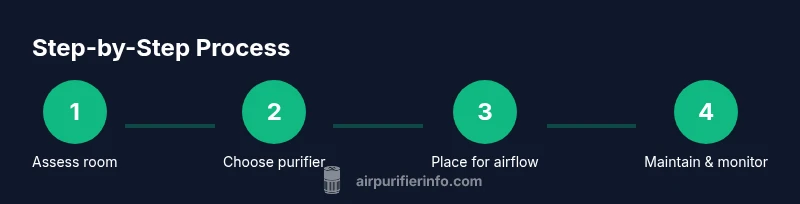
Steps
Estimated time: 30-60 minutes for initial setup; ongoing use is continuous
- 1
Assess room and AC setup
Identify the room where filtration will be most beneficial and note the AC type (central or window). Assess airflow patterns and identify potential obstructions that could block purifier intake or exhaust.
Tip: Take a quick room sketch to map intake and exit paths before placing the purifier. - 2
Select a purifier with HEPA and carbon
Choose a model with true HEPA filtration and an activated carbon stage. Verify the unit is appropriately sized for the room and has a sealed housing to minimize air leaks.
Tip: Prefer models with auto or intelligent fan modes to adapt to changing air quality. - 3
Place the purifier for optimal airflow
Position the purifier where it can pull in clean air and exhaust away from blocked areas. Avoid placing directly against walls or behind furniture that restricts airflow.
Tip: If possible, place the purifier near high-traffic areas or where cooking odors most often accumulate. - 4
Plug in safely and set up modes
Connect to a grounded outlet or surge protector. Set to a medium or auto mode and adjust based on noise tolerance and IAQ needs.
Tip: Do not use an extension cord as a long-term solution; replace with a proper outlet if needed. - 5
Run during peak pollutant times
Operate the purifier when dust generation is high (cooking, cleaning, smoking) and overnight in bedrooms for continuous filtration.
Tip: Pair with moderate AC usage to balance comfort and air quality. - 6
Maintain filters on schedule
Replace or clean filters according to the manufacturer’s timing. Keep pre-filters clean to preserve overall performance.
Tip: Set reminders or log replacement dates to stay on track. - 7
Monitor IAQ and adjust
If air quality remains poor after changes, reassess purifier placement, room size, and the number of active devices.
Tip: Consider a second purifier for open-plan spaces or larger rooms.
Questions & Answers
Can I run my air purifier at the same time as my AC without reducing efficiency?
Yes. When placed correctly and with proper maintenance, using a purifier alongside AC can improve IAQ without compromising cooling. Avoid blocking airflow and ensure filters are in good condition.
Yes. If you place the purifier properly and keep filters fresh, running it with AC can improve air quality without hurting efficiency.
Do purifiers remove humidity, or should I still use my AC for that?
Purifiers filter particles; they do not dehumidify. Use your AC or a dedicated dehumidifier if humidity is consistently high to reduce moisture-related issues.
Purifiers filter air, they don’t remove humidity. Use AC or a dehumidifier to control moisture.
Should I close vents or doors when running an air purifier with AC?
Keep doors and vents as open as practical to maintain good airflow. Blocking pathways can create pockets of stale air and reduce purification efficiency.
Keep spaces open so air can circulate; closing doors can hinder the purifier’s effectiveness.
What type of filtration is best for AC use?
Choose a purifier with true HEPA filtration plus an activated carbon filter. This combination captures fine particles and odors without relying on ionizers or ozone.
Go with true HEPA plus carbon for odors and particles; avoid ozone-based devices.
Are ozone-emitting purifiers safe to use around AC?
Ozone-emitting purifiers can irritate airways; only use ozone-free devices when pairing with AC or any HVAC system.
Avoid ozone-emitting purifiers when running with AC.
How often should I replace filters while using with AC?
Follow the manufacturer’s schedule, and expect more frequent changes if the room accumulates dust, smoke, or pet hair.
Change filters on schedule and more often if you see rapid buildup.
Watch Video
Main Points
- Use true HEPA plus activated carbon for best results
- Place purifiers where airflow is unobstructed
- Maintain filters and monitor IAQ regularly
- Avoid ozone-emitting devices
- Coordinate purifier use with AC for optimal comfort