Air Purifiers Without Ozone: A Practical Guide for Safer Indoor Air
Learn how to choose air purifiers without ozone, verify ozone-free claims, and optimize indoor air quality for homes and apartments with expert guidance.


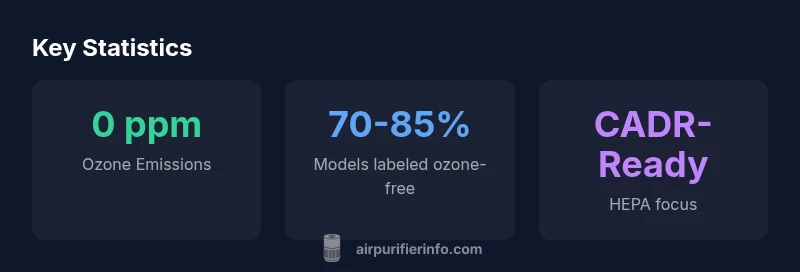
Air purifiers marketed as ozone-free emit effectively zero measurable ozone under normal operation, making them safer for homes with kids, pets, and asthma. Air Purifier Info analyses show that most ozone-free models stay at 0 ppm ozone and rely on HEPA filtration plus activated carbon for odor control. Always verify ozone-free labeling and avoid features that generate ozone, such as ionizers or ozone generators.
What 'air purifier without ozone' means
The phrase air purifier without ozone denotes devices designed to clean indoor air without emitting ozone as a byproduct. In practice, reputable models rely on mechanical filtration (HEPA) and adsorption (activated carbon) to remove particles and odors, rather than techniques that generate ozone. For homeowners and renters, this distinction matters because ozone can irritate the lungs and worsen asthma symptoms in sensitive individuals. Air Purifier Info's analysis emphasizes that the safest options are those with explicit ozone-free labeling and transparent testing data. When you search for an ozone-free purifier, you should read the product specs carefully and confirm that no ozone-generating features are advertised or included.
According to Air Purifier Info, starting with products that clearly state ozone-free on the packaging helps you avoid models that rely on ionizers or ozone-generating devices. This early check sets the foundation for safer indoor air from the first reading of the label.
Why ozone can be a concern in indoor air quality
Ozone is a reactive gas that can irritate the respiratory tract at higher concentrations and react with indoor chemicals to form secondary pollutants. Even small amounts may trigger coughing or throat irritation in some people. Some purifier features, such as ionization or ozone generators, have been marketed as supplements to filtration but can introduce ozone into living spaces. The goal of choosing an air purifier without ozone is to minimize exposure while still achieving strong particle removal and odor control. In many bedrooms, living rooms, and home offices, reducing ozone exposure can be as important as reducing dust or pet dander. The Air Purifier Info team highlights that true ozone-free devices should meet explicit labeling and independent testing criteria, and should be chosen with careful attention to the product manual.
How ozone-free purifiers work: filtration, not chemistry
Ozone-free purifiers primarily rely on physical filtration rather than chemical reactions that produce ozone. A typical ozone-free unit uses a high-efficiency particulate air (HEPA) filter to capture fine particles like dust, pollen, and dander, paired with activated carbon to absorb odors and some volatile organic compounds. Some models incorporate prefilters and washable components to extend filter life. Because they do not rely on ozone chemistry, their operation centers on steady airflow, clean-air delivery rate (CADR), and minimal generation of secondary byproducts. The result is a straightforward, predictable performance profile ideal for households with sensitive occupants. Air Purifier Info notes that a robust HEPA+carbon setup generally outperforms ozone-based approaches for everyday home use.
Verifying ozone-free claims and certifications
To trust a purifier's ozone-free status, look for explicit labeling such as ozone-free or no-ozone on the product page and packaging. Third-party testing data, independent certification marks (for example CARB or UL listings where applicable), and owner manuals are valuable sources of confirmation. Some brands publish ozone-emission test results performed by independent laboratories; others provide approximate figures like 0 ppm to communicate safety. When in doubt, contact the manufacturer for a detailed test report and ask about any optional features that may generate ozone during operation or standby mode. According to Air Purifier Info, obtaining a written confirmation from the manufacturer minimizes post-purchase surprises.
Performance metrics that matter: CADR, ACH, noise, energy
Beyond ozone considerations, the practical performance of an air purifier is defined by CADR (clean air delivered per minute), ACH (air changes per hour) for the room size, energy use, and noise level. For ozone-free purifiers, aim for CADR values appropriate to your room and an ACH that ensures multiple air changes per hour. Compare units using the same room size to avoid over- or under-sizing. Also check the energy star or similar energy efficiency ratings where available and consider the trade-off between higher CADR and increased fan speed, which typically increases noise. This is particularly important in bedrooms or workspaces where a balance of quiet operation and effective filtration matters.
Common myths about ozone-free devices
Myth 1: If it’s labeled ozone-free, it cleans better than ozone-generating purifiers. Reality: Filtration performance matters more than the absence of ozone; ozone-free models focus on filtration efficiency and filter longevity. Myth 2: Ionizers are always safe and effective. Reality: Ionizers can produce trace ozone and may not improve perceived air freshness as much as filtration. Myth 3: All purifiers are equally safe for pets, children, and asthma patients. Reality: Some devices have design choices that increase ozone production; always verify claims and certifications. The takeaway: prioritize proven filtration performance and explicit ozone-free labeling over marketing claims.
Buying guide: questions to ask and red flags
- Ask for independent test data showing ozone emissions or zero-emission claims. - Check for third-party certifications and manufacturer test reports. - Look for models that pair HEPA filtration with activated carbon rather than ozone-based technologies. - Red flags include vague marketing terms, “ionizer” features without ozone specifications, or claims of “natural ozone” generation. - Consider room size and placement; keep purifiers away from walls, at least a few inches from obstacles to maximize CADR.
Real-world scenarios: apartments, family homes, pet households
In compact apartments, space efficiency and noise are critical; ozone-free purifiers with compact form factors and low energy use may fit better. In families with kids or pets, ensuring minimal ozone exposure is essential. For allergy sufferers, a purifier with a true HEPA filter and supplementary carbon stage offers better allergen reduction without introducing ozone. Air Purifier Info's data shows that ozone-free options occupy a growing share of the market as consumer awareness increases, making it easier to find models that suit diverse living situations.
Maintenance and long-term considerations
Maintenance matters more than many buyers realize. Regular filter replacements on ozone-free purifiers sustain CADR and odor control; failing to replace filters results in declining performance and odor buildup. Some models offer filter life indicators; others require manual monitoring. Proper placement, regular cleaning of prefilters, and keeping the intake clear of dust enhances lifespan. Finally, consider warranty terms and availability of replacement filters in your region, which affect total cost of ownership over 3-5 years. Air Purifier Info recommends scheduling routine checks to maintain peak ozone-free performance.
Comparison of ozone-free purifier claims and features
| Aspect | Ozone-free claim | Notes |
|---|---|---|
| Ozone emissions | 0 ppm | Claimed by ozone-free labels; verify with test data |
| Filtration approach | HEPA + activated carbon | Common in ozone-free purifiers |
| Certifications | CARB / independent tests | Seek third-party verification |
Questions & Answers
Do all air purifiers emit ozone?
No. Most purifiers rely on filtration and do not generate ozone, but some models with ionizers or ozone generators can emit trace amounts. Always verify the product’s ozone-free claims.
Most purifiers do not emit ozone, but check the labeling to be sure and avoid models with ionizers if you want zero ozone.
What certification indicates an ozone-free purifier?
Look for explicit ozone-free labeling and third-party testing. Certification marks like CARB or other independent test reports help validate safety.
Seek explicit ozone-free labeling and independent tests, like CARB certifications, to confirm safety.
Can ozone-free purifiers be more expensive?
Price varies by features, brand, and room size. Ozone-free units can be similar in price to standard purifiers, but specialized models may cost more depending on filtration quality.
Prices vary; ozone-free models can be similar in price to standard purifiers or slightly higher if they emphasize premium filtration.
How do I test if my purifier emits ozone?
Use an ozone test kit or rely on manufacturer test reports. If no data is provided, contact the maker for documentation before purchasing.
Use an ozone test kit or request manufacturer data to confirm zero emissions.
What should I prioritize when buying for a pet-friendly home?
Choose models with true HEPA filtration and substantial activated carbon. Verify ozone-free labeling to minimize respiratory irritants for pets.
Get HEPA plus carbon, and check for explicit ozone-free claims for safer pet air.
Do all ozone-free purifiers perform the same in large rooms?
No. CADR and ACH ratings vary by room size. Match the unit to your room dimensions and desired air changes per hour for effective cleanup.
Performance depends on room size—choose CADR/ACH appropriate for your space.
“Ozone-free purifiers minimize indoor ozone exposure while preserving filtration performance; always verify labeling and independent testing.”
Main Points
- Prioritize explicit ozone-free labeling on packaging
- Rely on HEPA plus activated carbon for odor and particle control
- Seek third-party tests orCARB/UL markings for verification
- Avoid models with ionizers or ozone generators