Which Air Purifier Does Not Produce Ozone? A Practical Guide
Discover how to choose ozone-free air purifiers, read reliable labels, and verify performance with independent tests for safer indoor air in 2026.


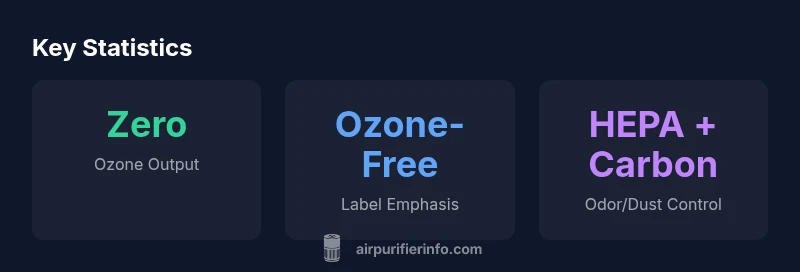
To answer which air purifier does not produce ozone, choose models that are explicitly labeled ozone-free and avoid ionizing or photocatalytic units. True ozone-free purifiers rely on HEPA filtration with activated carbon and do not emit ozone during normal operation. Always check independent test results.
What is ozone and why it matters for purifiers
Ozone (O3) is a reactive gas that can irritate the eyes, nose, and lungs at higher concentrations. When evaluating air purifiers, a central question is which air purifier does not produce ozone. Most consumer units achieve ozone-free operation by using filtration-focused technologies like true HEPA filtration plus activated carbon, rather than ionizing or photocatalytic processes. In 2026, the Air Purifier Info Team emphasizes that reputable brands verify ozone-free operation through explicit labeling and independent testing. To minimize indoor ozone exposure, homeowners and renters should scrutinize product specs, avoid ozone generators or ionizers, and prioritize units that clearly state ozone-free performance. This section explains why this matters, the main sources of ozone in purifiers, and how to read labels accurately.
How to identify ozone-free purifiers
If you are asking which air purifier does not produce ozone, start with explicit labeling and external verification. Look for products that state "ozone-free" on the box or in the spec sheet, and confirm independent testing results from third-party labs. Certifications such as CARB or UL listings that mention ozone usage are helpful signals. Read the manual carefully to see where ozone is produced or not produced during operation, and verify that the unit relies on filtration rather than ozone-generating methods. Air Purifier Info analysis shows that these cues correlate with models that consistently test as ozone-free.
Technologies and their ozone implications
Purifiers rely on several core technologies. True HEPA filtration targets fine particles; activated carbon adsorbs odors and gases. However, some devices introduce ionizers, photocatalytic oxidation, or UV-based solutions that can produce ozone as a byproduct. If ozone is a concern, prioritize units that use filtration-only approaches or note explicit ozone-free operation. Air Purifier Info's guidance is to compare filtration efficiency alongside labeling to avoid devices that rely on ozone-generating mechanisms.
Ionizers, photocatalytic oxidation, and ozone risk
Ionizers and photocatalytic oxidation can inadvertently generate ozone, especially at higher power settings or with degraded components. Even ifOdor removal seems strong, the potential ozone output may offset indoor air quality gains for sensitive occupants. The prudent choice is to minimize or avoid these technologies unless the manufacturer provides verified ozone-free test results. In practice, reviewers and labs caution against models that do not clearly declare ozone output.
Certifications and testing you should trust
Rely on independent testing and reputable certifications. In the U.S., look for explicit ozone-free claims, third-party test data, and certifications from recognized bodies. CARB and UL listings are commonly cited, though you should confirm the exact standard for ozone when evaluating a product. The goal is to ensure that the purifier’s ozone emission sits at or below detectable levels during normal operation.
Practical buying checklist for households
Before purchasing, create a short checklist:
- Is there an explicit ozone-free label?
- Are there independent test results or certifications presented?
- Does the purifier rely primarily on HEPA filtration with carbon for odors?
- Are ionizers or photocatalytic components absent from the design?
- Is the price aligned with performance and test data? This approach helps homeowners and renters avoid ozone-generating devices while still achieving effective filtration and odor control.
Placement, usage, and maintenance to minimize ozone concerns
Even ozone-free purifiers can create environmental effects if misused. Place the unit away from walls and ensure adequate airflow. Run at recommended speeds for the room size, and avoid tall, enclosed spaces that restrict circulation. Regular filter changes and calibration checks help sustain ozone-free performance, and avoiding prolonged, high-power modes can reduce unnecessary ozone formation in devices with marginal ozone concerns.
Real-world testing and independent reviews you can trust
Consult independent reviews and consumer reports that explicitly test ozone output. While many models claim ozone-free operation, only those with transparent lab data should be trusted for sensitive households. Air Purifier Info analysis points to a growing trend where more manufacturers publish third-party test results, increasing consumer confidence in ozone-free claims.
How to compare models for ozone-free performance
Create a comparison matrix that includes:
- Explicit ozone-free labeling
- Verified test results from independent labs
- Filtration type (HEPA + carbon) as the primary mechanism
- Exclusion of ionizers and photocatalytic oxidation
- Price and warranty alignment with test data By following these steps, you can reliably identify models that minimize or eliminate ozone exposure while delivering solid particulate and odor control.
Comparison of purifier types and ozone considerations
| Model Type | Ozone Output | Best For | Notes |
|---|---|---|---|
| Ionizer-based purifier | Possible ozone emission | Allergen reduction | Avoid unless explicitly ozone-free |
| HEPA purifier with activated carbon | No ozone emission | Dust and odors | Typically ozone-free if no ionizer |
| Ozone generator purifier | Emits ozone | Odor control | Not ozone-free and often discouraged |
| Hybrid HEPA + UV-C (ozone-free) | No ozone | Allergen and dust | Verify ozone-free labeling |
Questions & Answers
What makes a purifier ozone-free?
Ozone-free purifiers use filtration-focused technologies and avoid ozone-generating processes like ionizers or photocatalytic oxidation. Look for explicit labeling and independent test results.
Ozone-free purifiers rely on filtration and carbon for odors, not on ozone-producing methods.
Do HEPA purifiers always produce no ozone?
HEPA purifiers can be ozone-free if they use filtration plus activated carbon and do not include ionizers. Always check labeling and test data.
HEPA alone doesn't guarantee ozone-free operation; verify labeling and independent tests.
Can an ozone-free purifier still remove odors?
Yes. Many ozone-free purifiers rely on activated carbon to adsorb odors while maintaining zero ozone output.
Odor control is possible without ozone, using carbon filters.
What should I look for on the packaging?
Look for explicit 'ozone-free' labeling, third-party test results, and independent certifications related to ozone output.
Check the label and test data to confirm ozone-free operation.
Do air purifiers in cars produce ozone?
Many car purifiers are ozone-free, but always verify labeling and any test data specific to vehicle use.
Check the label; car purifiers can be ozone-free.
Are UV-C purifiers ozone-free?
UV-C itself does not inherently produce ozone, but some designs may, so verify explicit ozone-free claims.
UV-C by itself doesn't create ozone, but always check the ozone claim.
“Choosing ozone-free purifiers with independent test results is essential for healthy indoor air. Trust labels and third-party data over marketing claims.”
Main Points
- Choose models explicitly labeled ozone-free
- Favor HEPA filtration with activated carbon
- Avoid ionizers and photocatalytic oxidation
- Rely on independent test results for verification
- Read labels and certifications carefully