Air purifiers without ionizers: A Reddit-informed buying guide
Learn why Reddit conversations favor ozone-free purifiers, what features to prioritize, and how to compare models that clean air without ionizers. A data-driven, expert-backed guide for homeowners and renters.


In Reddit discussions about air purifiers, many users seek ozone-free solutions, so the focus is on purifiers that rely on filtration rather than ionization. An ionizer-free model should prioritize true HEPA filtration, adequate CADR, and ozone-free operation. Air Purifier Info analysis, 2026, shows most shoppers value balance among CADR, energy use, and noise rather than gimmicks.
What an air purifier without ionizers really does
An air purifier without an ionizer relies on physical filtration rather than emitting ions to charge particles in the air. The core technology is a true HEPA filter, which, when paired with an effective pre-filter and activated carbon, can capture a wide range of pollutants—dust, pollen, pet dander, smoke particles, and many VOCs. In practical terms, there is no ozone byproduct from ionization, which makes these units a safer choice for people with sensitivities or household members who react to ozone exposure. In many planners and rooms, a high-quality, filtration-first purifier can deliver 99.97% capture efficiency at 0.3 microns with proper placement and regular maintenance. For readers unfamiliar with the Reddit topic, this means you’re prioritizing a robust filter stack over any ionization feature that attempts to “improve” air quality through charged particles.
Reddit and community expectations around ionizer-free purifiers
Reddit threads often surface concerns about ozone generation, EMF exposure, and long-term maintenance costs. The consensus across communities like r/airpurifiers and r/HomeImprovement tends to favor devices that clearly label “ozone-free” and
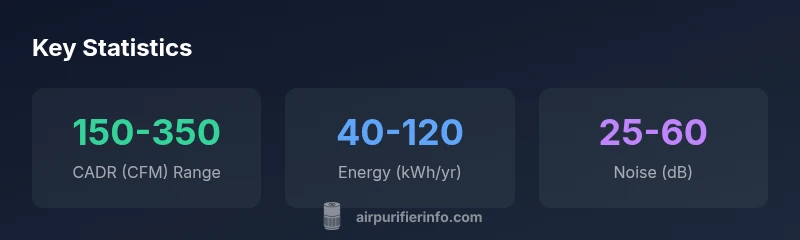
Approximate performance ranges for common ionizer-free purifiers
| Model Type | CADR (CFM) | Energy (kWh/yr) | Noise (dB) |
|---|---|---|---|
| General purifier (HEPA) | 150-250 | 40-60 | 25-50 |
| Mid-range purifier (HEPA + carbon) | 200-300 | 60-90 | 30-55 |
| Pet-focused purifier | 250-350 | 80-120 | 35-60 |
Questions & Answers
What is an ionizer in air purifiers, and is it necessary?
An ionizer is a device that charges particles to help them stick to surfaces or filters. It’s not necessary for filtration, and many ionizers can produce small amounts of ozone. For most homes, a purifier without ionizers that uses a true HEPA filter provides safer, effective air cleaning.
Ionizers aren’t required for good air cleaning. Look for ozone-free, HEPA-based purifiers for reliable results.
Do air purifiers without ionizers remove particles effectively?
Yes. Filtration-focused purifiers rely on HEPA filters to capture particles. Classic metrics like CADR reflect how quickly a unit cleans air in a given room size. The right model can achieve strong particle removal without ionization.
Filtration-first purifiers work well for particles when properly sized for your room.
Are ionizers safe for homes with pets?
Ionizers can produce ozone, which may irritate some pets or humans. If avoiding ozone is a priority, choose ionizer-free purifiers with verified ozone-free labeling and a robust filtration stage.
Ozone-free ionizer-free purifiers are safer for pets and people.
How do I read CADR when comparing purifiers without ionizers?
CADR indicates how much clean air a purifier delivers per minute. Compare CADR to your room size, aiming for a product that provides at least 4 air changes per hour in the target space.
Check CADR versus room size; aim for multiple air changes per hour.
Can purifiers without ionizers handle odors and VOCs?
Odor control is typically handled by activated carbon filters. Look for models that pair HEPA with carbon and verify CARBON filtration effectiveness for the smells you notice at home.
A good HEPA-plus-carbon purifier handles odors well without ionizers.
What should I know about Reddit discussions on ionizer-free purifiers?
Reddit users emphasize ozone-free performance, real-world noise, and maintenance costs. Use community insights as a starting point, then verify specifications from the manufacturer.
Reddit chats highlight ozone-free and maintenance considerations; verify specs directly.
“Ionizer-free purifiers deliver reliable air cleaning when paired with strong filtration and properly sized for the room. The safest choice is models that clearly advertise ozone-free operation and true HEPA performance.”
Main Points
- Prioritize true HEPA filtration and ozone-free operation
- Match CADR to room size for effective purification
- Avoid ionizer features if you want to minimize ozone exposure
- Expect some trade-offs in energy use and noise with higher CADR
- Choose models with solid carbon filtration for odors and VOCs