Air Purifier vs AC: Clear Comparison for Indoor Air Quality and Comfort
Compare air purifiers and air conditioners to decide which best improves indoor air quality and comfort. If you're exploring an air purifier like ac, this guide clarifies differences, features, energy use, and practical use for homes and rentals.


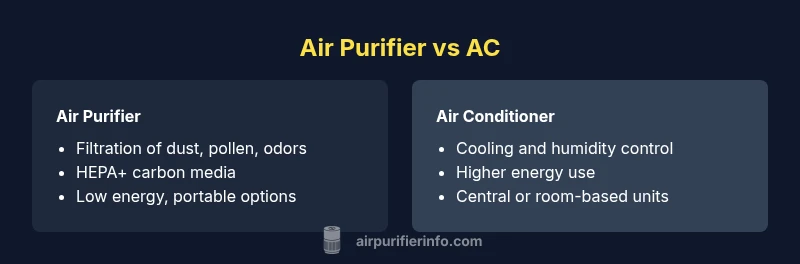
An air purifier like ac is not a direct substitute for an air conditioner. Purifiers focus on cleaning the air—removing dust, pollen, odors, and VOCs—while air conditioners cool and dehumidify. If your priority is healthier indoor air, a purifier with a HEPA filter and activated carbon will help most. For cooling comfort, you still need a traditional AC, or a combined setup for best results.
Defining the Roles: Air Purifier vs Air Conditioner
The indoor air problem often creates confusion because two common devices—an air purifier and an air conditioner—are designed for different outcomes. If you’re curious about an air purifier like ac, it helps to start with the basics: purifiers are designed to clean the air, removing dust, pollen, odors, and volatile organic compounds (VOCs). They do not reduce room temperature. Air conditioners, by contrast, remove heat from indoor spaces, lower humidity, and create a comfortable climate. This fundamental distinction matters for homeowners and renters who want to optimize health, comfort, and cost. According to Air Purifier Info, successful air improvement starts with understanding room size, filtration efficiency, and ongoing maintenance. In this article, we unpack the core differences, provide practical guidance, and show how many households combine both devices to achieve both clean air and comfortable temperatures. If you’re evaluating an air purifier like ac, this section sets the framework for informed decisions.
How Air Purifiers Work: Filtration and Gas Capture
Air purifiers operate by pulling room air through a series of filters and media. The first-stage prefilter traps larger particles. The core HEPA filter captures at least 99.97% of particles down to 0.3 microns, including dust, pollen, and certain smoke particles. Many models add an activated carbon or charcoal filter to adsorb odors and gases, addressing VOCs released by paints, cleaners, and cooking. Some units include optional ionizers or UV-C lights, but these features aren’t essential for most households. Key performance indicators include CADR (Clean Air Delivery Rate) and ACH (air changes per hour). A purifier’s effectiveness increases with appropriately sized CADR for the room and a seal around the unit to prevent bypass. For homes with pets or persistent odors, multi-stage filtration and carbon layering provide the best results. In practice, a purifier targeted to your room size can dramatically reduce visible dust, allergens, and persistent smells, improving daily comfort.
How Air Conditioners Work: Cooling, Dehumidification, and Airflow
Air conditioners remove heat from indoor air and can also dehumidify to improve comfort during humid days. Most home AC systems rely on a refrigerant cycle to move heat outside, delivering cooled air through ducts or a portable unit. Modern central ACs come with two key efficiency considerations: SEER (Seasonal Energy Efficiency Ratio) and proper sizing relative to the home. Window or portable units emphasize BTU capacity and energy draw. Beyond temperature, effective airflow and humidity control influence perceived comfort. While ACs don’t primarily target air contaminants, many households pair an AC with air purification to address a broader range of air quality issues. When the goal is a cool, comfortable room with cleaner air, pairing cooling with robust filtration yields the best results.
Key Features to Compare Between Purifier and AC
When evaluating an air purifier and an air conditioner, compare features that matter for your living space:
- Room size and capability: Purifiers should match the room’s volume (CADR and ACH). AC units should be sized by BTU or tons for cooling capacity.
- Filtration vs comfort: Purifiers rely on HEPA and activated carbon for particulates and odors; AC focuses on temperature, humidity, and airflow.
- Noise and energy: Purifiers can run quietly at low settings; ACs consume more energy, especially when cooling to very low temperatures.
- Maintenance costs: Purifiers require filter replacements (monthly to quarterly, depending on use); ACs require refrigerant checks and filter changes, plus potential duct cleaning.
- Placement strategy: Purifiers are portable and ideal for living rooms and bedrooms; AC units (central or window) require installation but deliver uniform climate control across spaces. If you’re aiming for an air purifier like ac, prioritize units that fit your room size and deliver consistent filtration without bypass leaks.
- Cost range and value: Purifiers tend to range broadly by CADR and features; air conditioning systems vary widely based on capacity, efficiency, and installation complexity. Real-world value comes from balancing upfront costs, ongoing maintenance, and energy use.
Real-World Scenarios: When to Use Each Device
Think about your daily needs and seasonal patterns. If you suffer from seasonal allergies, asthma triggers, or pet dander, a purifier is your frontline defense in breathing clean air, especially in bedrooms and living rooms. If you live in a hot climate or experience humidity during summer, an air conditioner provides essential cooling and humidity control. For households that crave both, consider using a purifier in the main living area to tackle pollutants and odors while the AC handles temperature throughout the day. In rental situations where major HVAC changes aren’t feasible, a portable purifier plus a window AC can create a practical compromise. The strategy is to avoid letting one device be the sole solution for both air quality and comfort; instead, use each tool for its strongest role and create a complementary system across the home.
Combined Solutions: Getting the Most from Both
A well-coordinated approach leverages the strengths of both devices without duplicating effort. Place a purifier in rooms where occupants spend the most time, especially bedrooms and living areas with potential odor buildup or dust. Use AC for cooling during peak heat, and rely on its humidity control to reduce musty smells in damp climates. In homes with dust or wildfire smoke concerns, maintain a purifier’s operation on high or medium-high settings during periods of poor outdoor air quality. For households seeking simplicity, a purifier placed close to the occupant or in a central living zone can offer noticeable improvements without complicating the home’s temperature management. Remember that effective air cleaning goes beyond the device: sealed windows, minimal outdoor pollutant sources, and proper filter maintenance are essential.
Choosing Models: What to Look For and How to Measure Impact
Selecting a purifier or an AC unit should involve a careful assessment of room size, energy efficiency, and expected maintenance costs. For air purifiers, look for a high CADR that matches the room volume and an appropriate ACH target. Also consider the filter’s MERV rating compatibility with your purifier’s filtration stage and the availability of replacement filters. For air conditioners, focus on cooling capacity (BTU or tons) matched to the space, SEER rating for efficiency, and the presence of smart controls or zoning capabilities. In both cases, a clear measurement plan helps track impact: before-and-after air quality readings, energy bills, and comfort indicators such as perceived freshness and humidity levels. This data-driven approach is especially important for households with allergies, asthma, or pets, where precise filtration and climate control can significantly improve daily life.
Maintenance, Costs, and Long-Term Considerations
Over the long term, maintenance costs become a primary factor in total ownership. Purifiers require timely filter replacements—often monthly to quarterly—plus occasional carbon filter changes. If you choose a purifier with washable prefilters, you may reduce some recurring costs, but you should still replace main filters at recommended intervals. Air conditioners require seasonal maintenance: airflow checks, refrigerant status, and coil cleaning, with potential ductwork care for central systems. Energy use is another critical component; purifiers generally consume less energy than cooling systems on a per-hour basis, but a purifier’s power draw adds up over time, especially in large rooms. It’s wise to budget for both upfront purchase prices and ongoing costs to determine true value over several years. Finally, consider the reliability and service options in your area and the warranty coverage offered by manufacturers.
Common Misconceptions About Air Purifiers and AC
Myths persist about whether purifiers can substitute for cooling or vice versa. The most persistent misconception is that purifiers alone can cool a room; this isn’t true. Another common belief is that all purifiers remove all odors instantly; in reality, filtration efficiency depends on room size and media quality. People also assume that higher CADR means better performance in every room; effective placement and room-specific sizing matter more than raw numbers. Understanding the limitations and strengths of each device helps you avoid costly mistakes and leads to smarter purchases that improve indoor air quality and comfort.
Comparison
| Feature | Air Purifier | Air Conditioner |
|---|---|---|
| Primary function | Remove particulates, gases, and odors (HEPA + carbon) | Cool room temperature and dehumidify |
| Typical energy use | Lower to moderate, depending on CADR and fan speed | Higher, due to refrigeration and compressor load |
| Noise level | Low to moderate at purification-only settings | Moderate to high at cooling/heating cycles |
| Maintenance cost | Filter replacements and occasional carbon filter changes | Periodic service, possible duct cleaning, and filter changes |
| Best for | Dust, allergies, odors, pet dander in rooms | Cooling, humidity control, comfort during heat waves |
| Price range | $150-$900 | $300-$2,500 |
What's Good
- Improves indoor air quality by removing dust, pollen, and odors
- Typically lower ongoing energy use than cooling devices
- Portable options offer flexible placement
- Can be paired with existing AC for better overall air quality
What's Bad
- Purifiers do not cool rooms or reduce heat
- Ongoing filter replacement costs
- Effectiveness depends on room size and placement
Purifiers excel for air quality; ACs excel for cooling. Use both when you want clean air and comfortable temperatures.
If air quality is the priority, choose a purifier with effective filtration. If cooling is critical, rely on an AC. A combined approach often yields the best overall indoor comfort and health.
Questions & Answers
Can an air purifier replace an air conditioner?
No. An air purifier cleans the air but does not lower room temperature. For comfort in hot weather, you still need an air conditioner or another cooling method.
No. Air purifiers clean the air, they don't cool rooms. You’ll still need cooling from an air conditioner for hot weather.
What is CADR and why does it matter for air purifiers?
CADR stands for Clean Air Delivery Rate. It measures how quickly a purifier can remove specific pollutants from a room. A higher CADR means faster cleaning for the target room size, improving air quality more quickly.
CADR tells you how fast a purifier cleans air. Higher CADR means quicker relief from dust and odors in a given room.
Are there air purifiers that also cool?
Most purifiers do not cool; they focus on filtration. Some vendors offer hybrid devices, but cooling performance typically lags behind dedicated AC units.
Most purifiers don’t cool. They filter air. If you need cooling, use a separate AC unit.
How do I size a purifier for my room?
Measure the room and compare it to the purifier’s CADR rating. For best results, the CADR should be at least two-thirds of the square footage of the room. Place the unit where air can circulate freely.
Check the purifier’s CADR and match it to your room size. Bigger rooms need higher CADR.
How loud are purifiers compared to AC units?
Purifiers often run quieter on low settings but can become noticeable at higher speeds. Portable AC units can be louder during peak cooling, depending on fan speed and compressor activity.
Purifiers can be quiet at low speeds, and ACs can get loud when cooling hard.
How often should I replace purifier filters?
Filter replacement frequency depends on usage and air quality. In practical terms, check manufacturer guidance, typically every 6-12 months for main filters, with prefilters reusable for longer use.
Check the filters regularly and replace as recommended by the manufacturer.
Main Points
- Define your priority: air quality or cooling
- Match purifiers to room size with CADR; match ACs to space with BTU/SEER
- Combine both for optimal indoor comfort and air quality
- Plan for ongoing filter costs and energy use
- Maintain seals and ventilation quality for best results