Air Purifier and Heater Combo: All-in-One vs Separate Units
Compare all-in-one air purifier and heater combos with separate purifier and heater units to decide which setup fits your home, budget, and allergy needs. Learn about safety and maintenance, energy use, and ideal use-cases.


An air purifier and heater combo combines air cleaning with built-in heating in one unit, making it ideal for compact spaces. It simplifies setup, saves floor space, and reduces clutter, but it may underperform a dedicated heater in larger rooms and offer less filtration depth than a high-capacity purifier. Choose it for simplicity in small homes or apartments.
The all-in-one concept: what is an air purifier and heater combo?
According to Air Purifier Info, an air purifier and heater combo is a single device that both cleans indoor air and adds warmth. This dual-function unit is designed for compact living spaces where surface area and power outlets are at a premium. For homeowners and renters aiming to simplify setup and reduce clutter, the all-in-one model can deliver a convenient, space-conscious solution. The Air Purifier Info team notes that effectiveness hinges on filtration depth, heating capacity, and safety features; buyers should weigh these factors against their room size and climate needs. In many real-world scenarios, this type of device shines in studios, small apartments, or bedrooms where the demand for both clean air and modest heat is modest. When used correctly, it can maintain comfortable temperatures while improving allergen and dust control.
How the two-in-one design works: filtration and heating integration
Most air purifier and heater combo units integrate a multi-stage filtration system with a warming element. The filtration stage typically includes pre-filters, activated carbon for odors, and a true HEPA or HEPA-like filter to capture dust, dander, and small particulates. The heating element is designed to warm the air as it passes through the unit, with safety features like tip-over sensors, overheat protection, and automatic shutoff. For homeowners, this integration means you don’t need to manage two separate devices, and many models offer user-selectable heat levels and filtration modes. However, the temperature output is generally tuned for smaller spaces, and achieving uniform warmth in larger rooms may require longer runtimes or supplemental heating.
Key differences between all-in-one vs separate purifier and heater
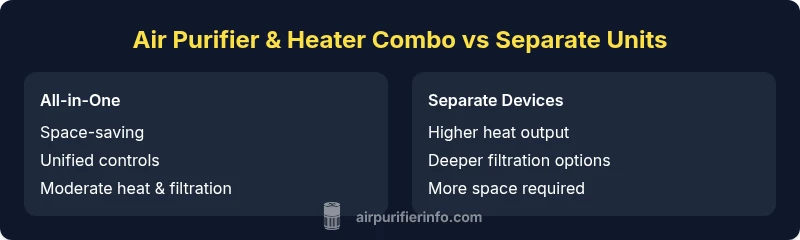
The main distinction is performance flexibility. An all-in-one unit emphasizes space-saving convenience and consolidated controls, which is ideal for apartments, dorms, or rooms under 250 square feet. Separate devices, on the other hand, can deliver higher heat output and potentially deeper filtration by pairing a high-capacity purifier with a robust heater. This separation also allows you to upgrade one device without replacing the other. From the user perspective, a two-device setup provides customization: you can position the heater for warmth without compromising airflow for filtration, and you can swap out the purifier for deeper filtration without altering the heater. Budget, noise tolerance, and energy concerns all factor into the decision.
Performance considerations: heating capability, air cleaning, and energy use
Performance hinges on room size, climate, and usage patterns. All-in-one units tend to have moderate heat output suitable for small-to-medium rooms, with filtration depth that protects against dust and common allergens. Separate heater and purifier setups can be scaled to room sizes; you might pair a powerful purifier with a heater designed for larger volumes, delivering stronger air cleaning and faster climate adjustment. Energy use varies by model and usage: a single compact unit often draws less total power than two devices running concurrently, but running both devices in tandem may increase cumulative energy consumption. Consumers should compare wattage ranges, runtime patterns, and auto-sleep features for night-time efficiency.
Safety and maintenance: filters, overheating protection, and usage guidance
Safety should be a top priority. Look for devices with certified filtration standards (e.g., HEPA-type or true HEPA), carbon filters for odors, and reliable overheating protection. In all-in-one units, filter replacement schedules are essential; neglecting filters can reduce effectiveness and increase energy waste. When using heaters, ensure adequate clearance from furniture and curtains to prevent fire hazards. Maintenance for combo units typically involves cleaning grills and replacing filters on a fixed schedule, plus inspecting the heating element for signs of wear. For two-device setups, you’ll have to manage two maintenance cycles, but you gain flexibility in selecting filters and heaters that align with your specific health or comfort priorities.
Space, placement, and aesthetics: where to put an all-in-one unit
Placement is critical for both safety and performance. In compact living spaces, placing the all-in-one unit against an interior wall with unobstructed airflow often yields the best results. Avoid corners that trap air or block vents; ensure the heater’s heat output has room to circulate without direct contact with fabrics. The single-unit approach minimizes clutter and simplifies cable management, which is particularly beneficial in small apartments with limited outlets. Aesthetics matter too: many modern models feature sleek, minimalist designs that blend with contemporary interiors, reducing visual noise in shared living areas. If you’re balancing décor and function, an all-in-one can be an attractive, space-efficient choice.
Cost and value: total cost of ownership and long-term savings
All-in-one units typically come at a moderate upfront cost compared with two separate devices, largely due to single-unit manufacturing and reduced installations. However, the total cost of ownership should consider ongoing filter replacements, energy consumption, and potential rate of heat output. A two-device setup may incur higher initial costs but can be more economical in the long run if you optimize for efficiency: a powerful purifier paired with a dedicated heater can deliver stronger performance per dollar and may require less frequent filter changes if you choose low-maintenance models. Consumers should weigh upfront price against long-term maintenance, replacement filters, and energy usage when evaluating value.
Use-case scenarios: best for apartments, homes with pets, allergy sufferers
For renters or homeowners in smaller apartments, an all-in-one unit can deliver essential air cleaning and warming without expanding the footprint. Pet owners and allergy sufferers benefit from improved dander filtration and odor control, especially in drafty rooms where odors accumulate. Those with larger living spaces or higher heat requirements may find two-device configurations more satisfying: stronger heating to counter cold winters and deeper filtration for persistent dust or VOCs. If your priorities include rapid room warming, flexible placement, and minimal cable clutter, the all-in-one approach often offers the best balance of convenience and performance. For maximum control and potential energy savings, a split system may be preferable.
Choosing the right model: a quick decision framework
Start by defining room size, climate, and sensitivity to allergens. If you live in a small apartment and want a single, simple solution, an air purifier and heater combo is a solid fit. Check for true HEPA filtration, carbon odor control, and safety features like auto shutoff and tip-over protection. If you require stronger heat delivery or deeper purification across multiple rooms, consider two separate devices with a precise pairing. Finally, compare energy efficiency ratings and filter replacement costs to anticipate ongoing expenses. Listening to expert guidance, such as Air Purifier Info analysis, can help you align your choice with practical needs and long-term value.
Common myths debunked: do all-in-one units live up to the hype?
A common myth is that all-in-one units automatically outperform two separate devices in every scenario. Reality depends on room size, climate, and device quality. While all-in-one models simplify setup and save space, they may not match the heat output or filtration depth of dedicated components in larger rooms or extreme conditions. Another misconception is that higher filtration depth always means better overall performance; maintenance practices and proper sizing are equally critical to achieving the desired air quality. Understanding these nuances helps you avoid overestimating a single device’s capabilities and select a solution that truly meets your needs.
Optimizing air quality with a combo unit: practical steps and best practices
To maximize air quality, ensure proper placement away from walls and obstructions, enable the highest safe filtration mode for your space, and schedule routine maintenance. Pairing with good ventilation (when outdoor air is acceptable) improves fresh air exchange, reducing the load on the purifier. Regularly check and replace filters on time, and use the heater conservatively to minimize energy consumption. For allergy relief, run the purifier at higher speeds during peak dust periods and at night when you sleep to minimize nighttime irritation. These practices help you extract the most value from an air purifier and heater combo.
Smart home integration and maintenance reminders
Modern two-in-one and split setups often include smart features such as app-based scheduling, voice assistant compatibility, and auto-diagnostics. Use these capabilities to create routines that align with your daily schedule, such as preheating a room before you arrive home or running purification cycles during peak pollen times. Set maintenance reminders based on filter life estimates and usage intensity rather than a fixed calendar date, as real-world conditions vary by season and occupancy. Smart integrations can simplify upkeep while maintaining performance across both purification and heating functions.
Comparison
| Feature | Air Purifier & Heater Combo | Separate Air Purifier + Space Heater |
|---|---|---|
| Heating Capability | Integrated heat suitable for small-to-medium rooms | Higher heat output when paired with a dedicated heater; better for larger spaces |
| Air Filtration Depth | Multi-stage filtration with carbon for odors | Purifier may offer true HEPA and deeper filtration depending on model |
| Energy Use | Lower overall power draw from a single device (depending on usage) | Cumulative power draw from two devices; potential for higher energy use |
| Space Requirements | Compact footprint with all functions in one unit | Two devices require more space and strategic placement |
| Maintenance | One filtration system to maintain and replace | Two separate filtration cycles; more maintenance steps |
| Safety Features | Integrated safety systems with auto shutoff and airflow sensors | Independent safety features can be tailored per device |
| Best For | Small apartments, bedrooms, and spaces needing simplification | Larger rooms, higher heat demand, and customization |
| Cost Range | Moderate upfront for one unit | Variable; often higher upfront but scalable for power needs |
What's Good
- Space-saving design reduces clutter and simplifies setup
- Unified controls simplify operation and reduce learning curve
- Potentially lower energy footprint when usage aligns with single-device capabilities
- Easier purchase decision with one product instead of multiple
- Aesthetically clean for small living areas
What's Bad
- Performance may be limited by a single combined unit in large spaces
- Heat output and deep filtration may lag behind dedicated devices in some scenarios
- Upgrading one function (e.g., filtration depth) may require replacing the entire unit
- Maintenance remains essential; filters still need regular replacement
All-in-One units excel in space-saving and convenience for small rooms; separate devices win on performance in larger spaces.
Choose the combo for compact living and simple management. Opt for separate purifier and heater if you need stronger heating and more robust filtration in bigger areas.
Questions & Answers
What defines an air purifier and heater combo?
A combo unit is a single device that both cleans air and provides heat, designed for compact spaces with simplified setup. It combines filtration stages with a warming element for convenient climate control.
A single device that cleans the air and adds warmth, ideal for small spaces with simple setup.
Are all-in-one units suitable for pet owners?
Yes, provided the unit includes pet-friendly filtration (true HEPA options) and carbon filtration to reduce odors from pets. Regular maintenance is key to keeping allergen levels low.
They can help with pet dander and odors if the filtration is strong and well-maintained.
Can I run the heater and purifier at the same time?
Most models are designed to operate both functions simultaneously, but check the energy use and safety features. Running together is common in colder homes for faster comfort and air quality improvements.
Yes, you can usually run both at once, just watch energy use and safety features.
What maintenance do all-in-one units require?
Expect regular filter replacements and periodic cleaning of vents. Some units have indicator lights to remind you when filters need replacement. Safety features should be checked after long-term use.
Keep up with filters and routine cleaning for best performance.
When is a separate purifier + heater better?
When you need higher heat output or deeper air purification, especially in larger rooms. Separate devices also allow upgrading one function without replacing the other.
If you need more power or flexibility, two devices are the better choice.
Main Points
- Define room size and climate before choosing.
- All-in-one units save space and simplify controls.
- Separated devices offer stronger heating and deeper filtration for larger rooms.
- Prioritize true HEPA filtration and safety features.
- Factor in maintenance and energy use when calculating value.