Air Purifier and Humidifier in the Same Room: A Practical Comparison
Analytical comparison of running an air purifier and humidifier in the same room, with setup tips, safety considerations, and buying guidance for homeowners and renters seeking improved indoor air quality.


According to Air Purifier Info, using an air purifier and humidifier in the same room can improve comfort and air quality by reducing dust and controlling humidity, but performance depends on room size and device settings. This comparison weighs two practical setups: purifier with a humidifier versus purifier alone, to guide homeowners and renters toward a balanced choice.
The Case for Combining Breathability and Clean Air
In dry indoor environments, a humidifier can restore moisture while an air purifier tackles dust, pollen, dander, and other particles. When used together in the same room, you can address two common complaints—dry air and airborne contaminants—without needing multiple rooms or devices. The Air Purifier Info team notes that the key is to balance humidity and filtration so that neither device overwhelms the other. This balance reduces irritation for sensitive residents and helps protect furniture and electronics from overly dry air, while keeping particulate levels in check.
Core Differences That Matter in Practice
The primary difference between running both devices in a single room versus using a purifier alone is humidity control. A humidifier adds moisture; an air purifier removes particulates faster and with a potentially different filter load. The combination can improve perceived air quality and comfort, but it can also complicate maintenance: water tanks, mineral buildup, and potential mold growth if humidity remains high. Keep in mind that effective performance depends on matching the purifier’s CADR and the humidifier’s output to the room size and occupant needs.
Room Size, Humidity Targets, and Device Choice
For smaller spaces (e.g., bedrooms under 200–300 sq ft), a compact purifier with a small humidifier can work well if humidity is kept within the 30–50% range. In larger rooms or open-plan areas, you may need a higher-capacity purifier and a humidifier with adjustable output. The best approach is to measure baseline humidity with a hygrometer and select models rated for the room size. If humidity tends toward the upper end of the range, consider a purifier with a humidity sensor and automatic mode to prevent oversaturation.
Safety, Placement, and Maintenance Best Practices
Placement matters: avoid placing the humidifier directly on top of the purifier to prevent water droplets from saturating filters. Maintain clean water to avoid mineral dust, use distilled or demineralized water where possible, and clean both devices regularly. Humidity targets beyond 50% can promote mold growth; if mold or musty odors appear, reduce humidity or separate the devices. Air purifiers with built-in humidity sensors simplify monitoring and reduce guesswork.
Practical Scenarios and Recommendations
In dry winter air, using a purifier with a humidifier can provide comfort and allergen reduction simultaneously. In humid climates, running only the purifier may be sufficient, and adding a humidifier could worsen indoor moisture levels. For allergy sufferers, ensure the purifier uses a true HEPA filter and a washable pre-filter; for sensitive households, choose models with auto-mode and air quality sensors. The combination is most effective when humidity is actively monitored.
Cost Considerations and Long-Term Value
Running two devices in one room increases upfront costs and ongoing energy use but may reduce the need for broader climate-control strategies. Compare the price ranges of compact units versus high-capacity systems and factor in filter replacements, humidifier parts, and water usage. In many cases, a single high-quality purifier with an integrated humidification option offers better value than two separate devices, especially if energy efficiency is a priority.
Comparison
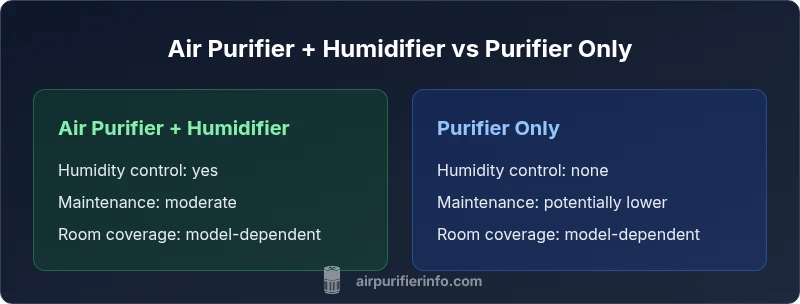
| Feature | Air purifier + humidifier in same room | Air purifier only |
|---|---|---|
| Humidity control | Maintains 30-50% RH with humidifier, adjustable | No inherent humidity control; relies on room conditions |
| Filtration burden on filters | Moderate load from particulates plus water/droplet exposure | Lower load; only particulates |
| Recommended room size | Up to 400-600 sq ft depending on models | Up to 600 sq ft (purifier alone) |
| Maintenance frequency | Water tank care + filter changes | Filter changes only |
| Noise level | Moderate to high depending on humidifier operation and purifier speed | Typically moderate |
| Power consumption | Moderate; depends on two devices running simultaneously | Low to moderate |
| Best for | Dry air + particulates; allergy relief with humidity control | Particle-focused air cleaning when humidity control is not needed |
What's Good
- Improved comfort from balanced humidity and cleaner air
- Potential for fewer dry-air symptoms (skin, throat) with humidity
- One setup can address multiple indoor air quality concerns
- Automation options available for sensor-based control
What's Bad
- Risk of over-humidification leading to mold or dampness
- Increased maintenance (water management, mineral buildup, two devices)
- Higher upfront and ongoing energy costs
- Humidifier output can affect purifier filter performance if not matched
Air purifier + humidifier is best for dry climates or winter months; purifier-only suits humid climates or where humidity control is not a priority
Choose the combined setup if humidity is consistently below optimal levels and you want synchronized air cleaning. Opt for purifier-only when humidity management is a secondary concern or when space, noise, or energy use is a priority.
Questions & Answers
Is it safe to run a humidifier and air purifier together in the same room?
Yes, it can be safe when humidity is kept within recommended ranges and devices are well maintained. Use distilled water in humidifiers to minimize mineral dust. Regularly check filters for moisture-related wear and clean the units per manufacturer guidelines.
Yes—running both can be safe if you monitor humidity and maintain the devices. Use distilled water and check filters regularly.
Will humidity affect purifier filter life?
Humidity can influence filter performance; excessive moisture may promote mold in filters or dampen the filter media. Choose purifiers with HEPA filters that tolerate some humidity and ensure proper airflow, plus humidity control to avoid damp conditions.
Humidity can affect filters; choose devices tolerant of moisture and keep humidity in check.
What humidity level is ideal when using both devices?
Aim for a relative humidity of about 30-50%. This range supports comfort and keeps mold risk low while enabling effective filtration.
Aim for 30 to 50% humidity for best balance.
Can I run both devices on a timer to save energy?
Yes. Timers or smart plugs can coordinate device operation to minimize energy use, while ensuring humidity stays within target ranges. Avoid running humidifiers at high output for extended periods without monitoring.
You can use timers to save energy, but monitor humidity to avoid over-wetting.
Do all humidifiers affect purifier performance?
Not all do. Some humidifiers produce mineral dust or mist that can accumulate on filters. Choose humidifiers with clean-water systems and use devices with humidity sensors to manage risk.
Not all humidifiers impact purifiers; pick models with low mineral dust and sensors.
Main Points
- Assess your baseline humidity first
- Aim for 30-50% RH to balance comfort and filtration
- Match device capacity to room size for effectiveness
- Monitor humidity with a hygrometer
- Factor in maintenance and energy costs when budgeting