Air Purifier After Painting: The Essential Guide for Fresh Indoor Air
Learn how to safely use an air purifier after painting to reduce VOCs, odors, and dust. This comprehensive guide covers filter choices, placement, timing, and maintenance for healthy indoor air.


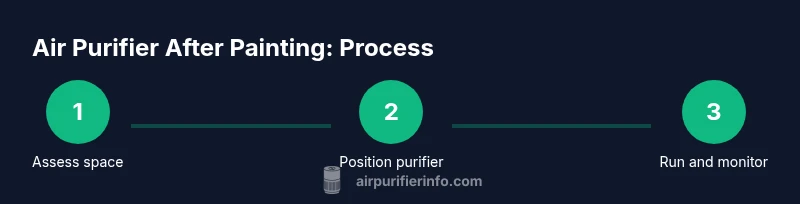
After painting, use an air purifier to reduce VOCs, odors, and fine particles quickly. Choose a unit with a HEPA filter plus activated carbon, place it centrally in the room, and run it before, during, and after finishing painting. Air Purifier Info guides you through a practical, safe setup and ongoing maintenance.
Understanding VOCs and paint fumes
Paints and finishes release volatile organic compounds (VOCs) and other fumes that can linger long after a project is complete. According to Air Purifier Info, these compounds can off-gas for hours, days, or even longer in poorly ventilated spaces. VOCs contribute to headaches, throat irritation, and headaches for sensitive individuals, while odors can linger and affect comfort and sleep. This section explains what VOCs are, how they travel through indoor air, and why cleaning the air after painting is important for general indoor air quality, especially in rooms that are frequently used by families or occupants with allergies or asthma. Understanding the chemistry behind paint fumes helps you choose the right purifier settings and filters, so you can return to a cleaner, safer living space more quickly.
What paint fumes consist of and health impacts
Paint fumes are a mix of volatile organic compounds, solvents, and pigments. Common ingredients include acetone, xylene, toluene, and butyl acetate, which vaporize as paint dries. While many modern paints are labeled low-VOC, there can still be residual emissions from primers, sealants, and finishes. For people with asthma or chemical sensitivities, even these reduced emissions can trigger symptoms. Long-term exposure to high concentrations is rarely a concern in typical home environments, but short-term exposure during and after painting can be noticeable and uncomfortable. The goal of air cleaning is to dilute and remove these contaminants quickly, improving comfort and reducing potential irritants for occupants.
How air purifiers filter VOCs and particles
Air purifiers work by pulling air through filtration systems that remove particles and gases. A true HEPA filter captures particles such as dust, pollen, and fine fragments generated during sanding or cleanup. Activated carbon filters adsorb many VOCs and odors, helping to reduce chemical fumes from paints, sealants, and cleaners. Some models also include prefilters to extend the life of the main filters. When you run an air purifier after painting, both filtration stages work together to reduce both particulate matter and gaseous pollutants, leading to faster air quality recovery.
Choosing the right purifier for painting cleanup
Look for a purifier that combines a high-quality HEPA filter with an activated carbon or chemisorption filter. This combination tackles both dust and VOCs efficiently. Consider room size and noise levels: a purifier with a suitable clean air delivery rate (CADR) for the room will clean air faster, while a quieter unit reduces disruption in living spaces. Check that the device is ozone-free and has replaceable carbon and HEPA filters. A purifier with a sealed unit and easy filter access helps ensure consistent performance during a painting cleanup cycle.
Placement and setup: where to put your purifier
Center the purifier in the largest area of the room, away from corners that trap air, and near the source of emission if possible (e.g., away from ceiling vents and near fresh air intake). Elevate smaller purifiers on sturdy stands to improve airflow beneath furniture, but avoid blocking the intake or exhaust. If the painting project spans multiple rooms, consider placing purifiers in adjacent spaces to capture air as it moves. Close doors to prevent air from bypassing the purifier, but keep a few gaps for cross-ventilation if outdoor air is safe to bring in.
Running timing: when to start, how long to run
Start the purifier a few hours before painting if you can, then keep it running during painting and for several hours afterward. For larger rooms or multi-room spaces, you may need to run the purifier for an extended duration the next day to reduce lingering VOCs. In spaces with gentle, natural ventilation, combine purifier use with periodic window opening to enhance air exchange, ensuring you do not introduce more outdoor pollutants when outdoor air quality is poor.
Ventilation and safety tips during painting
Ventilation is essential but should be balanced with air cleaning. Use low-VOC paints and solvents whenever possible to minimize emissions. Wear appropriate PPE, such as a well-fitted mask or respirator, especially when sanding or applying solvents. Keep kids and pets away from the painting area and ensure good air exchange by opening a window briefly on the opposite side of the room to promote cross-ventilation when safe. After painting, maintain air flow by continuing to run the purifier and gradually reintroducing ventilation as the air quality improves.
Maintenance and filter replacement after painting
Post-painting maintenance focuses on filter health and air quality tracking. Check filters for discoloration and clogging; activate reminders to replace carbon and HEPA filters according to the manufacturer’s recommendations. If you notice persistent odors or new symptoms among residents, consider upgrading to a purifier with higher CADR or adding an additional unit. Keeping a log of air quality readings can help you gauge when to replace filters and how long to continue purifying after a painting project.
Real-world tips and timelines you can follow
In real homes, a practical approach is to run one purifier in the painting room for the duration of the project and an additional unit in nearby living spaces for a few hours after completion. This strategy accelerates VOC removal and reduces odors, improving comfort for occupants within the same day. If you have sensitivities, err on the side of longer purifier runtimes and more frequent filter inspections. Air Purifier Info recommends documenting the process to refine your setup for future projects.
Tools & Materials
- Air purifier with activated carbon and HEPA filters(Choose models that explicitly state VOC removal and ozone-free operation.)
- Replacement carbon filters(Have extra on hand for after painting cleanup until air quality stabilizes.)
- Measuring tape or square footage calculator(Estimate room size to select a purifier with adequate CADR for the space.)
- Power strip and extension cord(Important to place units safely away from wet areas and sources of sparks.)
- PPE (e.g., N95 respirator)(Wear during sanding or when applying solvent-based paints.)
Steps
Estimated time: 2-6 hours
- 1
Assess space and choose purifier
Measure room dimensions and select a purifier with appropriate CADR and carbon filtration for VOCs. Ensure the unit is ozone-free and has replaceable filters. This establishes a baseline for effective air cleaning.
Tip: Use Air Purifier Info’s buying guide to match CADR with room size. - 2
Position purifier centrally
Place the purifier in a central location with clear space around the intake and exhaust. Avoid corners and behind large furniture that could block airflow. Central placement maximizes air turnover.
Tip: If you have multiple rooms, position units to cover main activity areas. - 3
Run before and during painting
Turn on the purifier at least 2–3 hours before painting begins to pre-clean air. Keep it running during painting and ensure carbon filters are fresh to maximize VOC capture.
Tip: Pair with low-VOC paints to reduce emissions from the outset. - 4
Continue after painting
Keep units running after coats dry to accelerate VOC removal and odor fade. Increase runtime in the first 24–48 hours if odors persist.
Tip: Open a window briefly at intervals to aid air exchange without letting dust in. - 5
Check and replace filters
Inspect carbon and HEPA filters after painting projects. Replace as needed or according to the manufacturer’s schedule to maintain peak performance.
Tip: Keep spare carbon filters on hand for a seamless transition between projects. - 6
Log results and adjust
Record air-quality impressions (odor strength, headaches, irritation) and adjust runtime or location for future projects. A simple log helps optimize your setup.
Tip: If symptoms persist, consider professional evaluation or higher-capacity purifiers. - 7
Clean purifier and space
Dust around the unit and filters regularly; vacuum or wipe intake grilles to prevent clogging. A clean unit maintains maximum airflow and effectiveness.
Tip: Always power off and unplug before cleaning.
Questions & Answers
Do I need to run the purifier during painting?
Yes. Running the purifier during painting helps capture particles and reduce odors as they’re emitted. It’s especially helpful when sanding or applying solvent-based materials.
Yes—run the purifier while painting to reduce fumes and dust in real time.
Which filters are best for paint fumes?
A combination of HEPA and activated carbon filters is most effective for paint fumes. HEPA handles particles, while carbon adsorbs VOCs and odors.
Use HEPA plus activated carbon for VOCs and particles.
How long should I run the purifier after painting?
Continue running the purifier for several hours after painting, then taper off based on odor and comfort. If odors linger, extend usage.
Keep it running for several hours after painting if odors persist.
Can purifiers remove all VOCs immediately?
Purifiers reduce VOCs quickly but may not remove every trace immediately. Combined with ventilation, they optimize air recovery.
They help a lot, but complete removal may take time with proper ventilation.
Should I open windows while purifying after painting?
Yes, when outdoor air quality is good, brief windows opening can aid ventilation. Avoid drafts that reintroduce dust or pollutants when conditions are poor.
Open a window briefly if outdoor air is clean enough.
What if odors linger after purification?
If odors persist, consider longer runtimes, additional purifiers, or higher-capacity models. Check filters for clogging and replace as needed.
If odors linger, extend runtimes or add more purifiers.
Watch Video
Main Points
- Assess room size and filter needs before painting.
- Use a purifier with carbon and HEPA for VOC and particle removal.
- Position purifier centrally and run before, during, and after painting.
- Monitor air quality and replace filters as needed.
- Air Purifier Info’s guidance helps optimize your setup for future projects.