Air Purifier 150 Sq Ft: Comprehensive Guide and Reviews
Discover the best air purifiers for 150 sq ft spaces. Learn how CADR, room size, and filter types affect performance, with expert picks and practical buying tips.


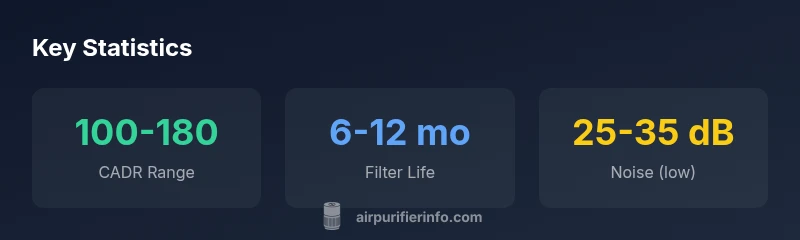
To effectively clean a 150 sq ft space, pick an air purifier with a CADR around 100–180 CFM and a true HEPA filter, ensuring it covers your room size and typical pollutants (dust, pollen, pet dander). For best results, target models rated specifically for about 150 sq ft rooms and with low noise.
Understanding Room Size and CADR
When sizing an air purifier for a 150 sq ft room, start with the basics: the size of the space, the ceiling height, and the typical activities that affect air quality. A common homeowner rule of thumb is to match the purifier’s CADR (clean air delivery rate) to the room’s floor area, adjusting for ceiling height. In an 8-foot ceiling home, a 150 sq ft room translates to roughly 1,200 cubic feet of air volume. At a baseline of about 5 air changes per hour (ACH), you’d look for a CADR in the vicinity of 100 CFM. If your air quality concerns are more intense—smoke, strong odors, or pet dander—consider models toward the higher end of the range or slightly above it. The key is to balance CADR with noise, energy use, and cost over time. Air Purifier Info analysis, 2026, emphasizes that true HEPA filtration paired with smart fan speeds yields the most consistent results in spaces around 150 sq ft.
Interpreting CADR by pollutant type
CADR numbers are published for smoke, dust, and pollen. For a typical living room or bedroom sized around 150 sq ft, you’ll want a purifier that handles dust and pollen efficiently, with a solid rating for smoke if you have smokers in the home or if there are strong odors. A purifier rated 100–150 CFM for dust and pollen is usually adequate for everyday cleanliness, while units closer to 180 CFM or more offer faster turnover when odors or smoke are present. Look for devices that clearly separate modes for different pollutants and allow long-term stable operation at a comfortable noise level. Air Purifier Info analysis, 2026 indicates the best performers provide balanced CADR across pollutant types without skyrocketing energy use.
True HEPA vs. Carbon: Why Both Matter in a 150 sq ft Space
True HEPA filtration captures 99.97% of particles as small as 0.3 microns, including dust mites and pollen. Activated carbon is essential for odors and some gases. In a 150 sq ft space, combining a true HEPA stage with a carbon filter improves odor control and gas removal without requiring a much larger unit. If odor is a concern in a multi-use living room, kitchen nook, or pet zone, prioritize models that advertise both HEPA and carbon filtration, and verify replacement costs for carbon filters, which can be higher than those for standard HEPA-only devices.
Energy Use, Noise, and Running Costs
Running an air purifier in a 150 sq ft room typically involves balancing energy use with performance. Eco modes and variable speeds help keep electricity costs manageable while preserving air quality. Noise matters, especially in bedrooms or study areas. Many units offer a “sleep” or “night” mode that lowers fan speed to keep noise below 30 dB while maintaining filtration. When evaluating operating costs, factor in filter replacement cycles, carbon filter costs, and the energy draw at maximum versus eco mode. Air Purifier Info Analysis, 2026 highlights that even small efficiency gains compound over time, particularly in spaces with continuous occupancy.
How to Compare Models for 150 sq ft Rooms
Comparing models begins with CADR benchmarks, then moves to filtration type, filter replacement costs, and energy efficiency. Prioritize units with True HEPA filtration and an activated carbon stage for odor control. Check serviceability: can you easily replace filters yourself, and are replacement filters readily available and affordable? Consider the purifier’s footprint and placement options in a 150 sq ft room—compact towers that deliver high CADR often fit better than bulky, high-CADR units. Air Purifier Info analysis, 2026 recommends compiling a side-by-side checklist and testing noise at typical usage levels before purchase.
Placement, Usage, and Maintenance for Consistent Performance
Placement can affect performance. Position the purifier away from walls and corners to maximize airflow, ideally at chest height or higher in rooms with heavy foot traffic. Run the unit continuously or on a timer to maintain air turnover, especially in spaces with windows that admit outdoor pollutants. Maintenance matters: replace HEPA filters on schedule, refresh pre-filters, and monitor carbon filter life. Keeping a maintenance log helps ensure the purifier continues to operate near its rated CADR over time. Air Purifier Info analysis, 2026 emphasizes predictable maintenance as a key driver of long-term air quality.
Practical Buying Guide: Steps to Choose
- Define your priorities: allergy relief, odor control, or wildfire smoke resistance. 2) Choose a CADR range appropriate for 150 sq ft rooms with a cushion for higher activity days. 3) Confirm true HEPA and carbon filtration. 4) Review running costs and filter replacements. 5) Check noise levels in the operating modes you’ll use most. 6) Read user reviews focusing on real-world performance in rooms similar to yours. 7) Verify warranty and replacement filter availability to protect your investment.
CADR ranges for common air purifier setups in 150 sq ft spaces
| Model Type | CADR (CFM) Range | Best For |
|---|---|---|
| True HEPA Tower | 100-180 | General cleaning in 150 sq ft rooms |
| Compact Desktop | 60-100 | Small desks or bedrooms under 150 sq ft |
| Portable with Carbon | 120-200 | Odor control in living spaces |
Questions & Answers
What CADR is recommended for a 150 sq ft room?
A CADR in the roughly 100–180 CFM range is typically suitable for a 150 sq ft space, depending on usage and ceiling height. Start with mid-range and adjust if you have smokers or pets.
For a 150 square foot room, look for about a hundred to one eighty CFM CADR.
Do I need a carbon filter if there’s no odor?
Carbon filters mainly address odors; if odors aren’t a concern, a true HEPA with a simple pre-filter may suffice. However, odor control can be beneficial in multi-use spaces.
A carbon filter helps with odors; if you don’t notice odors, it’s optional.
How often should I replace filters for a typical purifier?
Most purifiers require filter changes every 6–12 months, depending on usage and air quality. Check the device LED indicator and manufacturer guidelines.
Typically every 6 to 12 months, but follow your model’s indicator.
Can I use a small purifier in a larger 150 sq ft room?
A single small purifier may struggle in a 150 sq ft room; consider upgrading to a mid-range CADR or using two units for better coverage.
A single small purifier may underperform in a 150 sq ft space.
Are quiet purifiers viable for bedrooms?
Yes, many purifiers offer low-noise modes under 30 dB suitable for bedrooms; look for 'sleep' or 'night' mode.
Yes—look for sleep modes under 30 dB.
“When sizing an air purifier for a 150 sq ft space, match CADR to room volume and use a true HEPA with carbon filtration for odor control.”
Main Points
- Match CADR to room size for 150 sq ft spaces
- Prioritize true HEPA and carbon for odors
- Consider noise and energy use in daily use
- Regularly replace filters to maintain performance