Air Filter Placement: Before or After the Fan
Discover whether to place an air filter before or after a fan, how placement affects filtration efficiency and airflow, and practical tips for better indoor air quality.


Most home systems should place the air filter before the fan, typically in the return duct, to filter air before it reaches the blower. This improves filtration of dust and allergens and helps protect the equipment. An 'after the fan' placement is less common and usually only used in specific portable purifiers or inline configurations. The right choice depends on your setup and goals.
Why placement matters for indoor air quality
According to Air Purifier Info, where you place the filter relative to the fan can dramatically influence what gets captured before air circulates through your living spaces. The concept of air filter before or after fan is not just academic — it translates to real differences in dust and pet dander, odors, and overall indoor air quality. In most homes, the primary goal is to trap contaminants before they re-enter the living spaces, which points toward a placement that precedes the blower. This choice also affects how often you need to replace filters, how much resistance the system must overcome, and how effectively allergens are removed from the air you breathe every day. Small changes in placement can lead to noticeable improvements in comfort and potentially fewer allergy symptoms for family members, especially during high-pollen seasons or when a pet adds dander to the environment.
What 'before the fan' means in typical home HVAC
In many central HVAC setups, the filter sits in the return air path, ahead of the furnace or air handler's blower. This means air is cleaned before it passes through the fan and into the ducts that distribute warmth or cooling. Placing the filter here protects the blower from dust buildup and prolongs equipment life. Filters used in this position should be sized to fit snugly and installed with the arrow pointing in the direction of airflow. If your system uses a combined filter housing, ensure the seal is tight to prevent bypass. Keep in mind that the exact location of the return duct might vary based on home layout, so always consult your installation manual if you’re unsure where the filter should go. The result is cleaner air before it enters living spaces and less wear on the mechanical components driving your comfort.
What 'after the fan' means and when you might consider it
An 'after the fan' arrangement is more common in certain portable purifiers, inline fans, or specialized duct configurations where the goal is to protect downstream components or manage noise. In these cases, air first passes through the fan and then through the filter, which is primarily about post-filtration safety or unit-specific design. For most homeowners, this means the air is not filtered before entering the ducts, which can reduce overall filtration efficiency in living spaces. If you’re evaluating a retrofit, consult the device's documentation to see if an after-the-fan filter makes sense for your unit. If the purifier or system is designed for post-blower filtration, make sure the filter is accessible for replacement and that any seals remain intact after installation.
How placement affects filtration efficiency, pressure drop, and energy use
Placement choice directly influences how many particles are caught and how much pressure the system must overcome. A filter before the fan can reduce the dust load on the blower and improve air quality across rooms, while filters placed after the fan may increase downstream pressure and potentially reduce overall filtration efficiency. For homeowners and renters, the key is to balance filtration with the system’s airflow. Higher MERV-rated filters capture more fine particles but can increase resistance, so you’ll want to verify that your furnace or purifier can handle the added pressure without sacrificing comfort or performance. Air Purifier Info Analysis, 2026, notes that optimal placement tends to be the pre-blower position in most homes, with careful filter selection to minimize bypass and maintain consistent airflow. In other words, the benefit is not just cleaner air; it’s a smoother, quieter system that maintains the right balance between filtration and airflow.
Practical scenarios: central HVAC, portable purifiers, and DIY setups
For central HVAC systems, aim for a filter in the return duct before the blower to maximize contaminant capture. In rooms with portable fans or standalone purifiers, placement rules shift: filter location relative to the fan matters for where air is cleaned and how much of the room air benefits from filtration. If you’re retrofitting a non-standard setup, map out the air path and ensure the filter is correctly oriented with the arrows toward the direction of airflow. This stage is an excellent opportunity to align filtration goals with household needs, such as reducing pet dander in a living room or odors in a kitchen. Consider replacing the whole unit with a pre-filtered purifier if your current system makes pre-blower filtration impractical. Ultimately, true improvement comes from consistent maintenance and mindful placement that reflects how your family uses the space.
Maintenance and filter replacement best practices
Regardless of placement, regular filter maintenance is essential. Mark your calendar for filter changes based on usage, air quality indicators, and the manufacturer’s recommendations. A well-sealed, properly oriented filter prevents bypass and maintains effective filtration. Keep spare filters on hand and inspect during routine cleaning. If you notice a drop in airflow, increased dust accumulation on surfaces, or more symptoms in sensitive household members, it may be time to replace the filter or adjust placement to maximize efficiency. Store filters in a clean, dry area to avoid moisture-related damage and label them to match exact slots for quick swaps.
Choosing the right filter: MERV, HEPA, and compatibility
Your choice of filter should align with your goals and system compatibility. For central HVAC, higher MERV-rated filters can improve particle removal but may require a higher-quality blower with low static pressure. HEPA-grade options are typically used in portable purifiers or dedicated air cleaning devices. Always check the unit’s documentation for the maximum allowable filter size and resistance before upgrading. Consider dust, allergy needs, and pet dander when selecting a filter, and be sure to align with the air quality goals of your household. If you have chemical odors or VOC concerns, consider activated carbon blends in addition to particle filters. The interplay between filter density, cost, and maintenance frequency is a practical consideration for homeowners and renters alike.
Tools & Materials
- Replacement air filter (correct size for your system)(Ensure correct dimensions and MERV rating specified by your HVAC or purifier.)
- Measuring tape(To measure slot dimensions and confirm fit.)
- Screwdriver set(Needed if panels or housings are screw-secured.)
- Masking tape or marker(Label orientations and check arrows.)
- Replacement gasket or sealant(Optional if you notice bypass around edges.)
Steps
Estimated time: 45-60 minutes
- 1
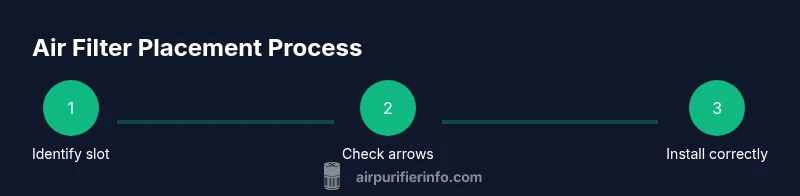
Identify system type and locate the filter slot
Find the return air pathway and the filter housing. Confirm whether the slot is before or after the fan relative to distribution ducts. Understanding the current path helps you decide if you should keep the filter placement or adjust.
Tip: Label the orientation arrows on the existing filter for quick reference in the future. - 2
Check airflow direction and arrow alignment
Inspect the filter and the unit for airflow arrows. Ensure the arrow points toward the direction of air movement through the system. This minimizes bypass and maximizes filtration efficiency.
Tip: If arrows are unclear, consult the system manual or contact the manufacturer for guidance. - 3
Decide on placement based on goals
If your goal is better overall room air quality, prioritize pre-blower filtration (before the fan). If you have a specific downstream component you protect, consider post-fan placement only after evaluating manufacturer guidance.
Tip: Avoid mixing placement logic without verifying compatibility with your HVAC or purifier. - 4
Install or reposition filter with a seal
Carefully remove the old filter, clean the slot, and install the new filter so it seals fully. A bypass gap can let unfiltered air through and defeat the purpose.
Tip: Gently tap the filter into place to ensure a snug seal. - 5
Test airflow and noise after changes
Turn the system back on and run it for several minutes. Listen for unusual noises or reduced airflow that could indicate a poor seal or too-high resistance.
Tip: If airflow is weak, consider a lower-MERV filter or consult a professional. - 6
Monitor performance over 1–2 weeks
Observe dust deposition, air quality, and energy use. A noticeable improvement in comfort and allergen levels validates placement choice.
Tip: Keep a simple log of symptoms or dust levels to quantify impact.
Questions & Answers
Should I place the air filter before or after the fan in a home HVAC system?
In most homes with central HVAC, place the filter in the return duct before the blower to protect the system and improve filtration.
Usually, place the filter before the fan in the return duct to filter air before it reaches the blower.
What happens if I put the filter after the fan?
Filtering after the fan can reduce the system's ability to clean air before it circulates and may increase wear on the fan.
Filtration after the fan isn't ideal for most setups and can reduce overall effectiveness.
Can higher MERV filters improve indoor air quality?
Higher MERV filters capture more particles but may increase resistance. Ensure your system can handle the added pressure.
Yes, higher MERV can help, but check compatibility with your equipment.
How often should I replace air filters?
Follow the manufacturer's schedule and check monthly during heavy use; replace when dirty.
Check the filter monthly and replace as needed.
Is there a difference for pet owners?
Pet dander is captured more efficiently by properly placed and maintained filters; consider HEPA or high-MERV options.
Pet hair and dander respond well to good filtration.
What about portable air purifiers?
Portable purifiers with built-in filters should follow the unit's guidance; placement with respect to airflow matters for efficiency.
Follow the purifier's setup instructions.
Watch Video
Main Points
- Place the filter in the return path before the blower for best filtration.
- Match filter type to system capability; higher MERV filters may require equipment upgrades.
- Seal the filter edges to prevent bypass and maintain airflow.
- Regularly replace filters according to usage and air quality.