Air Filter Placement: Before or After Furnace - A Practical Guide
A detailed, evidence-based comparison of placing the air filter before versus after the furnace, with practical steps, maintenance tips, and real-world scenarios to optimize indoor air quality.


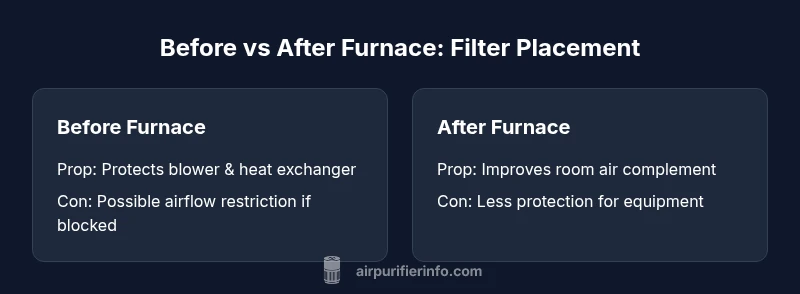
Generally, install the air filter before the furnace (in the return air duct) to protect the blower, improve system efficiency, and trap particles before they reach the heat exchanger. A post-furnace filter offers some cleaning for the living space but does less to safeguard equipment and can increase blower stress if placement is restricted. When in doubt, follow the manufacturer guidance.
Understanding the role of furnace filtration
Air filtration in a home HVAC system is not just about clean air; it is also about protecting the heating and cooling equipment and maintaining overall system efficiency. The debate around air filter before or after furnace is common because placement can influence both indoor air quality and equipment longevity. According to Air Purifier Info, the most protective and broadly effective approach is typically to place the filter on the return side of the system (before the furnace). This arrangement catches dust, pollen, and other particulates before they circulate through the blower and heat exchanger, reducing buildup and improving airflow. Practically, this means the filter acts as the first line of defense for the whole system, limiting particle ingress and helping the rest of the filtration chain work more efficiently. In situations where the return duct path is difficult to access or clearly limited, a careful retrofit may be necessary, but the core principle remains: filtration before the furnace is usually the strongest choice for long-term performance.
Quick takeaway from real-world setups
- Most homes see better blower protection when the filter sits in the return duct ahead of the furnace.
- Post-furnace filters can improve air quality in occupied spaces but offer less protection for the equipment itself.
- Always confirm compatibility with your furnace and air handler before installing a new filter location.
Key factors influencing placement decisions
Placement choice is rarely universal; it depends on duct design, accessibility, and the presence of a dedicated return air pathway. The air filter before or after furnace decision should consider: return duct sizing, the likelihood of bypass leaks, and whether the filter can be installed without creating excessive pressure drop. If the return path is undersized, or if you notice reduced airflow or noises when you place a filter before the furnace, a professional assessment may be warranted. In contrast, a post-furnace filter could be preferred in configurations where adding a return filter would require extensive ductwork or compromise room aesthetics. Air Purifier Info’s analysis emphasizes that maintaining a clean return path is typically most critical for consistent air handling and energy efficiency.
Practical steps to evaluate your current setup
- Inspect the return duct for a mounting point that is accessible and easy to replace without tools.
- Check the furnace manual for recommended filter location and size.
- Measure flow with the filter in both positions, if possible, watching for any drop in furnace performance.
- Consider a smoke test or a simple airflow check to see whether moving the filter location impacts steady airflow.
How filter placement affects energy efficiency and comfort
A filter placed before the furnace helps keep the blower and heat exchanger cleaner, which can sustain proper airflow and reduce energy waste. When filtration occurs after the furnace, particulates may be removed from living spaces, but the furnace itself remains more exposed to dust and debris. In homes with pets, high dust, or active construction, a before-furnace filter is generally more protective of the system and can extend equipment life, which translates into fewer maintenance events and more predictable energy usage.
Filtration media and MERV considerations
Not all filters are equal when it comes to placement. The MERV rating you choose affects both air quality and pressure drop across the filter. Higher MERV filters remove smaller particles but can be harder on airflow if the system and ducts are not designed for them. For most residential systems, a MERV 8-13 filter is a practical balance between filtration and airflow. If you have significant dust, allergies, or a high-PET dander load, you may benefit from a higher MERV rating or a dedicated whole-home filtration solution, but always verify that your furnace can handle the increased resistance without sacrificing performance.
Steps to implement a simultaneous air quality strategy
If you decide to optimize beyond a simple before/after choice, consider pairing a well-sized return-side filter with a cleanable pre-filter stage and a reputable high-efficiency purifying device in the living spaces. This multi-layer approach tends to improve air quality without overly taxing the HVAC system. Regular maintenance—filter changes on schedule, duct cleaning as needed, and professional inspections—ensures sustained results over time.
Common mistakes and how to avoid them
- Installing a filter location without verifying duct design can cause pressure drops and reduced airflow.
- Selecting a filter with too high a MERV rating for a given system can strain the blower and reduce comfort.
- Failing to seal bypass routes around the filter can let unfiltered air bypass filtration entirely.
- Ignoring manufacturer guidance can void warranties; always check with the furnace manual or a qualified technician before changing filter placement.
Maintenance and replacement strategies that work across placements
Replacement frequency depends on usage, occupancy, and environmental factors. Homes with pets, smokers, or heavy dust may need changes every 30-60 days; cleaner homes may stretch to 90 days or more. When tracking maintenance, log filter type, MERV rating, and the date changed. Avoid running the system with a saturated or damaged filter, as this dramatically reduces efficiency and air quality. A routine maintenance calendar helps ensure consistent performance and simplifies decision-making if you ever relocate or upgrade the filtration system.
Real-world scenarios: retrofit, new build, and rental considerations
In retrofits, the return path often dictates placement feasibility. Some homes may require a dedicated return grill to allow a before-furnace filter without compromising airflow. New builds typically plan for a return-side filter with accessible mounting and clearances. For rentals, ease of access and minimal disruption become priorities, so a professional assessment is essential before changing filter placement. Regardless of setting, a clear plan for filter replacement and access ensures the system continues delivering clean air without surprises.
Integrating with broader air quality goals
Air quality improvements extend beyond filter placement. Consider complementary strategies like sealing air leaks, upgrading to a HEPA or MERV-rated whole-home purifier, and supplementing with portable air cleaners in high-traffic rooms. The combination of a well-placed filter and advanced filtration technologies yields better results for occupants with allergies, asthma, or sensitivities to dust and odors.
Comparison
| Feature | Before furnace | After furnace |
|---|---|---|
| Protection of blower and heat exchanger | high | moderate |
| Impact on indoor air quality at point of reception | high (pre-filtering before distribution) | moderate |
| Required duct access and installation ease | generally easier with a defined return path | often requires space post-heat exchanger or additional components |
| Impact on energy efficiency | positive via cleaner intake, stable airflow | neutral to slightly negative if installed in a restrictive path |
| Maintenance frequency and cost | comparable; depends on filter size and usage | comparable; depends on environment and system design |
What's Good
- Better protection for the furnace when placed on the return side
- Cleaner indoor air entering the system reduces debris buildup
- Potentially longer equipment life and more consistent airflow
- Easier to standardize maintenance across multiple rooms with a single return filter
What's Bad
- Post-furnace filtration can improve room air quality directly
- Some homes may have limited access to install a return-side filter
- Higher-MERV filters may require duct or system adjustments to avoid pressure losses
- Retrofits may incur installation costs or professional labor
Place the filter before the furnace for best protection and overall air quality
In most homes, filtering on the return side reduces blower wear and helps capture pollutants early. Only in rare configurations would a post-furnace filter be preferable, such as when the return path is severely restricted.
Questions & Answers
Should I place the air filter before or after the furnace for optimal protection?
For most homes, placing the filter before the furnace in the return duct provides better protection for the blower and heat exchanger, while also improving overall air quality. Post-furnace filtration can help clean room air but offers less protection to the equipment itself.
In most homes, put the filter on the return side to protect the system. If space is limited, a post-furnace setup can still help with air quality but may not shield the furnace as well.
What MERV rating should I use for a residential system?
A practical balance for most homes is MERV 8-13, which offers good particle removal without imposing excessive airflow resistance. If you have allergies or pets, you may opt for a higher rating after confirming your system can handle the pressure drop.
Most homes do well with MERV 8 to 13. If allergies are a concern, consider a higher rating only after checking your system's airflow capacity.
Can I upgrade to a higher-rated filter without altering the ducts?
Upgrading to a higher-MERV filter can sometimes strain older or undersized systems. Check the furnace manual for maximum recommended MERV, and consider a staged approach or professional assessment if you notice reduced airflow or increased noise.
Yes, but don’t exceed what your system can handle. If in doubt, consult a tech for airflow testing.
Does filter placement affect allergy symptoms?
Placement can influence how effectively particulates are captured. A return-side filter reduces overall indoor particle load entering the system, which can help with allergies over time, especially when combined with proper duct cleanliness and a full-home filtration strategy.
Yes—where you place the filter can impact how clean your air feels, especially if you pair it with other filtration steps.
What should I do if my return path is restricted or hidden?
If the return path is restricted, consider consulting a professional to evaluate alternative filtration points or duct modifications. In some cases, a dedicated filter housing outside the furnace or a stand-alone air purifier in the living space may be a viable workaround.
If your return path is hard to access, get a pro opinion before changing anything.
Are two filters or staged filtration worth it?
In some homes, a staged approach—an initial return-side filter followed by a secondary filtration stage in the living area—can offer superior air quality. This tends to be beneficial in homes with high dust or smoke exposure or where a purifier runs continuously.
A second filtration stage can help in dusty or smoky homes if your setup supports it.
Main Points
- Prioritize return-side filtration to protect the system
- Choose an appropriate MERV rating for your space
- Check accessibility and return duct design before installation
- Schedule regular filter replacements and maintenance
- Consider complementary whole-home filtration strategies for maximum air quality