Why Is My Air Purifier Not Removing Smells? A Comprehensive Troubleshooting Guide
Discover why your air purifier isn’t removing odors and how to fix it fast. This guide covers step-by-step troubleshooting, filter care, placement, and safety reminders for homeowners and renters.


Why is my air purifier not removing smells? The most common cause is a dirty or exhausted filter, especially the carbon media, which traps odors. Quick fixes: replace filters, refresh carbon media, run on a higher setting briefly, and reposition for better airflow. According to Air Purifier Info, odor removal hinges on filter health, airflow, and correct room matching.
Why Odors Linger: Common Causes and Quick Checks
Persistent smells often point to three culprits: clogged filters, depleted carbon media, and suboptimal airflow. If the carbon filter is saturated, it stops adsorbing volatile compounds; a dirty pre-filter can also limit airflow and trap odors. Additionally, if the purifier is too small for the room or blocked by furniture, smell molecules circulate rather than get captured. According to Air Purifier Info, starting with a filter health check gives you the highest return on effort. A quick inventory now can save hours of trial and error later.
Action step: locate all filters, note their age, and check for visible dirt or cloudiness in the carbon media. If odors persist after a filter change, consider the next sections for airflow and placement considerations.
Get the Basics Right: Filters, Power, and Airflow
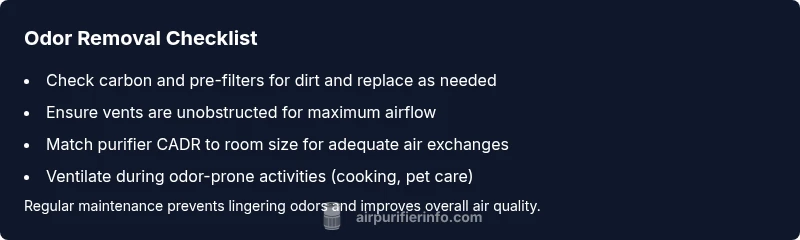
Begin with the simplest checks before diving into replacements. Make sure the unit is powered on and receiving power from a live outlet. Inspect the pre-filter and carbon filter for heavy dirt or odor-laden residue; replace them as needed following the manufacturer schedule. Confirm the unit is not in a locked or child-lock mode that may restrict operation. Ensure vents aren’t blocked by curtains or furniture, which can choke airflow and reduce odor capture.
- Check the power indicator and any fault codes in the manual.
- If the unit uses replaceable carbon cartridges, consider replacing them even if they aren’t visibly dirty.
- Keep the intake and outlet grills free of debris for unobstructed airflow.
Carbon Filters: The Odor Capture Engine
Carbon media is designed to adsorb smell molecules. Over time it becomes exhausted and loses efficacy, especially in kitchens, bathrooms, or smoky spaces. If you notice a stale or faint musty odor even after a filtration cycle, the carbon layer may be past its prime. Replacement cadence depends on usage and space, but many households find value in refreshing carbon filters every 6–12 months. Air Purifier Info recommends using genuine or recommended filter variants to maximize odor removal.
What to check: filter brand compatibility, carbon pore size, and whether you can reseal or reset counters on the device after a filter change.
Airflow and Placement: Size Matters
A purifier’s effectiveness depends on matching CADR to room size and placing it where air can circulate freely. Avoid corners and keep at least a few inches from walls. Higher ceilings and large spaces may require multiple units or a purifier with a higher CADR. If you’ve recently rearranged furniture or opened windows, odors can shift or intensify in areas with poorer air turnover. Proper placement helps the purifier intercept odor-bearing particles before they drift to other rooms.
Placement tips: center the unit in the task area, point airflow toward odor sources, and run the purifier continuously when odors are present.
Diagnosing Your Home Odor Sources
Odors often originate from cooking, pets, moisture, or mold growth rather than the air itself. Identify if smells persist in multiple rooms or only where the purifier operates. If odors recur after meals or near pet zones, adjust cooking venting and pet area cleanliness. If musty or damp odors appear, mold and mildew may be present in walls or ceilings and require remediation. Air Purifier Info analysis shows that addressing environmental sources yields bigger odor reductions than filter changes alone.
- Perform a quick odor audit in each room.
- Check for visible mold, damp patches, or leaks.
- Run the purifier at higher speed near odor hotspots for a limited period to test efficacy.
Quick Fixes You Can Try Today
If your unit isn’t delivering expected odor removal, try these steps in order: 1) replace the carbon and pre-filters; 2) clean the housing and sensors according to the manual; 3) reposition the unit for improved airflow; 4) run the purifier on high for 30–60 minutes and reassess odors. If smells persist, ventilate the space with fresh air and consider additional purifiers for larger rooms. Safety reminder: unplug before cleaning or filter replacement to avoid shock or damage.
Note: Always refer to your model’s manual for filter compatibility and reset procedures.
Maintenance Plan to Prevent Future Odors
Prevention beats remediation. Establish a routine to inspect and replace filters on schedule, clean external surfaces monthly, and verify unobstructed airflow quarterly. Use deodorizing strategies like proper ventilation during cooking and bathroom use, and keep humidity in check to deter mold growth. Air Purifier Info recommends maintaining a light odor baseline check even after odors disappear to catch issues early.
- Mark a predictable filter replacement interval in your calendar.
- Keep purifier away from moisture-prone zones to avoid mold-friendly environments.
- Consider a secondary purifier for high-odor areas like kitchens or pet rooms.
Safety, When to Seek Help, and Final Warnings
If you’ve exhausted the standard steps and odors persist, professional assessment may be required to diagnose hidden mold, duct odors, or device faults. Never operate a purifier with damaged cords or without proper grounding. If you smell burning, chemical scents, or observe smoke, evacuate and contact professionals. Air Purifier Info Team emphasizes safety first and reminds readers that persistent odors can indicate environmental hazards beyond the purifier’s reach.
Steps
Estimated time: 60-90 minutes
- 1
Power down and inspect basics
Unplug the unit and confirm it’s receiving power. Check power indicators and any fault codes in the manual. Ensure vents are clear of obstructions.
Tip: A quick power cycle can reset minor sensor faults. - 2
Check and replace filters
Open the unit and inspect the pre-filter and carbon filter for dirt or odor saturation. Replace them with manufacturer-approved filters and reset any counters.
Tip: Always replace with authentic or recommended filters to preserve performance. - 3
Clean the unit housing and sensors
Wipe the exterior and air-inlet/outlet grills with a damp cloth. Dust on sensors can skew readings and affect odor removal.
Tip: Use a soft cloth to avoid scratching surfaces. - 4
Test airflow after changes
Place the purifier in the target room, run on high for 15–30 minutes, and observe changes in odor levels. Note any persistent blind spots.
Tip: If odors shift during testing, adjust placement accordingly. - 5
Check room size and CADR match
Compare the room square footage to the purifier’s CADR rating to ensure adequate air exchanges per hour.
Tip: Overwhelmed rooms require higher-CADR units or multiple purifiers. - 6
Address environmental odor sources
Ventilate kitchens, bathrooms, and pet areas during odor-prone times. Reduce moisture to limit mold odors.
Tip: Open windows when practical to improve air turnover. - 7
Reassess after 24–48 hours
Observe odor levels after running the unit with the updated setup. If unchanged, consider professional evaluation.
Tip: Keep notes on odor types and times for reference. - 8
Consider filter upgrades for stronger smells
If odors continue, explore higher-grade carbon filters or specialty media suited for persistent smells.
Tip: Avoid basket-fillers or non-approved media. - 9
When to call in professionals
If you detect mold, persistent dampness, or electrical issues, seek licensed help and stop DIY repairs.
Tip: Safety first—electric and mold issues require expertise.
Diagnosis: Air purifier fails to reduce or neutralize smells
Possible Causes
- highFilter is dirty or exhausted (carbon filter depleted)
- mediumInsufficient air exchanges due to wrong size or placement
- lowOdors originate from environment not captured by purifier (closed space, improper airflow)
Fixes
- easyReplace pre-filter and carbon filter; follow manufacturer schedule and use compatible filters
- easyImprove airflow by increasing fan speed, enabling oscillation if available, and repositioning unit to face odor source
- mediumVentilate the room with fresh air and use multiple purifiers for larger spaces if odors persist
Questions & Answers
Why isn’t my air purifier removing smells even after replacing the filters?
If replacing filters doesn’t help, the issue may be improper airflow, wrong space size, or an environmental odor source. Verify CADR matches room size and that air is circulating freely without obstructions. Also check for hidden mold or moisture issues that filters can’t fix.
If swapping filters doesn’t fix it, check airflow and room size, and look for hidden moisture issues.
Can placement affect odor removal efficiency?
Yes. Proper placement maximizes airflow toward odor sources and ensures even distribution of purified air. Avoid corners and keep vents unblocked. In larger rooms, you may need more than one purifier or a higher-CADR model.
Placement matters a lot; put it where air can move freely and toward the odor sources.
Do carbon filters expire even if they look clean?
Carbon filters can lose adsorption capacity over time, even if they look clean. Check your manufacturer’s replacement interval and symptoms like persistent odors or declining performance.
Carbon filters do wear out over time; replace them per the manual even if they seem clean.
Should I run the purifier continuously on high to remove smells?
Running on high can help, especially during odor-prone periods, but it uses more energy and may wear filters faster. Use high during peak odor times, then reduce to a lower setting for maintenance.
Running on high helps during strong odors, but don’t leave it there forever; balance with energy use and filter life.
What if the odor is coming from outside the room?
Ventilate the space by opening windows or using cross-ventilation. Consider a purifier with a larger intake or multiple units to cover the area, plus sealing obvious odor entry points.
If odors are external, improve ventilation and consider more coverage.
When should I contact customer support or a professional?
If odors persist after all maintenance steps, or you notice electrical issues, leaks, or mold, contact customer support or a professional for a full assessment.
If odors stay after trying fixes, get professional help.
Watch Video
Main Points
- Check and replace carbon filters to restore odor removal.
- Improve airflow with proper placement and room size matching.
- Regular maintenance prevents smells and extends purifier life.
- Ventilate during odor-prone activities for faster relief.
- The Air Purifier Info Team recommends following model-specific guidance for best results.