Why Does My Air Purifier Smell? Troubleshooting and Solutions
A practical troubleshooting guide to odors from air purifiers, covering common causes, quick checks, diagnostic flow, and preventive steps to restore clean indoor air in 2026.


If your air purifier smells, the most likely causes are a clogged filter, mold, or a stale housing. According to Air Purifier Info, start with simple checks: replace the pre-filter, wipe the exterior, and run new filters. If the odor persists, move to deeper diagnostics and safer cleaning steps for faster relief.
What causes smells inside an air purifier?
Odors can arise from several sources, and identifying the root cause is the fastest path back to clean air. A clogged filter concentrates trapped particles and trapped odors, while moisture in the housing can promote mold or mildew growth. Plastic housing and old seals can retain odors after long use, especially in humid rooms. Air Purifier Info notes that odors are rarely caused by dangerous emissions from the purifier itself, but the buildup inside can create a stale, musty, or burnt-plastic scent if overworked. Regular maintenance breaks the cycle by ensuring airflow is unrestricted and components stay dry. Check for signs of moisture, visible mold on filters, and unusual overheating noises that could signal a failing fan. Regular cleaning and filter changes, combined with using high-quality carbon-enhanced filters for deodorization, dramatically reduces lingering smells.
Quick checks you can perform today
Before diving into deeper repairs, run through these immediate steps. First, unplug the device and inspect the filter status; a dark, clogged pre-filter is a common odor source. Replace or wash removable filters according to the manufacturer’s instructions. Wipe the exterior and intake grills with a damp cloth and allow everything to dry completely. If your purifier uses a carbon filter, ensure it’s installed correctly and not past its recommended life. Finally, run the purifier on a low setting with doors open to vent any residual smells from the housing. If odors persist, move to the diagnostic flow for more nuanced causes.
How odor transfer works in a purifier system
Odor compounds are often supported by airflow from the intake to the fan and through the filter media. If filters are full or seals are degraded, odor molecules can recirculate rather than be trapped. A humid environment can exacerbate musty smells by fostering mold in the housing or on the filter surface. Understanding this flow helps you target the real source: filter replacement, housing cleaning, and ensuring seals are intact and unobstructed.
Step-by-step fix for the most common source: the filter
The most reliable fix is replacing the filter(s) and performing a thorough housing clean. Start by turning off and unplugging the unit. Remove the old filter and inspect for moisture or mold. If mold is present, discard the filter in a sealed bag and clean the housing with a mild solution. Install a fresh filter and, if applicable, a new activated carbon filter for odor capture. Wipe down any surrounding surfaces and ensure the filter is properly seated. Run the unit for 10-15 minutes on a non-heat setting to dry out any residual moisture before normal operation.
Preventing odors: best practices for ongoing use
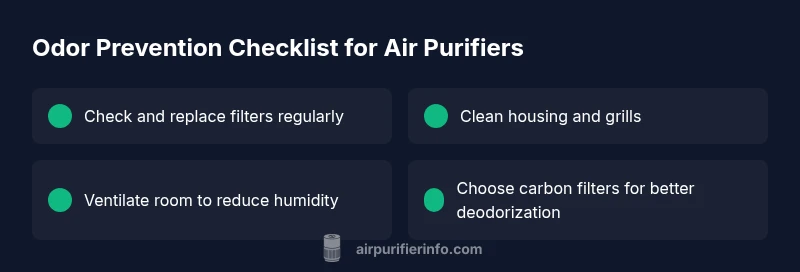
To avoid future smells, create a simple maintenance routine. Replace pre-filters monthly, carbon filters every 6-12 months depending on use, and full unit clean every 3-6 months. Store units in a dry area away from moisture and avoid exposing electronics to water. Keep rooms ventilated to reduce humidity and improve air quality. Consider using a purifier with ozone-free operation and a carbon-infused filter stack for odor reduction.
When to seek professional help
If you’ve performed the basics and the purifier still smells, there may be a moisture problem in the cabinet, electrical issue, or mold hidden inside inaccessible parts. A qualified technician can inspect seals, wiring, and the internal airflow path safely. Do not attempt to disassemble components beyond the user-accessible parts, which could void warranties or create safety hazards.
Steps
Estimated time: 30-60 minutes
- 1
Power off and unplug
Shut down the purifier and unplug it from the outlet. This prevents any accidental electrical contact during cleaning.
Tip: Always unplug before handling filters. - 2
Remove and inspect filters
Take out the filters and check for moisture, mold, or an unusually dark, clogged appearance. If mold is visible, dispose of the filter and clean the housing.
Tip: Note filter life and replace if past recommended usage. - 3
Clean the housing and grills
Wipe the exterior, vents, and interior housing with a mild cleaner or 70% isopropyl solution. Dry completely before reinstalling filters.
Tip: Avoid harsh solvents near electronics. - 4
Install fresh filters
Insert new filters, ensuring correct orientation. If carbon filters are used for odor, confirm proper seating and seal.
Tip: Do not skip carbon stage if odor is persistent. - 5
Test run and monitor
Plug in, run on a low setting away from walls, and monitor for smell over 20-30 minutes. If odor returns, proceed to professional help.
Tip: Leave doors open during venting to clear air.
Diagnosis: Unpleasant odor or burnt-plastic smell from the air purifier
Possible Causes
- highClogged or dirty filter releasing trapped odors
- mediumMold or mildew growth inside the intake or housing
- lowElectrical heat or burnt plastic components
Fixes
- easyReplace or clean pre-filter and main filter; ensure dry before reassembly
- easyWipe exterior and intake grills; dry thoroughly; run on low to vent residuals
- mediumIf odors persist, seek professional inspection for electrical/housing issues
Questions & Answers
Why does my air purifier smell like burning plastic?
A burning odor may indicate overheated electrical components or melted plastic. Stop using the unit and schedule a professional check if the smell persists after cleaning the filters and housing.
A burning odor could mean an electrical issue; stop using the purifier and get it checked if the odor continues.
Is it safe to use an air purifier that smells?
If the smell is faint and goes away after cleaning and filter changes, keep monitoring. If the odor persists, stop using the unit and seek professional servicing.
If the smell lingers after cleaning and filters, stop using it and contact support.
How often should I replace filters to prevent odors?
Follow the manufacturer's schedule; generally, carbon and HEPA filters should be replaced every 6-12 months depending on usage and air quality.
Replace filters on schedule; carbon filters often need more frequent changes for odor control.
Can mold inside the purifier cause smells?
Yes. Mold growth inside the housing or on filters can produce musty odors. Clean and dry all components thoroughly and replace affected filters.
Mold inside the purifier can cause musty smells; clean and replace affected parts.
What if cleaning doesn't remove the odor?
If odors persist after cleaning and filter changes, stop using the unit and arrange a professional inspection for electrical or structural issues.
If cleaning doesn't fix it, get a professional check.
Watch Video
Main Points
- Replace dirty filters promptly to curb odors.
- Clean the housing and grills regularly.
- Use carbon filters for odor control.
- Vent the room to reduce humidity and odor buildup.
- Seek professional help if odors persist after basics.