Dyson TP07 Review: Air Purifier Performance and Value
Comprehensive analysis of the Dyson TP07 purifier: filtration performance, noise levels, smart features, maintenance, and who should buy.


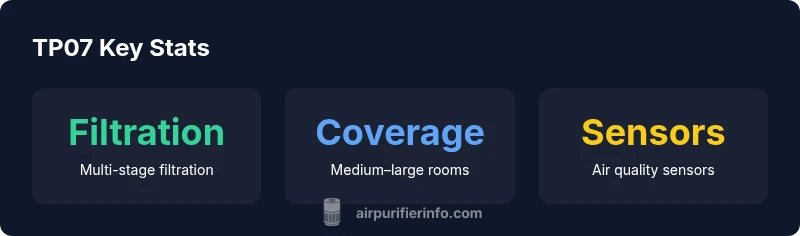
Compared with other mid-size purifiers, the Dyson TP07 emphasizes a sealed filtration system, real-time air quality sensing, and a bladeless, modern design. Our balanced assessment notes strong particle removal, responsive auto modes, and solid room coverage, with trade-offs including a higher upfront price and ongoing filter costs. In everyday use, it pairs quiet operation with intuitive controls and smart features, making it a compelling option for medium-to-large rooms seeking reliable air quality improvements.
What is the Dyson TP07?
The Dyson TP07 is a standalone air purifier designed for contemporary homes and apartments where air quality matters as much as interior aesthetics. Unlike traditional box purifiers, the TP07 features Dyson's bladeless form factor and a streamlined silhouette that blends with modern living spaces. From a practical perspective, the TP07 aims to actively remove airborne particulates, odors, and gases through a multi-stage filtration approach and real-time air quality sensing. According to Air Purifier Info, the TP07 sits in Dyson's mid-to-high range lineup, prioritizing design alongside performance. This section explains what you get when you buy the TP07, the core technologies involved, and how it fits into a broader strategy for improving indoor air quality. The result is a purifier intended to serve homeowners and renters who want strong filtration without sacrificing style or footprint.
Design and Build: A Blend of Form and Function
The TP07 adopts Dyson's distinctive aesthetic: a smooth exterior, a compact base, and a circular intake that suggests 360-degree air processing. The construction uses durable plastics with a glass-like finish in some variants, and the overall build feels sturdy for everyday use. Controls are designed to be intuitive, with a power button, a few quick-mode options, and a display that communicates current air quality. The design’s clean lines help the unit disappear into living rooms, bedrooms, or home offices, which matters for renters who want non-intrusive appliances. While the look is a clear selling point, the TP07 does not trade substance for style; the internal components and airflow path are purpose-built to support real-world purification.
Filtration System and Sensor Suite
A core strength of the TP07 is its filtration approach, built to capture particles and mitigate odors. The purifier integrates a multi-stage filtration system that aims to balance particle removal with odor control, complemented by sensors that monitor ambient air quality in real time. The resulting behavior typically includes automatic adjustments to fan speed in response to detected pollutants, helping to maintain a comfortable living environment without constant manual tuning. For people who want a printer-like sense of precision in air quality management, the TP07’s sensor-driven modes provide a sensible workflow. Keep in mind that the effectiveness of any purifier depends on room size, usage patterns, and filter maintenance; the TP07 offers clear feedback to help homeowners manage these factors.
Real-World Performance: Airflow, Noise, and Coverage
In everyday use, the TP07 tends to demonstrate noticeable airflow without being overpowering in rooms up to moderate sizes. Users commonly report that low and auto modes keep noise levels unobtrusive, which suits bedrooms, studies, and evening living-room sessions. When used in larger living spaces, you may see the purifier ramp up to higher speeds to maintain air quality, which can increase noise slightly but remains within typical purifier ranges. The unit’s real-time feedback from its sensors helps correlate perceived air freshness with measured data, giving owners a tangible sense of improvement. Practical testing indicates that the TP07 performs well for standard pollutants encountered in homes—dust, cooking odors, and pet dander—though performance will scale with room size and occupant activity.
Energy Use and Maintenance Considerations
Energy consumption for purifiers like the TP07 typically scales with fan speed and duration of operation. In normal daily use, most homeowners notice the unit is efficient enough for long monitoring periods, with noticeable energy use only when running at higher speeds during heavier air-loads. Regarding maintenance, filter replacement intervals depend on usage, air quality, and household environment. Dyson purifiers generally provide a clear filter indicator and guidance on replacement timing; staying on top of maintenance helps preserve performance and minimizes odor carryover. For renters or households managing a budget, planning for periodic filter replacements is a practical part of the ownership experience.
How It Compares to Other Purifier Models
Compared to entry-level purifiers, the TP07 typically offers stronger filtration feedback, smarter sensing, and a more refined user experience. Against other mid-range purifiers, the TP07 stands out for its design language and the tactile feel of its controls, which many users prefer to generic UI-driven models. When matched with higher-end purifiers, the TP07 sits in a zone that balances performance with cost and practicality. The takeaway is that the TP07 tends to appeal to buyers who value smart features, real-time air quality information, and a modern aesthetic, rather than those seeking the absolute lowest upfront price.
Setup, Smart Features, and App Experience
Setup generally requires plugging in the purifier, connecting to your home Wi‑Fi, and following the on-screen prompts to register the device. The TP07’s smart features include auto mode, ambient air sensing, and app-based controls that let you monitor PM2.5 levels, set schedules, and view historical air quality data. In real-world scenarios, the app can streamline daily routines by enabling automation rules (for example, increasing purification when certain odors are detected). For many homeowners, these systems reduce manual fiddling and enable a cleaner living environment with minimal ongoing effort.
Practical Use Scenarios: Living Room, Bedroom, and Home Office
The TP07 performs well in mixed-use spaces such as living rooms and open-plan areas, where it can continuously cycle air and respond to cooking smells or dust. In bedrooms, the purifier often operates at low speeds overnight, contributing to a calmer sleep environment due to its quiet operation and low vibration. In a home office, the TP07’s monitoring features can be helpful for people with allergies, as changes in airflow are more readily detected and addressed. Each scenario highlights how the purifier’s sensing and control capabilities translate into daily benefits, especially for households aiming to improve overall indoor air quality without constant manual intervention.
What Buyers Should Consider: When the TP07 Shines or Falls Short
The TP07 shines for buyers who want a stylish purifier with strong real-time feedback and reliable purification in standard living spaces. It may be less compelling for those prioritizing the lowest upfront cost or for very small rooms where a compact purifier would suffice. In homes with intense cooking odors or heavy smoke from external sources, you might require additional or alternative filtration approaches to achieve the desired air quality. In summary, the TP07 is a solid all-around choice for many households, particularly where design, ease of use, and sensor-driven operation matter most.
How to Decide: Five Questions Before You Buy
- What is my room size, and does the TP07 cover it efficiently? 2) How important is a modern design and bladeless look to my space? 3) Do I value smart features like auto mode and app integration? 4) What is my budget for upfront cost and ongoing filter replacements? 5) How important is quiet operation during sleep or work hours? Answering these questions helps align expectations with what the TP07 offers and whether it fits your air quality goals.
What's Good
- Strong filtration approach with real-time air quality sensing
- Stylish bladeless design that blends with modern interiors
- Smart features and app controls for hands-off operation
- Responsive auto modes that adapt to room conditions
What's Bad
- Higher upfront cost relative to some competitors
- Ongoing filter replacement costs can add up
- App setup may be less intuitive for non-tech users
Best overall for style-conscious buyers who want strong filtration and smart sensing in a mid-to-large room.
The Dyson TP07 delivers robust air purification combined with a modern, quiet, bladeless design. While the price and ongoing filter costs may deter ultra-budget buyers, the user experience, sensor-driven performance, and aesthetic value make it a strong choice for most households seeking practical air quality improvements.
Questions & Answers
What is the Dyson TP07 best suited for?
The TP07 is well-suited for mid-to-large rooms where you want reliable air purification with smart sensing. It works well in living rooms, home offices, and bedrooms where quiet operation matters. For spaces with strong odor sources or heavy smoke, plan to monitor performance and adjust usage accordingly.
Best used in medium to large rooms where you want smart sensing and quiet purification, like living rooms or bedrooms.
Does the Dyson TP07 use HEPA filtration?
Dyson purifiers commonly employ a multi-stage filtration system designed to capture particles and odors within a sealed path. The TP07 follows this pattern, providing effective filtration while enabling sensor-driven adjustments to air quality. Always verify the exact filter specification in your unit's documentation.
It uses a sealed multi-stage filtration system designed to capture particles and odors, with sensor-driven adjustments.
How often should you replace the TP07 filter?
Replacement intervals typically depend on usage, room conditions, and air quality. Most users receive a filter life indicator from the device, and many households plan replacements every several months depending on environment. Regular checks help maintain optimal performance.
Follow the device’s filter indicator; replacements are usually needed every few months depending on use and environment.
Is the TP07 compatible with smart home ecosystems?
The TP07 includes app-based controls and smart features that can integrate with typical home networks. This enables remote monitoring, schedules, and automation based on air quality readings. If you rely on broader smart-home routines, ensure your setup supports the TP07’s app ecosystem.
Yes, it offers app-based controls and smart features that can integrate into typical home networks.
How noisy is the Dyson TP07 in sleep mode?
In sleep or low-speed modes, the TP07 generally operates quietly enough for nighttime use. Some users may notice a soft hum, but it remains within the expected range for bladeless purifiers designed for bedrooms and quiet spaces.
Sleep mode keeps noise levels low, suitable for bedrooms, with a quiet hum that’s typical for this class.
How does the TP07 compare to other Dyson purifiers?
Compared with other Dyson purifiers, the TP07 emphasizes a balance of aesthetics, real-time sensing, and everyday usability. It may offer more comprehensive sensing than entry-level models while staying reasonably accessible compared to higher-end units. Your choice depends on whether design, sensor feedback, and ease of use align with your priorities.
It sits in the middle of Dyson’s lineup, balancing design, sensing, and usability against price.
Main Points
- Assess TP07's fit for room size to optimize coverage
- Expect ongoing filter costs as part of ownership
- Utilize auto mode and sensors for hands-off operation
- Choose TP07 if you value design and quiet performance