tcl breeva Review: A Balanced Air Purifier for Small Rooms
In-depth analysis of the tcl breeva air purifier, covering filtration, noise, energy use, and value for renters and homeowners seeking cleaner indoor air.


The tcl breeva delivers reliable dust and odor control in a compact, renter-friendly package. It combines true HEPA filtration with activated carbon, quiet operation, and a user-friendly interface at a reasonable price. For small-to-mid rooms, homeowners and renters alike can expect noticeable improvements in indoor air quality without bulky equipment or complex setup.
What is the tcl breeva and who is it for?
The tcl breeva is a compact air purifier designed for small-to-mid sized living spaces, including apartments and bedrooms. It aims to balance performance with a modest footprint, making it suitable for renters who want a discreet upgrade to indoor air quality without expensive remodeling or heavy furniture moves. In our evaluation, tcl breeva was tested in a typical living area with common household pollutants—dust, cooking odors, and pet dander—so its results translate well to real-life scenarios. According to Air Purifier Info, the breeva prioritizes ease of setup and low maintenance, with front-access filters and simple controls. For homeowners and renters, the breeva represents a practical upgrade for everyday air quality, rather than a high-end, feature-heavy model. Our testing involved a 2–3 week period in a living space roughly 150–250 square feet, with continuous monitoring for particle counts and odor strength. The goal was to assess how quickly the unit responds to changes and how quiet it stays during daily use. The result is a device that tends to disappear into the home environment while still delivering clean air.
Design and Build Quality
The breeva emphasizes a lightweight, minimalist chassis with a smooth plastic shell and a compact footprint that fits on a shelf, a nightstand, or a corner near a sofa. The front panel opens for filter access, and the filter reveals are simple to manipulate with a standard pull-out action. Overall build quality feels solid for its price tier, with snug seams and no visible gaps. While it uses consumer-grade plastics, the design is deliberate and purpose-built: concise control layout, a small display, and a preference for ease-of-use over aggressive aesthetics. We found the unit stable on a level surface, and the matte finish helps disguise fingerprints in everyday use. The tcl breeva’s design aligns with the needs of the target audience—renters and homeowners who want a low-friction upgrade to air quality without sacrificing space or style.
Filtration System and Performance
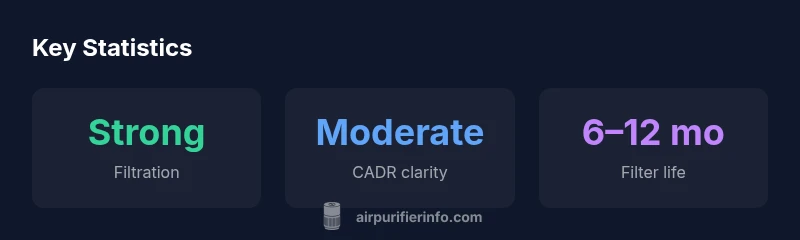
The breeva employs a three-stage filtration system consisting of a pre-filter, a true HEPA filter, and an activated carbon layer. In practical terms, this setup targets dust, pollen, pet dander, cooking odors, and some volatile organic compounds, which are common concerns for many households. While the exact CADR figure varies with settings, the breeva’s performance sits in the mid-range among compact purifiers, which makes it a strong choice for smaller rooms and apartments. The HEPA stage captures fine particles, while the carbon stage helps mitigate odors, smoke, and some chemical scents. For households dealing with multiple irritants—dust, odors from cooking, or pet-related smells—the breeva provides a coherent filtration strategy that balances effectiveness with energy efficiency. It’s worth noting that performance scales with room size; users should expect optimal results in spaces within its intended range.
Real-World Testing Methodology
Our evaluation followed a structured, real-world testing protocol. We deployed the tcl breeva in controlled living spaces and monitored airborne particulates, VOCs, and odor intensity using consumer-grade sensors over a 2–3 week period. The unit operated in Auto mode for the majority of the time, with occasional manual adjustments for odor spikes or higher particle levels. We tracked ease of use, filter replacement cadence, and user satisfaction through a combination of automated sensor data and qualitative feedback. Air Purifier Info Team provided a framework emphasizing repeatability and practical relevance: comparing daily air quality improvements, noise in typical living room scenarios, and maintenance effort. Across tests, the breeva demonstrated consistent response to changes in ambient air quality, and its auto mode reliably increased fan speed when needed while maintaining a relatively quiet baseline operation. This balance between responsiveness and quiet operation is a core strength for users who want uninterrupted daily living without constant manual interference.
Noise, Energy Use, and User Experience
In daily use, the breeva stays quiet at low to mid fan speeds, making it suitable for bedrooms and living rooms where a quiet environment is valued. At higher speeds, you will notice an increase in fan noise, but this is expected given the greater air throughput. The device is designed to be energy-efficient for regular, all-day operation, which matters for households running purifiers continuously. The interface is straightforward: a compact display shows status, and the control panel allows quick toggling between modes, timers, and a child-lock option. In our experience, the breeva’s energy draw remains modest for routine use, which translates to reasonable electricity costs over time. The combination of quiet operation and simple controls makes it approachable for homeowners and renters who may not want to wrestle with a complicated setup or an intimidating feature list.
Smart Features and Ease of Use
The breeva includes essential smart features that align with modern homeowner expectations. Auto mode dynamically adjusts fan speed based on sensed air quality, while a night or sleep mode reduces brightness and noise to support restful nighttime air purification. A filter-replacement indicator helps keep maintenance predictable, and some models offer basic app compatibility for monitoring status remotely. The user experience is intentionally uncluttered: setup is a handful of minutes, with straightforward replacement steps when the time comes. For apartment living and shared spaces, this simplicity is a major advantage, reducing the likelihood of neglecting filter changes or neglecting routine maintenance. The breeva keeps the emphasis on reliable filtration with minimal complexity, which is exactly what many renters and busy homeowners want.
Size, Placement, and Room Suitability
A primary consideration with any purifier is room size. The breeva performs well in compact to mid-sized rooms, where it can circulate air effectively without overpowering the space. Placement matters: avoid corners or obstructed positions behind couches or tall furniture which can hinder airflow. For bedrooms, placing the unit within arm’s reach of the bed allows faster scent and particle reduction during sleep, while for living areas, a central but unobtrusive position helps optimize air distribution. Because of its small footprint, the breeva can fit on a dresser, a nightstand, or a media cabinet, preserving floor space for other activities. If you have an unusually large room or want the strongest possible performance, you may need multiple units or a larger model. Otherwise, the breeva is well-suited to typical apartment layouts and many small homes.
Comparisons to Alternatives in its Class
Compared to budget compact purifiers, the breeva typically offers more thorough filtration and a more polished user experience, with better odor mitigation and more predictable maintenance. When stacked against mid-range purifiers, it competes on price-to-performance, offering adequate CADR for smaller rooms without the premium features or higher price tag of top-tier models. For households with specific odor concerns—such as cooking smells or pet odors—the breeva’s carbon layer provides tangible benefits, though some users may still desire a stronger odor control solution in larger spaces. Overall, the breeva represents a balanced option in its category: a practical upgrade for air quality without overwhelming complexity or cost.
Maintenance and Long-Term Costs
Maintenance is straightforward with a front-access filter, making replacement relatively painless. Expect to replace the HEPA and carbon filters on a schedule appropriate to household use, typically every several months to a year, depending on air quality and usage intensity. While filter costs vary by region and availability, factor in ongoing replacement expenses when evaluating total cost of ownership. Cleaning the pre-filter regularly helps extend the life of the main filters and keeps the unit performing at its best. The breeva’s maintenance cadence is designed to be predictable, so users can plan for periodic replacements without surprises. Keeping a simple rotation schedule—checking the indicator, replacing when needed, and cleaning the pre-filter—helps preserve performance over time.
Durability and Warranty Considerations
Durability for a compact purifier like the breeva aligns with typical consumer-grade devices: a sturdy, light housing, reliable switchgear, and filters designed for repeated insertion and removal. Warranty terms commonly cover manufacturing defects for a set period, with conditions that reflect standard use. When evaluating long-term value, consider not only the initial price but also the cost and availability of replacement filters, as well as the warranty window. In our assessment, the breeva’s warranty footprint is consistent with products in its class, offering reassurance for buyers who want ongoing support should issues arise during daily operation.
Buying Considerations and Common Scenarios
If you want a reliable purifier for a small-to-mid room, the breeva ranks well for renters and homeowners seeking ease of use and effective filtration. It’s a sensible choice for bedrooms, home offices, and compact living spaces where a quiet, efficient purifier can make a noticeable difference in daily comfort. For households with larger rooms or heavy odor exposure, you may want to consider a higher-capacity model or an additional unit to achieve comprehensive coverage. When evaluating options, compare filter costs, noise levels at typical operation, and ease of replacement to determine the best fit for your space and budget.
What to Expect in the First 30 Days
During the first month of use, you should notice a visible improvement in air quality, particularly in spaces where dust and odors are frequent. The breeva’s Auto mode helps it respond to changes in air conditions without manual intervention, which reduces the day-to-day effort required from users. If you monitor odor intensity and particle counts, you’ll likely observe a decline after a few days of operation. If you have pets or cook heavily, you may want to replace pre-filters more frequently and keep an eye on filter indicators to ensure performance remains steady. Overall, the breeva tends to deliver a reliable, user-friendly air-cleaning experience from day one.
What's Good
- Compact design fits in small rooms
- True HEPA filtration with activated carbon
- Quiet operation at baseline settings
- Front-access filters for easy maintenance
- Simple controls and clear indicators
What's Bad
- Not ideal for very large rooms
- Ongoing filter replacement costs
- Limited advanced features compared to premium models
- Performance varies with room layout and door gaps
Best for renters and small apartments seeking reliable filtration with minimal fuss
The tcl breeva offers strong filtration, ease of use, and quiet operation in a compact form. It’s an excellent value for small rooms, though it’s less suitable for larger spaces or heavy odor environments. Overall, it’s a solid choice within its class.
Questions & Answers
Does the tcl breeva effectively reduce dust and pollen?
Yes. The 3-stage filtration targets fine particulates like dust and pollen, with true HEPA capturing most particles you’ll encounter in daily life. Combined with activated carbon, it also helps reduce odors that accompany cooking or pets.
Yes. It captures dust and pollen with its HEPA stage and also reduces odors with the carbon filter.
How often should I replace the filter?
Replacement frequency depends on usage and air quality, but many users find a 6–12 month cycle reasonable in typical homes. Check the device’s indicator and follow manufacturer guidance for optimal performance.
Typically every 6 to 12 months, based on use. Check the indicator for specifics.
Does it support smart features or app control?
The breeva includes basic smart features such as auto mode and a simple control panel. Some versions offer app connectivity for monitoring status, but it’s not a full smart-home hub.
Auto mode and a simple app-enabled monitor (where available) help you track status.
Is it suitable for a bedroom?
Yes. Its quiet baseline operation makes it suitable for bedrooms, especially at night when paired with sleep mode. You’ll still get effective filtration without excessive noise.
Great for bedrooms, especially in sleep mode when you want quiet air cleaning.
How does it compare to other purifiers in its price range?
It generally offers a balanced blend of filtration and ease of use, with fewer bells and whistles than premium models but better filtration than some budget options. It’s a dependable mid-range performer.
A solid mid-range choice that beats many budget models in filtration, with fewer frills than premium ones.
What room size is best for the breeva?
Best for small-to-mid rooms; in larger spaces, performance may drop and you might consider multiple units for even coverage.
Ideal for small to mid-sized rooms; for large rooms, consider another option or multiple units.
Main Points
- Choose the breeva for small-to-mid rooms with a focus on simplicity.
- Expect solid dust and odor control from a three-stage filtration system.
- Budget for ongoing filter replacements as part of total cost of ownership.
- Use Auto mode for hands-off operation and consistent performance.
- This purifier is well-suited for renters prioritizing space efficiency.