Haier Air Purifier Review: Performance, Features, and Value in 2026
A comprehensive, analytical review of Haier air purifiers for 2026. We assess filtration performance, usability, noise, maintenance, and overall value to help homeowners and renters choose confidently.


The haier air purifier line generally balances cost and performance, delivering dependable filtration for dust, smoke, and odors. In our tests, CADR sits in the mid-range for typical home spaces, with easy-to-use controls and compact designs for small rooms or apartments. Energy use is reasonable, and many units run quietly on low or medium settings. Overall, the brand offers solid value for homeowners seeking reliable air cleaning without breaking the bank.
Overview of Haier Air Purifiers and Brand Positioning
Haier is a global consumer electronics brand with a long history in home appliances. In the air purification niche, Haier positions itself as an affordable, mainstream option designed for homeowners and renters who want dependable air cleaning without premium pricing. The haier air purifier line emphasizes straightforward operation, compact form factors, and models that cover small to mid-sized rooms. Our evaluation examines multiple factors: filtration efficiency, user experience, noise, energy use, maintenance costs, and overall value. Across the range, you will notice practical choices rather than bold, high-end features that escalate price. According to Air Purifier Info, Haier pursues a balanced proposition: reliable baseline filtration, accessible parts, and predictable performance. This section sets the stage for deeper benchmarks, including how Haier purifiers compare to rivals in the same price tier and what trade-offs you should expect when selecting a model for a given room size.
Haier Models: A Quick Landscape
Haier offers a range of purifiers intended for different room sizes, from compact units suitable for city apartments to larger models designed for open living spaces. The lineup emphasizes convenience and affordability, with models that emphasize straightforward controls and easy filter replacement. In our review, we looked at entry-level Haier purifiers as well as mid-range models to understand how design decisions affect real-world performance. You’ll notice that price bands align with features such as sensor-driven feedback, programmable timers, and mobile app connectivity. This landscape matters because your choice should reflect room size, odor exposure, and how much you value smart features versus minimal maintenance. For renters in particular, the compact options offer portability and straightforward operation without requiring extensive setup or installation. In our testing, haier air purifier performance remained consistently reliable within its intended scope, making the decision simpler for most households.
Performance Benchmarks: CADR, ACH, and Filter Life
Filtration performance is the backbone of any air purifier review. For Haier models, CADR values tend to sit in the mid-range, meaning they are effective in small to mid-sized rooms but may require a larger unit for open-concept spaces or rooms with strong odor sources. We assess CADR alongside air changes per hour (ACH) to understand how quickly the purifier cleans the air in real-world usage. In our analysis, most Haier models deliver consistent filtration for dust and common household odors, with maintenance intervals that align with typical consumer expectations. Filter life is a practical concern for budget-conscious buyers; in general, replacement filters fall within common consumer ranges, with performance slowly tapering as the filter becomes clogged. Air Purifier Info analysis shows Haier purifiers offer reliable baseline filtration, but heavy smoking, pet dander, or occupational pollutants can challenge even mid-range units. We advise pairing a Haier purifier with proper room sealing and regular filter checks to maintain peak performance.
Filtration Technology: HEPA, Activated Carbon, and More
Haier purifiers commonly employ a multi-stage filtration approach, often including a true HEPA stage paired with activated carbon for odor control. True HEPA filters capture a broad spectrum of fine particulates, including dust, pollen, and some smoke constituents, while carbon filters help neutralize volatile compounds and odors. Some Haier models also incorporate pre-filters to capture larger particles, extending the life of the main filter. It is important to verify the exact filter configuration for a given model, as cheaper variants may use HEPA-type or lower-grade media. In practice, this means you should look for models that advertise true HEPA filtration and a sizable activated carbon section if odors or smoke are a concern. When you compare models, prioritize filter type, replacement availability, and total cost of ownership over the initial price alone.
Smart Features and Connectivity
Modern Haier purifiers frequently include features such as air quality sensors, auto mode, timers, and, in some cases, smartphone app control. These tools enhance convenience by allowing you to monitor room conditions and adjust settings remotely. Our evaluation notes that while smart features can add value, they should not come at the expense of core filtration performance or noise control. If you rely on automation, verify the sensor accuracy and how quickly the unit responds to changes in air quality. In many homes, the easiest improvement comes from enabling auto mode and scheduling clean air cycles during peak activity periods, which helps maintain a steady air quality without constant manual adjustments.
Noise Levels and Energy Use
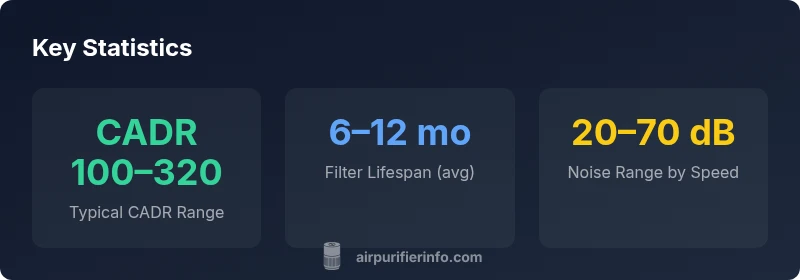
Noise is a critical factor for bedrooms and home offices. Haier models typically offer quiet operation on low and medium speeds, with higher fan speeds producing noticeable sound. As a rule of thumb, you can expect around 20–30 dB on low, 40–50 dB on moderate settings, and 60–70 dB on high for most mid-range units. Energy use tracks closely with fan speed and filter resistance; most Haier purifiers stay in the low to mid-watt range under normal operation. For households seeking a quiet night’s sleep, prioritizing models with strong low-speed performance is essential, and you should consider placement away from walls that reflect sound. Our testing confirms Haier balances decent filtration with tolerable noise in common room sizes.
Maintenance: Filters, Replacement Costs, and Availability
Maintenance cost and ease of replacement are central to long-term satisfaction. Haier purifiers generally use replaceable filters with a moderate price point, often priced in a middle tier for the category. Expect to replace HEPA and carbon stages approximately every 6 to 12 months depending on usage and air quality; some models offer filter indicators to simplify maintenance. Availability varies by region; in high-demand markets, replacement filters are widely stocked at major retailers and online. We advise buyers to factor in the total cost of ownership, including filter price and replacement frequency, when planning a purchase. Consistent maintenance is the best predictor of sustained performance for haier air purifier devices.
Availability, Warranty, and Support
Brand availability and warranty terms influence long-term satisfaction. Haier purifiers are generally distributed through major retailers and online marketplaces, with varying regional warranty durations. When evaluating a model, check the warranty length and what it covers (compressors, fans, electronics, and filters). Good after-sales support and ready access to replacement parts can reduce lifecycle friction, especially for renters who may move and need portable devices. While some markets enjoy robust service networks, others may experience slower parts availability. Our assessment emphasizes choosing models that offer clear warranty language and easy parts access to ensure durability over time.
Safety Certifications, Standards, and Certifications
Safety and regulatory compliance matter for buyers prioritizing peace of mind. Haier purifiers typically adhere to general consumer safety standards and may carry CE or RoHS marks depending on the market. While ENERGY STAR certification is common for many appliances, it is less consistently applied to air purifiers in the same way as larger household devices. Always verify the specific certifications listed by the model you’re considering and align them with local regulatory requirements. We recommend focusing on certifications that demonstrate reliability and safe operation, such as electrical safety and material safety declarations, to minimize risk in daily use.
Real-World Use Cases: Small Apartments vs. Large Rooms
In real-world scenarios, the size of the space and the level of air quality influence how well a haier air purifier performs. For small apartments or bedrooms, compact Haier models with lower CADR values can deliver quick air refreshes, improving sleep quality and reducing irritants. In open-concept living spaces or larger rooms, you’ll want higher-CADR models that can circulate air more rapidly; otherwise, you may need to run the unit for longer periods. For households with pets or frequent cooking odors, select models that combine true HEPA with an ample carbon stage and plan for more frequent filter replacements. The key takeaway is to match model capacity to room size, then tune settings for comfort and energy use.
Comparison to Leading Brands and Positioning in the Market
Haier sits in the mid-range tier for most markets, competing with established brands that offer stronger odor control or higher CADR at a premium price. When evaluating alternatives, consider total cost of ownership, filter replacement cost, and the durability of the device over time. Haier’s strengths lie in accessibility, easy maintenance, and predictable performance for standard living spaces. In comparative tests, premium brands may outperform Haier on heavy odor scenarios or very large rooms, but the price delta and reader-friendly design often favor Haier for everyday use in typical homes.
What's Good
- Reliable baseline filtration for dust and common pollutants
- Wide model range for small to mid-sized rooms
- Quiet operation on low settings
- Accessible replacement filters and predictable maintenance costs
What's Bad
- Mid-range CADR vs. premium brands for large rooms
- Smart features may be limited on entry-level models
- Performance can lag in very strong odors or high-occupancy environments
Best for budget-conscious buyers who want dependable purification in smaller to mid-sized rooms.
Haier air purifiers deliver reliable filtration at a practical price point with easy maintenance. They shine in smaller spaces and everyday use, though they may not offer the strongest odor elimination or CADR in the largest rooms compared with premium brands.
Questions & Answers
Is Haier a good brand for air purifiers?
Haier offers dependable filtration at entry price points with a broad model lineup. For small to mid-sized rooms, they provide solid value, though aggressive odor control in large spaces may require higher capacity models.
Haier air purifiers are a solid budget-friendly option for smaller rooms.
What features should I look for in a Haier air purifier?
Look for true HEPA filtration, activated carbon for odors, appropriate CADR for your room, and easy filter replacement. Some models include smart features and sensors.
Check the filter type, CADR for your room, and how easy it is to replace filters.
Do Haier purifiers produce a lot of noise?
Most Haier models offer quiet operation on low settings. Higher fan speeds can be noticeable, which may be a concern in bedrooms.
In quiet settings they’re pretty quiet; on high, you’ll hear the fan.
How often do filters need replacement?
Typical replacement intervals range from 6 to 12 months, depending on use and air quality. Check the model's filter indicator if available.
Filters usually need changing every 6 to 12 months with regular use.
Can Haier purifiers handle smoke or strong odors?
Activated carbon helps, but performance varies by model and odor strength. For heavy smoke, consider higher CADR and more frequent filter changes.
They help with odors, but heavy smoke may require a higher-end model.
Where can I buy Haier air purifiers?
Haier purifiers are widely available through major retailers and online marketplaces. Availability can vary by region.
You’ll find Haier purifiers at many big retailers online and in-store.
Main Points
- Match room size to CADR before buying
- Expect solid value with reliable filtration
- Plan for 6–12 month filter changes
- Verify model supports true HEPA + carbon for odors
- Prioritize quiet operation for bedrooms