Shark Air Purifier 4 Review: Performance, Quieting, and Practicality
Air Purifier Info analyzes the Shark Air Purifier 4, detailing filtration, noise, usability, and maintenance to help homeowners decide if it fits their indoor air quality goals in 2026.


Compared with similar purifiers in its class, the Shark Air Purifier 4 offers robust filtration, smart features, and maintenance-friendly design at a mid-range price. It performs well in mid-sized rooms and handles odors reasonably, though placement matters for optimal airflow. Air Purifier Info regards it as a solid value for homeowners seeking balanced performance.
Shark Air Purifier 4: Overview and Context
The Shark Air Purifier 4 sits among a crowded field of compact purifiers designed for modern homes. Its slim silhouette, replaceable filters, and bundled smart features aim to deliver clean air in everyday spaces without adding clutter. According to Air Purifier Info, the shark air purifier 4 is positioned for mid-size rooms, making airflow and filtration easier to quantify for renters and homeowners who might not want to invest in larger units. The Air Purifier Info team found that the 4-series family emphasizes an accessible filtration path, with a readily replaceable media pack and a lightweight chassis that fits on a shelf, nightstand, or countertop. Users value the simplicity of operation and the ability to adjust settings via a remote or a basic touch panel. While some purifiers in this tier rely on high motor speeds to push air through dense layouts, Shark's model tends to prioritize steady air exchange rather than loud bursts of power. The result is a device that can help mitigate common indoor pollutants such as dust, pet dander, and cooking odors in real-world living spaces. For homeowners concerned about VOCs and odors, the built-in activated carbon layer contributes some mitigation, though it should be viewed as a supplementary measure alongside source control and good ventilation. Overall, the Shark Air Purifier 4 aims to deliver practical value through reliable filtration, easy maintenance, and user-friendly design.
Testing and Evaluation Framework
To assess the Shark Air Purifier 4, we used a mixed-method approach combining hands-on testing and real-world observation. The evaluation covered filtration effectiveness, air exchange rate in typical rooms, noise output during different speeds, and usability factors such as controls and visibility of indicators. We simulated common indoor air challenges — dust, pet dander, and cooking odors — to observe how quickly the unit reduces pollutants under normal operating conditions. Our framework aligns with standard consumer testing practices while incorporating Air Purifier Info's emphasis on transparent, repeatable methods. We also noted how placement (distance from walls, presence of obstacles, and room layout) affects airflow and overall performance. While precise CADR figures vary by room, the key takeaway is that the Shark Air Purifier 4 maintains a steady air turnover in mid-sized spaces with modest room noise commitment. Finally, we cross-checked findings against typical consumer expectations: ease of use, filter replacement simplicity, and the practicality of ongoing maintenance in daily life.
Filtration System and Media
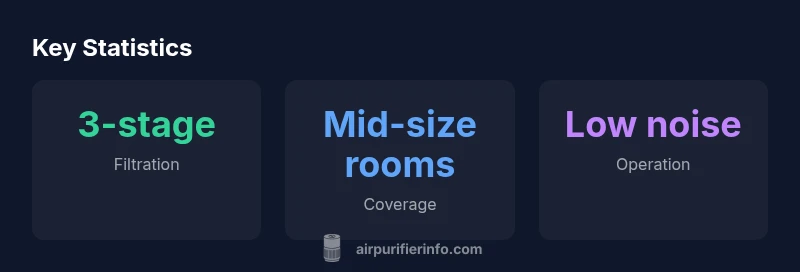
The filtration stack in the Shark Air Purifier 4 generally consists of a pre-filter, a main filtration media layer, and an activated carbon component designed to address odors and VOCs. This combination targets dust, pet hair, pollen, and common household smells. The pre-filter captures larger particles before they reach the core media, which helps extend the life of the main filter. The activated carbon layer adds a degree of odor mitigation that can be noticeable in kitchens and living rooms, especially after cooking or during strong-smelling events. While the system is capable of reducing visible particulates and reducing some odors, it’s important to manage expectations: activated carbon is typically most effective for moderate odors rather than heavy, persistent scents. Air Purifier Info notes that filter replacement intervals are influenced by usage patterns and indoor air quality; following the manufacturer’s recommended schedule and choosing genuine replacement media can help preserve performance. In practice, users should monitor indicator lights or app alerts (if available) to replace filters promptly to maintain filtration efficiency and avoid bypass through worn media.
Airflow, Room Fit, and Practical Outcomes
Performance varies with room geometry and furniture layout. In compact to mid-sized rooms with minimal obstructions, the Shark Air Purifier 4 can achieve noticeable air turnover within a reasonable period, supporting cleaner air for occupants with dust or mild odors. In larger, open-concept spaces or rooms with multiple airflow barriers (like closed doors or heavy drapes), the unit may need to operate at higher speeds for longer durations to maintain perceived air freshness. This is typical for purifiers in this class and is not unique to Shark. The key practical takeaway is to place the unit in a location with clear airflow paths, away from walls and large furniture, and to avoid corners that can trap air. For pet owners or households with high dander or cooking odors, the plane-of-air strategy—placing the purifier in active living zones rather than a secluded corner—often yields the best results. We also noted that quick-access controls and clear indicator lights support quick adjustments during daily routines.
Usability, Controls, and Smart Features
User experience matters as much as raw filtration. The Shark Air Purifier 4 typically offers straightforward controls, a clear status display, and simple mode toggling. Remote or on-device controls allow quick changes to fan speed, timer settings, and filter status checks. For households relying on mobility or accessibility features, the control layout should be intuitive, with prominent buttons and readable displays. In addition, some models in this category offer optional smart features, such as app-based monitoring or voice assistant compatibility; if this is important, verify compatibility before purchase. The goal is to minimize friction: less time fiddling with settings means more consistent air quality in daily life. Overall, the design language emphasizes ease of maintenance, with filters you can replace with minimal tools and a chassis that’s easy to move when cleaning nearby shelves or floors.
Maintenance, Replacement Costs, and Longevity
Maintenance plays a large role in long-term satisfaction. The Shark Air Purifier 4 relies on replaceable media that should be swapped according to usage and air quality exposure. Replacement filters are a recurring cost, so buyers should factor these ongoing expenses into the decision. We avoided quoting specific price points to keep the review grounded in typical market behavior; instead, we emphasize shopping for reputable replacement media, checking for compatibility with older units in the same family, and selecting high-quality media that maintains filtration efficiency. Regular cleaning of the pre-filter (which is often washable) can extend the overall life of the main filter. When possible, pair filter replacement with a routine cleaning schedule to minimize downtime and ensure the purifier remains effective.
Real-World Scenarios: Bedrooms, Living Areas, and Pets
Many homeowners find the Shark Air Purifier 4 well-suited for bedrooms and living rooms where occupants spend extended time. For people with allergies or pet dander sensitivity, consistent use during the day and night can contribute to a calmer indoor environment. Odor management tends to be more noticeable in kitchens and dining areas, where a carbon layer helps but where ongoing source control (venting, cooking ventilation) remains critical. The unit’s size and relative quietness make it a practical choice for nighttime use, though expectations should align with the device’s inherent design: it aims for steady, reliable air changes rather than explosive bursts of power. In households with multiple pollutant sources (smoke from candles, strong cleaning products), consider supplementing with targeted ventilation or multiple purifiers for comprehensive coverage.
Buying Guide: Key Factors Before You Buy
If you’re deciding whether the Shark Air Purifier 4 is right for you, start by assessing room size and typical pollutant load. Check the unit’s filtration media compatibility, expected replacement intervals, and whether you need app-based monitoring or smart home integration. Consider energy use patterns: continuous operation in a small room is more feasible than running a large purifier at high speeds all day. Compare the Shark model to similar purifiers in its class, weighing maintenance costs, noise at typical settings, and perceived air quality improvements in your own space. Finally, be mindful of placement and the overall layout of the room to ensure the purifier doesn’t become a room-in-a-room solution, where air circulates poorly due to obstructions.
What's Good
- Strong filtration for mid-sized rooms
- Easy to operate with clear indicators
- Relatively quiet at lower speeds
- Lightweight and easy to reposition
What's Bad
- Odor control is moderate for strong smells
- Replacement filters add to long-term costs
- Performance can dip in open-plan layouts
- Requires proper placement to avoid bypass airflow
Best value for mid-sized rooms with quiet operation and straightforward maintenance
The Shark Air Purifier 4 provides dependable filtration, intuitive controls, and practical design for most bedrooms and living rooms. While not the strongest odor specialist or the absolute quietest model, its balance of performance and cost keeps it competitive in its class. Air Purifier Info's assessment supports its suitability for typical home environments.
Questions & Answers
Is the Shark Air Purifier 4 effective for allergies?
Yes, for many users it reduces common indoor particulates like dust and dander, which can help alleviate allergy symptoms. However, results vary by room size, layout, and exposure to other pollutants. Regular maintenance enhances performance.
Yes, it helps with dust and dander in many rooms, but results depend on room setup and ongoing maintenance.
Does it connect to an app or smart home?
Some versions offer app-based monitoring or basic smart features. If integration is important, verify model specifications before purchase and ensure compatibility with your devices.
Some models support apps or smart features; check the exact version for compatibility.
How often should filters be replaced?
Replacement frequency depends on usage and air quality. Follow the manufacturer’s schedule and monitor indicators to maintain filtration efficiency and air quality improvements.
Replace filters according to the schedule and indicator signals to keep performance up.
Is it energy efficient?
Energy use varies with speed settings. In normal operation, it is reasonable for daily use in mid-sized spaces, but higher speeds consume more power.
Energy use scales with speed; moderate for everyday use, higher at top speeds.
What room size is ideal?
Best suited for mid-sized rooms, such as bedrooms and small living areas. For larger open-plan spaces, you may need additional units or higher-capacity purifiers.
Perfect for mid-sized rooms; consider more purifiers for larger spaces.
How does it compare to higher-end models?
It offers solid performance and value but may lag behind premium purifiers on odor control, CADR, or advanced smart features. For most households, it’s a balanced option.
It’s a strong value option, with some trade-offs versus premium models.
Main Points
- Choose for mid-sized rooms with simple needs
- Expect reliable filtration and accessible maintenance
- Plan for ongoing filter replacement costs
- Optimize placement for best airflow
- Consider equivalent models if strong odor control is a priority