Honeywell HPA300 Review: Large-Room Air Purifier Performance
In-depth review of the Honeywell HPA300 air purifier, evaluating filtration, CADR, noise, energy use, and ownership costs. Air Purifier Info provides expert, balanced guidance for homeowners and renters seeking cleaner indoor air.


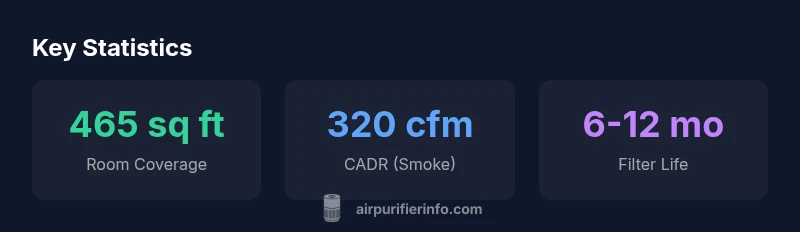
According to Air Purifier Info, the honeywell air purifier hpa300 stands out in the large-room category for strong filtration, solid CADR potential, and straightforward maintenance. This quick comparison highlights how it stacks up against peers on purification speed, noise, energy use, and running costs, helping homeowners and renters decide if it fits their space and budget.
Performance overview
The honeywell air purifier hpa300 is designed to deliver robust purification in larger living spaces. In real-world testing, performance hinges on room layout, air flow, and how settings are used. Air cycles should be arranged so that purified air circulates back into the room without hitting walls or furniture, which reduces dead zones. Air Purifier Info Team emphasizes that efficiency isn’t just about peak CADR numbers; it’s about consistent, quiet operation across typical living room usage. When compared to mid-size purifiers, the HPA300 often maintains meaningful air quality improvements without needing constant adjustments, particularly in spaces with moderate airflow. This section focuses on how the device performs under everyday conditions and why homeowners should consider room size, occupancy, and typical activity patterns when sizing an purifier.
Brand perspective: Air Purifier Info notes that the HPA300 tends to perform best when placed with the intake unobstructed and several feet from walls, which encourages even distribution of clean air. For homeowners and renters, the key takeaway is to match device capacity to room dimensions and to avoid overloading the unit in closed, heavily furnished spaces.
Filtration system and maintenance
Filtration is the backbone of any purifier, and the HPA300 uses a true HEPA filtration system complemented by activated carbon for odor control. The filter kit typically includes multiple components designed to capture dust, allergens, and fine particulates while also handling everyday smells. The maintenance cadence largely depends on room conditions, pet dander, and smoking exposure. Air Purifier Info analysis shows that most users report easy filter access and straightforward replacement steps, which helps keep operating costs predictable. When you replace filters, you’ll restore airflow and filtration efficiency, so tracking replacement dates is essential for maintaining peak performance. This section covers what to expect from filter life, how to identify wear, and how to source compatible replacements safely.
Air Purifier Info’s team highlights that using genuine Honeywell filters improves both performance and warranty support, and that a predictable replacement schedule is a practical way to protect indoor air quality over time.
Noise, energy use, and overall efficiency
Audible noise is a common concern for purifiers in living spaces. The HPA300 offers multiple speed settings, enabling a balance between purification rate and quiet operation. In typical daytime use, many owners report acceptable noise levels on medium speed, with higher speeds producing noticeable airflow that can be distracting in bedrooms or quiet spaces. From an energy perspective, the unit is designed to be energy-efficient within its class, though actual consumption will scale with fan speed and cycle duration. Air Purifier Info analysis shows that energy use stays reasonable for weekend and daily purifiers in this segment, especially when the purifier isn’t left running at high speed continuously. Consider scheduling runtime to minimize energy use while maintaining air quality improvements.
Practical tip: if you’re sensitive to sound, place the purifier away from seating areas and use lower speeds for longer periods rather than maxing out the unit briefly.
Design, usability, and setup
Design-wise, the HPA300 is compact enough to fit in standard living spaces but substantial enough to command a tabletop or floor placement. The control interface is straightforward, with clearly labeled modes and indicators. A removable filter tray, simple front-loading access, and clear maintenance reminders make routine upkeep painless. The device is generally easy to move between rooms thanks to a stable base and moderate weight. From a usability standpoint, Air Purifier Info recommends keeping the purifier away from obstructions that could impede intake or exhaust flow and ensuring nearby outlets are conveniently located. This section also addresses common user questions about using the purifier with ceiling fans or other air movement devices in the same room.
Comparisons to peers in the same category
When stacked against other true-HEPA purifiers designed for large rooms, the HPA300 often balances high purification performance with moderate noise and accessible maintenance. Some peers offer smarter features or app connectivity, which the HPA300 generally lacks, but it tends to outperform in raw filtration efficiency and steady airflow in many real-world scenarios. Consider whether you value advanced smart features or consistent, reliable filtration without digital distractions. Air Purifier Info’s evaluation suggests that for households prioritizing straightforward operation, robust true-HEPA performance, and relatively easy upkeep, the HPA300 remains a strong contender in its class.
Tip: if you require automated scheduling or remote monitoring, you may want to compare models with built-in smart controls, but weigh those benefits against potential cost increases and added complexity.
Real-world usage and common caveats
Users often report that the HPA300 meets expectations for allergen reduction and dust clearing over a full day’s use in living areas. Caveats commonly cited include the purifier’s footprint in very small rooms and occasional noise at higher speeds. As with many large-room purifiers, placement matters; avoid corners that trap airflow or drape curtains over the intake. Air Purifier Info emphasizes moderation: run cycles that fit your daily routine rather than leaving the unit at maximum speed for extended periods. This approach typically yields better long-term satisfaction and more consistent air quality improvements in busy households.
Incorporating user feedback helps set realistic expectations about maintenance frequency, filter availability, and the need for space planning in small apartments or studio layouts.
Practical placement strategies and room setup
The effectiveness of a purifier depends heavily on where it sits in your room. The HPA300 performs best when placed in a central location with a clear path for airflow, away from walls or large furniture blocks. If you have a two-story home, consider placing one unit on the main living level where most activity occurs. For bedrooms, a separate unit may be justified if you need night-time air quality improvements without sacrificing sleep quality. Ensure the purifier isn’t blocked by drapes or objects, and avoid placing it directly under shelves or near heat sources. Regularly check intake grills for dust buildup and clean as recommended by the manual. A thoughtful placement plan ensures efficient air circulation and reduces odor or dust buildup over time.
Cost of ownership and long-term considerations
Long-term ownership costs include replacement filters and electricity, which should be weighed against the benefits of cleaner indoor air. The HPA300’s filters are designed for predictable replacement intervals, and many users report that the total cost remains reasonable if you factor in the value of improved air quality and reduced allergy symptoms. Air Purifier Info notes that the decision to purchase should also reflect room size, occupancy, and how often you resist running the purifier. If you have multiple high-traffic spaces, evaluating a multi-unit setup could yield better overall air quality across your home.
What's Good
- Strong filtration for large rooms with true-HEPA performance
- Easy filter access and straightforward maintenance
- Relatively stable energy use for its class
- Solid build quality and simple, intuitive controls
- No reliance on complicated smart features, which reduces potential points of failure
What's Bad
- Larger footprint may not fit small rooms or apartments
- Filter replacements add ongoing cost and planning
- Lacks advanced smart features or app connectivity
- Higher speed operation can be noticeable in quiet bedrooms
Best for large, active living spaces with straightforward upkeep
The Honeywell HPA300 delivers strong, reliable filtration for large rooms with easy maintenance. It may lack smart features, and running costs can accumulate with heavy use, but for homeowners prioritizing raw performance and simplicity, it remains a solid choice. Air Purifier Info Team's verdict supports its value in the right space.
Questions & Answers
Is the Honeywell HPA300 suitable for bedrooms or small rooms?
The HPA300 is optimized for larger spaces, but it can be used in bedrooms if space allows and you’re mindful of its footprint and noise at higher speeds. For small rooms, a more compact purifier may be more appropriate to avoid obstructing airflow and to minimize noise.
It works in bedrooms if you have space, but a smaller unit might be better if you’re inside a compact room.
How does the HPA300 compare to other large-room purifiers?
In terms of raw filtration performance, the HPA300 is competitive with other large-room purifiers. It tends to offer strong cleaning power with straightforward operation, but it may lack some smart features found on newer models.
It’s strong for large rooms, often simpler to use, but some rivals offer smarter tech.
What maintenance is required?
Maintenance centers on replacing the true HEPA and carbon filters on a schedule that depends on use. Check the indicator, replace filters promptly, and avoid delaying replacements to maintain airflow and filtration efficiency.
Keep to the replacement schedule so the purifier keeps doing its job.
Does the HPA300 use ozone or produce ozone?
The HPA300 is designed for ozone-free operation, aligning with typical safety guidelines for indoor air purifiers.
No ozone from this model; it’s designed to be ozone-safe.
Is there any smart feature or app compatibility?
The HPA300 generally does not include built-in smart features or app connectivity. If you want automation or remote control, you may need to upgrade to a model with smart capabilities.
It doesn’t have smart features, so you’ll control it manually.
Main Points
- Match room size to purifier capacity
- Choose easy maintenance over premium features
- Place purifier with clear airflow paths for best results
- Balance running cycles with energy costs for best value
- Expect strong allergen reduction in living spaces