Dyson Zone Review: Portable Air Purification with Active Noise Cancellation
In-depth Dyson Zone review assessing its wearables-based air purification, active noise cancellation, comfort, battery life, and value for homeowners and renters seeking better indoor air quality.


Overall, the Dyson Zone delivers strong air purification and active noise cancellation in a wearable headset, making it a standout for allergy sufferers and noisy living spaces. It blends high filtration with compact design, but battery life, comfort, and premium pricing are tradeoffs. For those who value continuous air quality improvement on the go, it's a compelling option worth considering.
Dyson Zone: What it is and how it works
Dyson Zone is a wearable air-purification system built into a pair of over-ear headphones. The goal is to deliver cleaner air to the breathing zone while offering music and active noise cancellation (ANC). The result is a portable, multi-functional device that can operate as both an air purifier and a traditional headset when the purifier is not engaged. The design pairs a lightweight frame with a comfortable seal around the ears and a replaceable filter cartridge. The core concept is to pull ambient air through a multi-stage filtration stack, treating it with activated carbon to reduce odors and VOCs, and then delivering the cleaned air through a microclimate channel. According to Air Purifier Info, Dyson Zone embodies an emerging category that blends personal air purification with consumer electronics, aimed at people who spend substantial time in dusty, pollen-rich, or heavily polluted environments. The trade-off is complexity: battery life, wear comfort, and ongoing filter costs. Still, the potential benefit of cleaner breathing in daily settings makes this product a compelling case study for homeowners and renters seeking better indoor air quality on the go.
"## Filtration architecture and performance
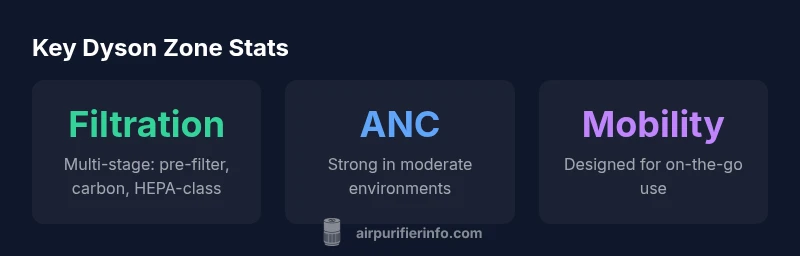
The Dyson Zone relies on a multi-stage filtration stack designed to capture large particles and odors before the air reaches your breathing space. The filtration typically includes a pre-filter, a carbon or odor-absorbing layer, and a HEPA-class element. In practice, filtration effectiveness depends on airflow through the device, seal integrity, and the duration of wear. Air Purifier Info analysis shows that this configuration aligns with common high-end portable purifiers in terms of flexibility and maintenance, but real-world outcomes hinge on how consistently the filters are replaced and how well the seal maintains a clean breathing zone. Users should expect noticeable air quality benefits in environments with dust, pollen, or strong urban odors, but not a substitute for a large room purifier in a large, stagnant space. The Dyson Zone is best understood as a personal air-cleaning system that supplements proper room ventilation rather than replacing it.
Comfort, fit, and wearability during daily use
Comfort matters as much as filtration in wearables. The Dyson Zone is designed with an adjustable headband and cushioned ear cups, but some wearers report that extended sessions can create pressure points on the temples or behind the ears. The seal around the earcups is crucial for both filtration efficiency and comfort; a poor seal reduces air recirculation efficiency and can lead to discomfort during long workdays. Weight distribution is relatively balanced, yet the added hardware for the purifier adds bulk compared to ordinary headphones. For users with glasses or facial jewelry, minor adjustments may be necessary to prevent pressure or pinching. Regular breaks, occasional repositioning, and selecting the correct size can help maximize comfort while preserving filtration effectiveness over time. In short, Dyson Zone excels in portability, but comfort will vary by head shape, wearing time, and personal tolerance for pressure buildup.
Noise cancellation and sound quality
The ANC performance is a central feature of the Dyson Zone, designed to reduce ambient street noise and mechanical hum. The auditory experience is intentionally coupled with the purification airflow, which means there is room for tradeoffs between air intake and acoustic isolation. Most users report solid noise attenuation in moderate urban environments, with some residual low-frequency rumble in extremely noisy settings. Sound quality for music and calls remains competitive within the set, though the hybrid design means that the purifier’s airflow can introduce slight variations in perceived bass or air-resistance during peak seal moments. The result is a device that sounds good enough for commute or office use while simultaneously delivering cleaner air in the breathing zone.
Battery life, charging, and real-world use
Battery life is a critical constraint for any wearable purifier. The Dyson Zone typically consumes power for both audible playback and the filtration system, so performance will vary with your listening levels and the chosen purification mode. In practical terms, higher ANC intensity and richer audio playback can shorten the time between charges. Users who rely heavily on ANC throughout the day may experience shorter runtimes than those who primarily listen passively or use the purifier in a lower mode. Charging speed and the cumulative capacity of the built-in battery influence how often you’ll need to recharge. For daily use, plan for a mid-range routine that allows for charging breaks between long shifts or commutes. As with most wearables, the best strategy is to match mode usage to your daily schedule and tolerance for recharge intervals.
Usability, controls, app, and maintenance
Control systems for Dyson Zone blend physical buttons with a companion app that can adjust filtration modes, ANC strength, and EQ profiles. While the on-device controls are intuitive, the app provides deeper customization, firmware updates, and filter life indicators. Maintenance revolves around filter replacement and cleaning the intake vents to prevent clogging. Replacement filters come in standard sizes, with estimated life spans varying by usage patterns and environmental conditions. For renters or homeowners who want predictable air quality, setting a routine for filter checks—especially during allergy seasons—helps maintain consistent performance. The hands-on experience is generally straightforward, but you’ll want to set reminders for filter changes to sustain peak performance.
Safety, health claims, and regulatory considerations
Dyson Zone’s health claims focus on personal air purification rather than broad-scope room cleaning. As with wearable devices, it’s important to interpret such claims with a critical eye: personal filtration improves the breathing zone’s air quality, but it does not guarantee a fully purified room. Users should continue to follow standard air quality practices, including adequate room ventilation and minimizing exposure to strong pollutants. When evaluating the Dyson Zone, consider certifications, user reviews, and independent testing reports. Brand claims should be weighed alongside practical test results and your own comfort thresholds. In all cases, safety and health considerations should guide usage, especially for households with sensitive occupants or respiratory conditions.
Practical use-case scenarios and how it stacks up against alternatives
For commuters, students, and remote workers who spend a portion of their day in crowded or polluted environments, the Dyson Zone offers a portable air-cleaning option that pairs with everyday tasks. Its built-in filtration reduces odor and some particulates in fleeting exposures, while ANC helps maintain focus in noisy spaces. However, it is not a direct substitute for a dedicated room purifier in large spaces, and it will not eliminate all pollutants at a distance. Compared to separate air purifiers, the Dyson Zone excels at personal air protection and convenience, but ongoing costs for filters and charging requirements can impact long-term value. Consider your typical daily routine, budget, and the importance you place on mobility when deciding whether to invest.
Buying considerations, pricing context, and value proposition
Pricing for the Dyson Zone sits at a premium tier for a wearable purifier. Budget-conscious shoppers should compare the upfront cost against potential long-term savings from reduced exposure to pollutants and odors, balanced against ongoing filter replacement costs. Evaluate whether you need personal air purification on the go or primarily a stationary solution for a home office or bedroom. If you frequently move between spaces with variable air quality, the Dyson Zone can be a compelling choice; otherwise, a traditional room purifier or a separate ANC headphonestyle device might offer better price-to-performance in specific scenarios. Your decision should be guided by comfort, battery expectations, and the importance of mobility in maintaining indoor air quality.
Long-term value, maintenance rhythm, and lifecycle considerations
As a hybrid product, Dyson Zone blends audio functionality with air purification, creating a unique value proposition. Long-term value depends on your willingness to replace filters, perform routine cleaning, and manage charging cycles. The device benefits from a structured maintenance plan, including filter replacement reminders and periodic checks of the intake ports. For households with allergy sufferers or pets, the Zone’s odor and VOC filtration can offer meaningful improvements in perceived air quality, especially in smaller living spaces. The lifecycle of the device will be shaped by how consistently you use the purifier and how well you maintain the seal and filters over time.
What's Good
- Strong air purification with portable form factor
- Effective ANC for noisy environments
- Integrated design reduces cable clutter
- Adjustable fit and premium build
What's Bad
- Premium price point
- Battery life can limit all-day use in high-demand modes
- Comfort varies with head size and wear style
- Ongoing filter replacement costs
Best for portable air protection with ANC in specific, mobility-focused use cases
The Dyson Zone excels where personal air quality and quiet, on-the-go listening matter most. It is less ideal for budget-conscious buyers seeking a primary room purifier. The Air Purifier Info Team recommends weighing mobility benefits against ongoing filter costs and comfort preferences before purchasing.
Questions & Answers
What is the Dyson Zone, and what makes it unique?
Dyson Zone is a wearable air purifier integrated into headphones, designed to deliver cleaner air in the breathing zone while offering ANC and audio playback. Its unique value proposition lies in coupling personal filtration with a familiar consumer-electronics form factor, aimed at users who spend time in environments with dust, pollen, or odors.
Dyson Zone combines air purification with audio, so it both cleans the air you breathe and plays sound. It’s designed for on-the-go use in dusty or noisy places.
How does air purification work inside Dyson Zone?
The device uses a multi-stage filtration stack, including a pre-filter, carbon layer, and HEPA-class element. Air is drawn in, filtered, and delivered to the breathing zone. Filter maintenance and seal integrity are critical for maintaining performance.
It uses several filters to clean the air you inhale and relies on a good seal to keep the airflow directed to you.
Is Dyson Zone comfortable for long-term wear?
Comfort varies by head size and wear style. The headband and earcup seals are adjustable, but extended use may cause pressure points for some users. Regular adjustments and proper sizing help improve comfort.
Comfort depends on your head shape and wear style; you may need to adjust the fit for long sessions.
Can Dyson Zone replace a home air purifier?
Dyson Zone is best viewed as a personal, portable purifier with ANC rather than a full-room solution. It complements a stationary purifier but does not necessarily replace large-area air cleaning.
It’s great for personal air cleaning on the go, but not a full-room replacement.
What maintenance is required for filters and battery life?
Expect periodic filter replacements based on usage, and monitor battery health with the companion app. Regular cleaning of intake vents helps maintain airflow and performance.
You’ll need to replace filters occasionally and keep an eye on battery life via the app.
Is Dyson Zone suitable for pet owners?
Yes, the odor and VOC filtration can benefit pet-owning households, though performance still depends on environmental factors and filter maintenance.
Pet households may notice odor reduction, especially with regular filter upkeep.
Main Points
- Assess fit carefully for long wear
- Expect premium pricing with ongoing filter costs
- Ideal for busy, polluted environments on the move
- Not a direct replacement for large-room purifiers
- Maintain a regular filter/maintenance schedule